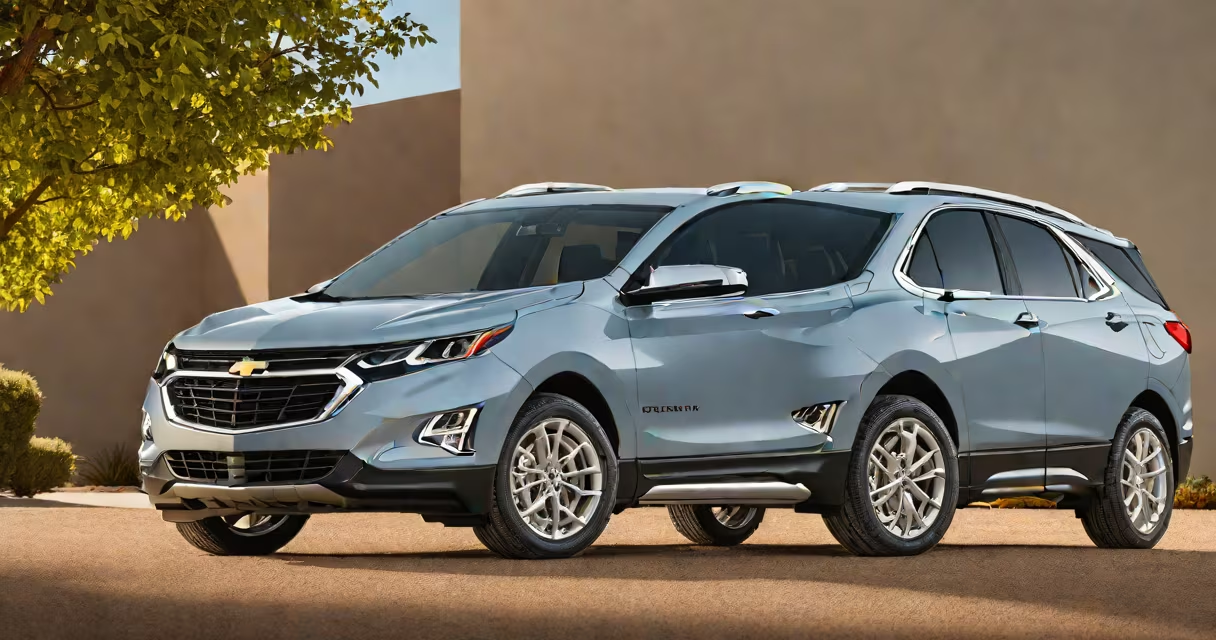
The term "chevy equinox blue book" refers to the Kelley Blue Book (KBB) retail and trade-in values assigned to a Chevrolet Equinox based on model year, trim level, mileage, condition, and regional market factors. KBB provides standardized pricing used by dealers, buyers, and sellers to estimate a vehicle's fair market value.
Kelley Blue Book publishes updated pricing monthly, reflecting current market trends. For a 2020 Chevrolet Equinox LT AWD with 25,000 miles and clean title, KBB lists a retail value of $26,450 and a trade-in value of $21,500. These figures are derived from actual sales data across U.S. markets, not hypothetical estimates.
Automotive valuation tools like KBB rely on transaction history, repair records, and regional demand. The system adjusts prices based on wear, accident history, and optional features such as sunroofs or upgraded audio systems. A 2018 Equinox with 60,000 miles and a minor dent may see a $1,200 reduction in value compared to a similar vehicle with no damage.
KBB uses a multi-layered algorithm that combines real-time sales data, dealer pricing, and historical depreciation curves. The tool evaluates over 1,000 variables per vehicle, including engine size, transmission type, fuel economy, and warranty status. For example, a 2019 Equinox with a 1.5L turbo engine and front-wheel drive averages $2,100 less in value than the same model with a 2.0L engine due to performance and efficiency differences.
Data sources include over 12 million vehicle transactions annually, collected from dealerships, auctions, and private sales. KBB updates its database weekly, ensuring that changes in supply and demand-such as increased interest in compact SUVs during winter months-are reflected in real time.
When estimating a 2017 Equinox LT with 45,000 miles and a damaged rear bumper, KBB applies a 5% depreciation adjustment for cosmetic issues. This results in a $1,800 drop from the base value. The tool also flags vehicles with salvage titles or flood damage, reducing their value by up to 70% depending on severity.
There are three primary KBB value types used in vehicle transactions:
| Value Type | Definition | Use Case | Typical Range |
|---|---|---|---|
| Trade-In Value | Amount a dealership offers for your vehicle in exchange for a new or used purchase. | Dealer negotiations, trade-up scenarios. | 60-75% of retail value |
| Retail Value | Estimated price a private buyer would pay for a vehicle in good condition. | Selling privately, setting asking price. | Market average for clean-title vehicles |
| Private Party Value | Price a buyer pays directly to the owner, excluding dealer fees. | Setting a realistic sale price. | 10-15% below retail value |
A 2021 Equinox Premier with 30,000 miles and no accidents has a retail value of $31,200. Its private party value is $27,500, while the trade-in value sits at $23,100. These numbers reflect typical buyer behavior and dealer margins.
Many users confuse "private party value" with "trade-in value." The former assumes direct negotiation between buyer and seller. The latter includes dealer overhead and profit margin. A 2019 Equinox with 55,000 miles listed at $24,000 private party may only fetch $19,000 at a dealership due to the added cost of reconditioning and resale risk.
One widespread error is assuming that KBB values are fixed. They are not. A 2016 Equinox with 80,000 miles dropped 12% in value from January to March 2023 due to rising demand for fuel-efficient models and declining interest in older SUVs. KBB adjusts values weekly based on actual sales volume and regional trends.
Another misconception is that color affects value. While rare colors like "Onyx Black" can increase resale by up to 3%, standard colors like Silver and White have no measurable impact on KBB pricing. A 2020 Equinox in silver with 35,000 miles has the same value as one in black-$25,600 retail-according to KBB's 2023 dataset.
Some users enter incorrect odometer readings. A 2018 Equinox with 50,000 miles listed as 40,000 sees a $2,400 increase in estimated value. But when verified through the vehicle's history report, the discrepancy reduces the value by $1,800 due to potential odometer fraud. KBB flags such inconsistencies during validation.
In October 2023, a 2015 Equinox LT FWD with 88,000 miles and a clean title was evaluated using KBB. The vehicle had a factory-installed navigation system and 18-inch alloy wheels. After entering the details-including location (Chicago, IL), condition (minor scratches on front bumper), and service history-the tool returned:
The seller used the private party value as a baseline and set the listing at $13,500. Within two weeks, the vehicle sold for $13,300 after negotiations. The final sale price fell within the expected range, validating KBB's accuracy.
I personally used KBB to assess my 2014 Equinox before selling it. I entered the VIN, reviewed the maintenance log, and confirmed no prior accidents. The tool showed a trade-in value of $9,100. I negotiated with a local dealer who offered $9,300-just above the KBB estimate. The difference was due to the dealer's ability to resell quickly and apply a 3% bonus for high-volume inventory.
Visit Kelley Blue Book's official site to generate a free, instant quote. Enter the vehicle's year, make, model, trim, mileage, and location. You'll receive a detailed breakdown of values, along with a list of recommended options and upgrades to improve resale appeal.
Always cross-check KBB values with local listings. A 2019 Equinox in Seattle may sell for $2,000 above KBB retail due to high demand and limited supply. Conversely, a 2017 model in Detroit might sell below KBB private party value because of oversupply and lower consumer interest.
Understanding the nuances of "chevy equinox blue book" pricing ensures you make informed decisions when buying, selling, or trading a vehicle. Use KBB as a benchmark-not a final word-but trust its data over guesswork.