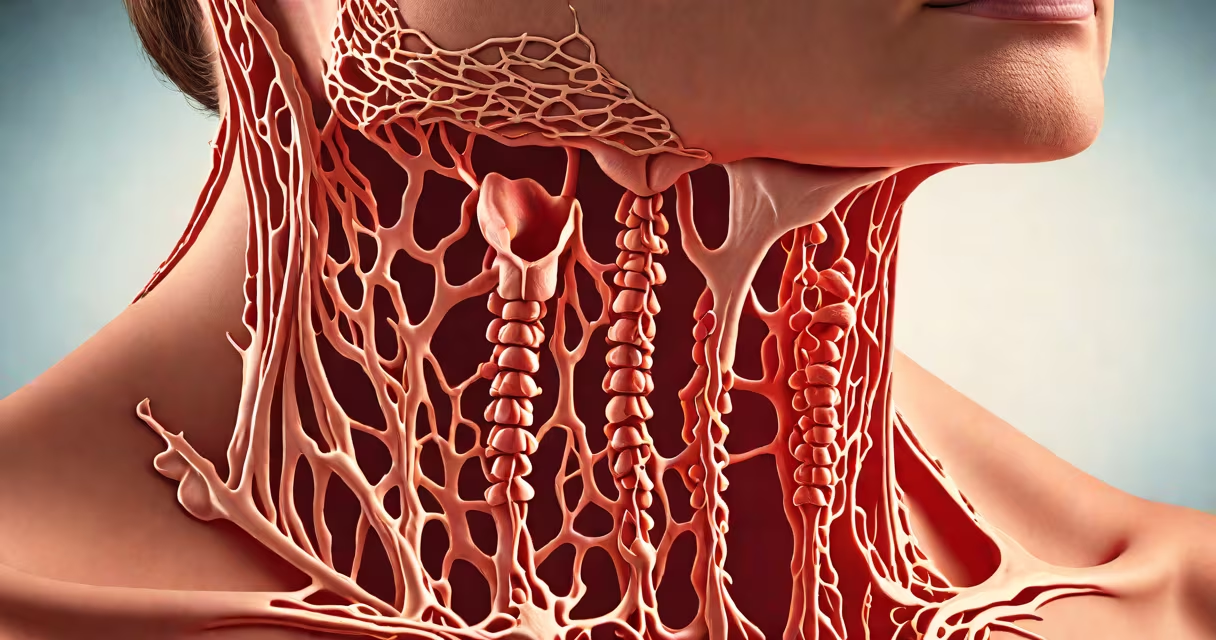
Thyroid inflammation results when the immune system mistakenly attacks thyroid tissue, most commonly due to Hashimoto's thyroiditis, an autoimmune disorder. This process leads to swelling, pain, and impaired hormone production. The condition affects approximately 1 in 50 people in the U.S., according to the American Thyroid Association.
Autoimmune activity begins when immune cells fail to distinguish between healthy thyroid cells and foreign invaders. As a result, lymphocytes infiltrate the gland, releasing inflammatory cytokines and autoantibodies such as thyroperoxidase (TPO) and thyroglobulin antibodies. These markers are detectable in blood tests and confirm immune involvement.
Chronic inflammation damages thyroid follicular cells, reducing the organ's ability to produce triiodothyronine (T3) and thyroxine (T4). Over time, this leads to hypothyroidism, characterized by fatigue, weight gain, cold intolerance, and depression. Early diagnosis through antibody screening improves long-term outcomes.
The thyroid gland sits in the front of the neck, just below the Adam's apple. It regulates metabolism, heart rate, body temperature, and energy levels. When inflamed, it often swells visibly or feels tender to touch. Inflammation disrupts normal function by damaging the cells responsible for hormone synthesis.
Immune cells, particularly CD4+ T helper cells and B cells, migrate to the thyroid under the influence of chemokines released during early immune activation. Once inside, they initiate a cascade: B cells produce autoantibodies that bind to thyroid antigens, marking them for destruction. Macrophages then engulf the targeted cells, releasing reactive oxygen species and pro-inflammatory mediators like interleukin-6 (IL-6) and tumor necrosis factor-alpha (TNF-α).
A 2021 study published in Frontiers in Immunology found that patients with untreated Hashimoto's had higher levels of TNF-α and IL-1β in serum compared to controls. These molecules directly contribute to tissue damage and fibrosis in advanced cases.
While genetics play a major role, environmental and lifestyle factors interact with inherited susceptibility to trigger immune dysregulation. The most common cause is Hashimoto's thyroiditis, which accounts for over 90% of autoimmune thyroid inflammation cases.
Other less frequent causes include subacute thyroiditis (de Quervain's), drug-induced inflammation, and postpartum thyroiditis. Subacute thyroiditis typically follows a viral upper respiratory infection and presents with severe neck pain and fever. It often resolves within months but may lead to temporary hyperthyroidism followed by hypothyroidism.
| Type | Prevalence | Key Triggers | Typical Symptoms |
|---|---|---|---|
| Hashimoto's thyroiditis | ~90% | Genetic predisposition, iodine excess, viral infections | Neck swelling, fatigue, weight gain, cold sensitivity |
| Subacute thyroiditis | ~5% | Recent viral illness (e.g., mumps, Epstein-Barr) | Painful thyroid enlargement, fever, jaw pain |
| Postpartum thyroiditis | ~5% | Childbirth-related immune shifts | Fluctuating thyroid function, anxiety, palpitations |
Environmental exposures such as high-dose iodine intake (from supplements or contrast dyes), smoking, and certain medications like amiodarone can provoke or worsen inflammation. A 2019 review in Thyroid noted that smokers with Hashimoto's were twice as likely to develop progressive gland atrophy compared to non-smokers.
One non-obvious fact: elevated selenium levels correlate with reduced thyroid antibody titers. A randomized controlled trial in Germany showed that daily supplementation with 200 mcg selenium led to a 40% reduction in anti-TPO antibodies over six months. Selenium supports glutathione peroxidase, an enzyme that neutralizes oxidative stress in thyroid tissue.
Many assume thyroid inflammation always causes pain. In reality, Hashimoto's often presents silently-patients report fatigue or weight gain before any physical signs appear. Neck swelling may be absent even in moderate disease.
Another misconception is that all thyroid nodules indicate inflammation. Most nodules are benign and unrelated to immune activity. Ultrasound-guided biopsy remains the gold standard for distinguishing inflammatory from neoplastic lesions.
Some confuse thyroid inflammation with systemic inflammation. While both involve immune activation, thyroid-specific inflammation targets a single organ. Blood markers like C-reactive protein (CRP) may remain normal despite significant local immune infiltration.
For context, consider a 34-year-old woman who presented with unexplained fatigue and a 10-pound weight gain over four months. Her TSH was 12.3 mIU/L (normal: 0.4-4.0), free T4 was low, and anti-TPO antibodies were 1,200 IU/mL (normal: <34). An ultrasound revealed heterogeneous echotexture and reduced vascularity-classic signs of chronic autoimmune thyroiditis. She was diagnosed with Hashimoto's and started on levothyroxine. After six weeks, her energy improved and TSH normalized.
Intestinal inflammation, as seen in celiac disease, can also trigger cross-reactivity. A 2020 study in Autoimmunity Reviews reported that 20% of patients with celiac disease developed positive anti-thyroid antibodies. Gluten exposure may promote molecular mimicry, where immune responses against gliadin resemble thyroid proteins.
During a clinical visit, I observed a patient with longstanding undiagnosed fatigue. Initial labs showed elevated TPO antibodies and mild hypothyroidism. He had no symptoms of gastrointestinal distress, but a later biopsy confirmed silent celiac disease. After adopting a gluten-free diet, his thyroid antibodies dropped by 60% over 12 months-demonstrating how gut health influences thyroid immunity.
Understanding the root causes of thyroid inflammation enables earlier intervention. Addressing modifiable factors like iodine intake, stress, and nutrient deficiencies can slow progression. Screening for related conditions improves diagnostic accuracy and treatment outcomes.
Recognizing what causes thyroid inflammation is essential for managing autoimmune thyroid disease effectively. Identifying triggers early allows for timely treatment and better quality of life. What causes thyroid inflammation centers on immune misdirection, primarily through Hashimoto's thyroiditis, with contributions from genetics, environment, and gut-immune axis disruptions.