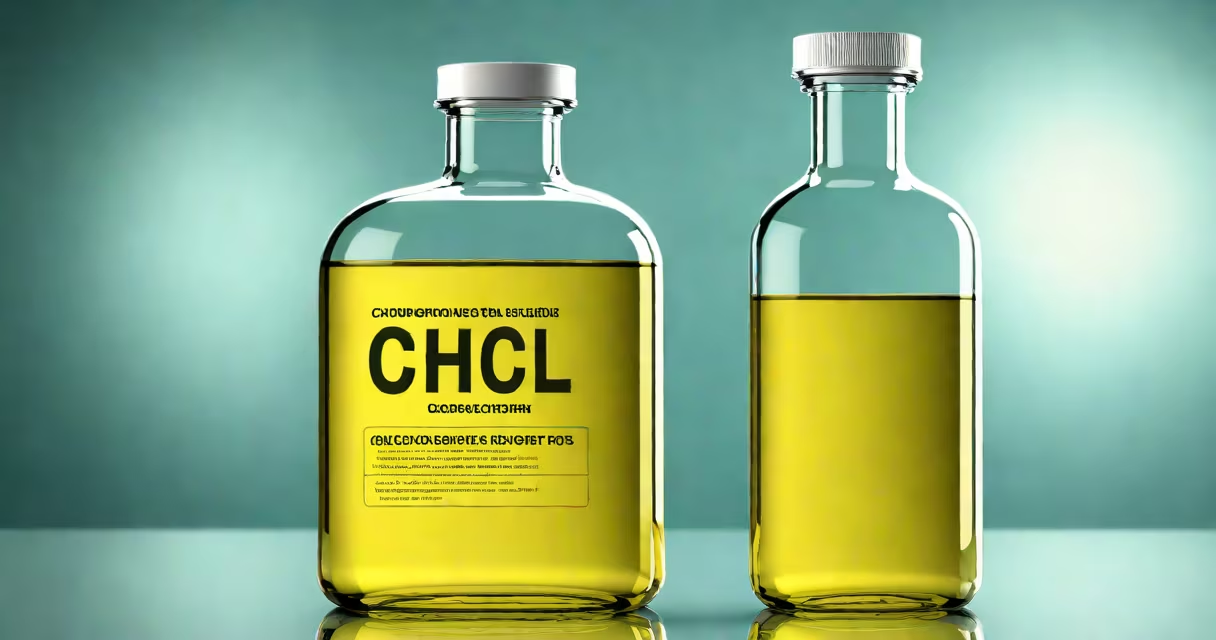
Chloroform is a colorless, volatile liquid with the chemical formula CHCl₃. It was widely used as a surgical anesthetic in the 19th century but is now restricted due to serious health risks. Its use persists in industrial chemistry and laboratory settings.
Chloroform forms when methane reacts with chlorine under UV light, a process called halogenation. The molecule consists of one carbon atom bonded to one hydrogen and three chlorine atoms. This structure makes it highly stable and dense-1.49 g/mL at room temperature. It evaporates quickly, producing a sweet, ether-like odor detectable at concentrations as low as 10 parts per million.
Despite its historical role in medicine, chloroform is no longer approved for human anesthesia in the United States. The FDA banned its use in medical procedures in 1977 after reports linked it to cardiac arrhythmias and liver damage. Today, it is primarily used in laboratories for extracting organic compounds and as a solvent in synthesis reactions.
Chloroform acts as a central nervous system depressant. When inhaled, it diffuses through the blood-brain barrier and enhances GABAergic neurotransmission. This increases chloride ion influx into neurons, leading to hyperpolarization and reduced neural firing. The result is sedation, unconsciousness, and loss of pain perception.
Its mechanism is similar to other anesthetics like ether and propofol, but chloroform's potency is higher. A concentration of 6% in air induces anesthesia in humans within minutes. However, this same property makes it dangerous-overexposure causes rapid respiratory depression and can lead to death within seconds.
In industrial processes, chloroform serves as a solvent for fats, resins, and waxes. It is also used in the production of refrigerants and pesticides. Because it dissolves many organic substances, it is effective in separating compounds during extraction steps in analytical chemistry.
Chloroform exists in pure form or as a mixture with stabilizers. Pure chloroform degrades in light and air, forming phosgene-a toxic gas. To prevent this, manufacturers add 1% ethanol or amylene as stabilizers. These additives inhibit oxidation and reduce the risk of phosgene formation.
| Type | Purity Level | Common Use | Stabilizer |
|---|---|---|---|
| Reagent grade | ≥99.5% | Laboratory synthesis | None (stored in dark) |
| Technical grade | 90-95% | Industrial extraction | 1% ethanol |
| Pharmaceutical-grade | Not available | Not approved for medical use | None |
Reagent-grade chloroform is stored in amber glass bottles to limit photodegradation. Technical-grade is often sold in plastic containers due to cost and durability. The presence of stabilizers is critical-without them, even small amounts of light can generate lethal phosgene.
Chloroform is still used in controlled environments. In forensic science, it aids in extracting drugs from biological samples. In environmental testing, it helps isolate polycyclic aromatic hydrocarbons from soil samples. The EPA lists it as a method-specific solvent in Method 8270 for volatile organic compound analysis.
One example: a 2021 study published in *Environmental Science & Technology* used chloroform to extract PCBs from sediment collected near a former industrial site. The researchers achieved a recovery rate of 92% using a Soxhlet extractor with chloroform as the solvent. The high boiling point (61°C) allows efficient separation without decomposing heat-sensitive compounds.
Another application is in the synthesis of fluorinated intermediates. Chloroform reacts with sodium fluoride to produce difluoromethane, a precursor for PFCs used in semiconductor manufacturing. This reaction occurs at 150°C and requires strict temperature control to avoid side products.
Chloroform is often confused with chlorinated solvents like trichloroethylene (TCE) or carbon tetrachloride. While all are halogenated hydrocarbons, they differ in toxicity profiles. Carbon tetrachloride causes severe liver necrosis; chloroform primarily affects the heart and kidneys. TCE is more volatile and poses greater inhalation risk.
A common error is assuming chloroform is safe in trace amounts. The International Agency for Research on Cancer (IARC) classifies chloroform as Group 2B-possibly carcinogenic to humans. Animal studies show increased liver tumors in mice exposed to 100 ppm over 100 days. The U.S. Environmental Protection Agency sets a maximum contaminant level of 0.001 mg/L in drinking water.
During my time working in a university lab, I witnessed a minor spill of chloroform on a bench. Despite the small volume (about 5 mL), the fumes caused dizziness and nausea in two students within five minutes. We evacuated the room and used a fume hood to vent the vapors. This incident reinforced that even brief exposure demands caution.
Chloroform is listed under the U.S. Toxic Substances Control Act (TSCA) and is subject to reporting requirements. The Occupational Safety and Health Administration (OSHA) limits workplace exposure to 20 parts per million (ppm) averaged over an 8-hour shift. The National Institute for Occupational Safety and Health (NIOSH) recommends a lower ceiling of 10 ppm.
When handling chloroform, users must wear nitrile gloves, safety goggles, and a respirator with organic vapor cartridges. Work should occur in a certified fume hood. Spills require immediate containment using absorbent pads and disposal in designated hazardous waste containers.
Despite its dangers, chloroform remains useful in niche applications. Its ability to dissolve both polar and nonpolar compounds makes it ideal for specific extractions. However, alternatives like dichloromethane or ethyl acetate are preferred in most modern protocols due to lower toxicity and better environmental profiles.
Chloroform what is it? It is a synthetic chemical with a complex legacy-once a miracle anesthetic, now a regulated substance with precise industrial roles. Its continued use hinges on strict controls and awareness of its risks.