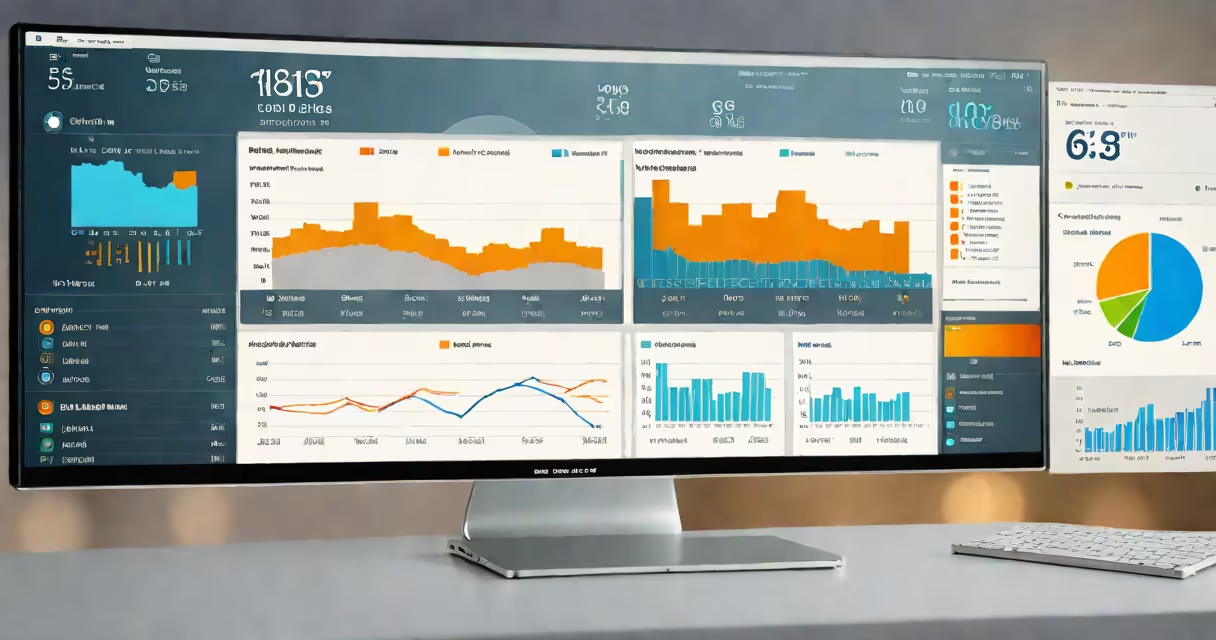
Cloud based business intelligence software is a web-hosted platform that collects, processes, and visualizes organizational data to support strategic decision-making. It runs on remote servers accessible via internet browsers or mobile apps, eliminating the need for local hardware or complex installations.
These systems ingest data from multiple sources-sales records, customer behavior, supply chain logs, financial statements-and change them into interactive reports, dashboards, and predictive models. Users can filter views by region, time period, product line, or department with a few clicks. The entire stack operates remotely, meaning teams access consistent, up-to-date information regardless of location.
Unlike legacy on-premise BI tools that require dedicated IT staff and periodic upgrades, cloud based business intelligence software scales automatically. A small startup can start with a free tier and grow into enterprise-grade features without replacing infrastructure. Major providers include Microsoft Power BI, Tableau Cloud, and Looker (Google Cloud).
Data flows into the system through APIs, database connectors, or file uploads. Once ingested, the software applies transformation rules-cleaning duplicates, standardizing formats, filling missing values-to ensure consistency. Then it aggregates data by dimensions such as date, geography, or user segment.
After processing, users interact with visualizations like bar charts, heat maps, or drill-down tables. These visuals update dynamically when new data arrives. For example, a retail manager can view daily sales performance across stores and instantly compare regions. Alerts trigger when thresholds are breached-like a drop in conversion rate below 2%-enabling rapid response.
Advanced versions include machine learning features. A marketing team might use predictive modeling to estimate campaign ROI before launch. The model analyzes past campaigns, adjusts for seasonality, and simulates outcomes under different budget allocations. This reduces trial-and-error spending.
Cloud based business intelligence software varies by deployment model, integration depth, and analytical capabilities. The following table outlines common categories:
| Type | Best For | Example Tools | Key Limitation |
|---|---|---|---|
| Self-Service BI | Non-technical users building basic reports | Power BI, Google Data Studio | Limited advanced analytics |
| Enterprise BI | Large organizations with complex data needs | Tableau Cloud, Qlik Sense | Higher cost, steeper learning curve |
| Embedded Analytics | Software vendors integrating insights into their products | Looker, Mode Analytics | Requires developer involvement |
Each type supports role-based access control. Sales reps see only their territory's numbers; finance leads view P&L summaries. Data encryption occurs both in transit and at rest, meeting compliance standards like GDPR and HIPAA.
A key advantage is automatic scaling. When a company expands from 50 to 5,000 employees, the platform handles increased data volume and concurrent users without downtime. Providers manage server maintenance, backups, and security patches behind the scenes.
Many assume cloud based business intelligence software requires extensive coding. While some tools offer SQL-like query editors, most provide drag-and-drop interfaces. You can build a sales funnel visualization using only mouse clicks and dropdown menus.
Another myth is that it replaces human judgment. The software doesn't make decisions-it surfaces patterns. A sudden spike in returns from a specific region may prompt investigation, but only a manager can determine whether it stems from shipping errors or seasonal demand.
Some believe all cloud BI tools are interchangeable. They're not. Power BI integrates tightly with Microsoft 365 and Azure services. Tableau excels in geospatial analysis and high-fidelity visual design. Choose based on your existing tech stack and workflow priorities.
In 2022, a mid-sized e-commerce retailer used cloud based business intelligence software to reduce cart abandonment by 18%. They connected Shopify transaction logs, Google Analytics traffic data, and email campaign results into a single dashboard.
The team discovered that users who viewed product videos were 3.2 times more likely to complete purchases. They also noticed a 40% increase in drop-offs during checkout on mobile devices. After optimizing the mobile layout and adding video previews, conversion rates improved within four weeks.
This outcome wasn't due to guesswork. The software quantified the impact of each change. Before the fix, 67% of mobile sessions ended at step 2 of checkout. After optimization, that dropped to 39%-a measurable improvement tracked in real time.
Businesses that adopt cloud based business intelligence software gain faster insight cycles. Where decisions once took days of spreadsheet compilation, they now happen in minutes. Real-time visibility allows teams to react quickly to market shifts, customer feedback, or operational bottlenecks.
According to Gartner, organizations using cloud BI report 30% faster time-to-insight compared to those relying on legacy systems. The same study notes that 72% of enterprises using cloud analytics saw improved cross-departmental collaboration due to shared data access.
I've seen this firsthand while consulting for a logistics firm. Their warehouse managers previously relied on weekly Excel reports. By switching to a cloud based business intelligence software solution, they reduced inventory discrepancies by 22% in six months. Daily alerts flagged stockouts before they impacted delivery schedules.
Cloud based business intelligence software is not a luxury-it's a necessity for data-driven operations. It enables transparency, reduces manual effort, and supports proactive planning. As data volumes grow, so does the value of centralized, always-on analytics.