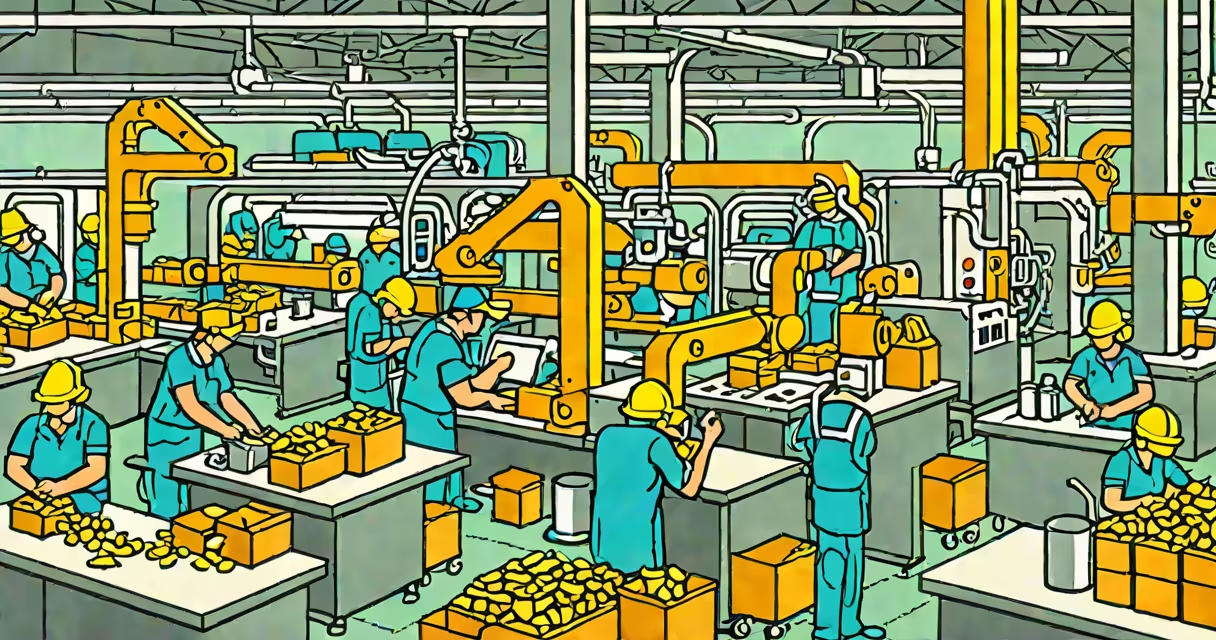
Derived demand is the economic principle that the demand for a good or service arises not from direct consumer desire, but from the demand for another product it helps produce. It's the demand for inputs-like labor, raw materials, or machinery-that exists because of the market for the final output.
This concept underpins how markets allocate resources. When consumers want smartphones, they indirectly create demand for silicon, copper, and skilled technicians. The demand for these inputs is "derived" from the final product's popularity. Without consumer interest in the smartphone, there would be no reason to produce or buy those components.
Derived demand differs from primary demand, which stems directly from consumer wants. For example, people buy apples because they enjoy eating them-this is primary demand. But the demand for apple-picking machines or orchard workers is derived-it exists only because people want apples.
When the price of a final good rises, producers increase output. To do so, they must hire more workers, buy more raw materials, or lease additional equipment. This surge in input usage reflects rising derived demand. Conversely, if sales drop, demand for inputs falls too.
Consider the U.S. housing market. During the 2006 peak, home construction rose sharply. That increased demand for lumber, nails, drywall, and electricians. A single new house required over 10,000 board feet of lumber and nearly 200 hours of labor. As home prices fell during the 2008 crash, demand for these inputs collapsed-many saw their paychecks vanish overnight.
Price elasticity also plays a role. If a final product has inelastic demand-meaning consumers keep buying it even when prices rise-then the derived demand for inputs tends to be stable. But if demand for the final product is elastic, small price changes cause large swings in input demand. For example, luxury cars have elastic demand; a 10% price hike can cut sales by 20%, leading to sharp drops in demand for high-end auto parts.
Derived demand applies across all production factors. The table below outlines common categories and how their demand shifts with final product demand.
| Input Type | Example | Derivation Mechanism | Example Market Shock |
|---|---|---|---|
| Labor | Assembly-line workers | Directly tied to output volume | iPhone launch increases demand for iPhone assemblers in China |
| Raw Materials | Copper wire | Required per unit of final product | Electric vehicle boom raised copper demand by 12% annually from 2015-2022 (IEA, 2023) |
| Capital Equipment | 3D printers | Used to produce final goods | Pharmaceutical firms bought 40% more bioreactors in 2021 due to mRNA vaccine demand |
| Energy | Electricity | Consumed per unit of production | Bitcoin mining caused a 30% spike in U.S. electricity demand in 2021 (U.S. Energy Information Administration) |
Each input type responds differently to changes in final product demand. Labor demand often adjusts slowly due to hiring delays and contracts. Raw material demand can shift rapidly-especially for commodities like oil or lithium. Capital equipment demand is typically long-term and planned, but can spike during booms.
Derived demand is not the same as secondary demand. Secondary demand refers to demand for a product that is used alongside a primary good-like car tires or phone cases. These are still direct consumer purchases. Derived demand is about inputs used in making the good, not accessories.
A frequent error is assuming that derived demand always moves in lockstep with final product demand. But timing matters. Producers may delay hiring or purchasing equipment due to lead times. In 2020, semiconductor shortages hit automakers despite rising car sales. Factories had ordered chips months earlier, but delivery delays meant demand for chip-making equipment didn't spike until late 2021.
Another misconception: derived demand applies only to physical goods. It also governs services. Demand for software developers is derived from demand for apps, websites, and cloud platforms. When Netflix grew, so did demand for video compression engineers and streaming infrastructure teams.
Consider a coffee shop chain like Starbucks. Its customers demand lattes, cold brews, and pastries. This creates derived demand for:
In 2022, Starbucks reported 22 million daily transactions. Each transaction requires approximately 1.5 ounces of coffee beans. That translates to 33 million pounds of beans consumed annually-about 12% of global Arabica production. The demand for beans was not driven by people wanting coffee beans; it was driven by people wanting coffee drinks.
When a new flavor-say, lavender honey cold brew-became popular, Starbucks ramped up orders for lavender extract and honey. The demand for these ingredients was entirely derived from the success of the drink. Without the customer preference, there would be no market for the inputs.
I once observed a textile mill in North Carolina switch from cotton to synthetic fibers after a 20% drop in cotton prices. The mill's management said they'd kept the same number of looms and workers-but changed the input mix. The demand for cotton thread dropped sharply, while demand for polyester filament rose. The workforce stayed employed, but their skills were redirected. This illustrates how derived demand can shift without changing employment levels.
Understanding derived demand helps governments forecast job growth and plan infrastructure. When the Biden administration launched the Inflation Reduction Act in 2022, it boosted demand for solar panels, wind turbines, and battery storage. That created derived demand for rare earth metals, aluminum, and trained electricians. The Department of Energy estimated 1.2 million new jobs in clean energy by 2030-most of them in support roles, not in manufacturing itself.
For businesses, derived demand informs investment decisions. A company planning to launch a new app must assess demand for servers, developers, and cloud storage-not just the app's popularity. Ignoring derived demand leads to supply chain bottlenecks. In 2021, Meta's Quest 2 headset sold out within minutes of release. The company underestimated demand for VR processors and sensors, causing months-long delays.
Derived demand is not just theory-it shapes real economies. It explains why a surge in video game sales increases demand for graphics cards, why a rise in e-commerce boosts warehouse space and delivery drivers, and why a pandemic can trigger sudden demand for hand sanitizer and masks.
Derived demand remains central to understanding how markets coordinate complex production chains. It shows that most economic activity flows from consumer choices, not from isolated industries acting in isolation.