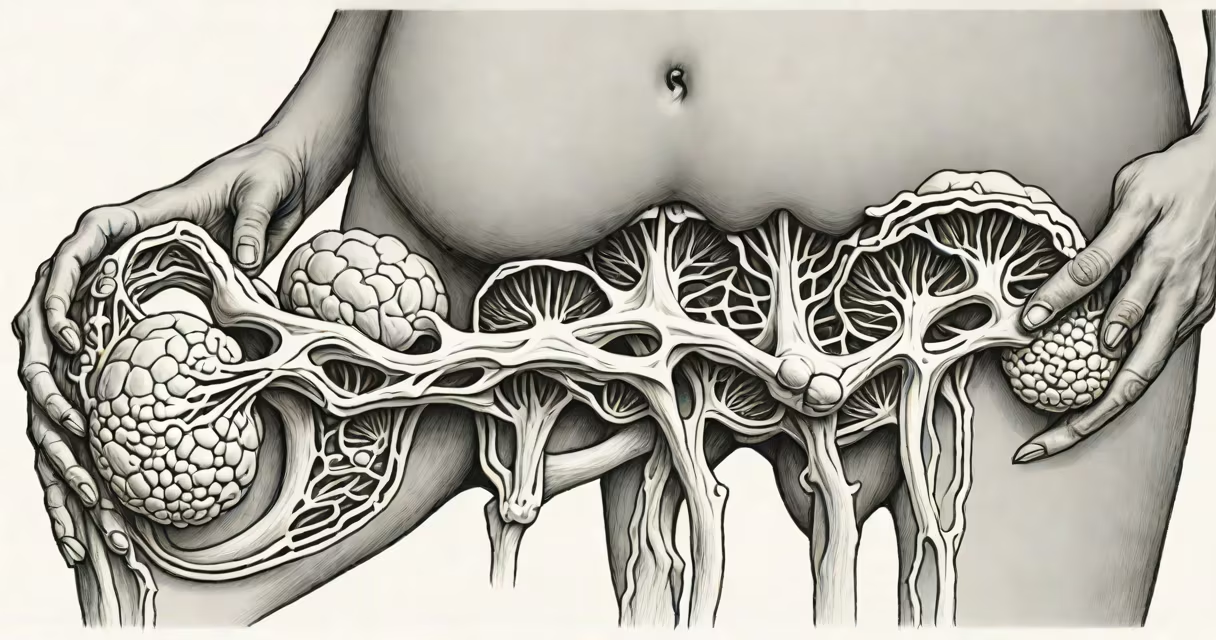
Yes, fibroids can cause menstrual cramps. These noncancerous growths in the uterus often lead to painful periods, especially when located near the uterine lining or growing large enough to distort the uterine cavity.
Fibroids develop from muscle cells in the uterine wall. They grow slowly and may remain undetected for years. When they press on surrounding tissues or affect blood flow during menstruation, they trigger cramping. The pain typically begins before or during the period and can last longer than typical menstrual discomfort.
According to the American College of Obstetricians and Gynecologists (ACOG), about 70% of women have fibroids by age 50, but only 20-30% experience noticeable symptoms. Among those who do, heavy bleeding and cramping are the most common complaints. Fibroids are not cancerous and rarely turn malignant, but their impact on quality of life varies widely.
Fibroids cause cramps through several physical mechanisms. Submucosal fibroids-those that grow into the uterine cavity-disrupt normal contractions. During menstruation, the uterus contracts to expel the endometrial lining. When fibroids interfere with this process, contractions become stronger and more irregular, leading to intense pain.
Large intramural fibroids-those embedded within the uterine wall-can compress blood vessels, reducing oxygen supply to uterine tissue. This ischemia triggers nerve signals interpreted by the brain as cramping. Studies show that women with symptomatic fibroids report higher levels of prostaglandins, hormones linked to inflammation and uterine contractions.
A 2021 study published in Obstetrics & Gynecology found that women with submucosal fibroids were 3.4 times more likely to report moderate to severe menstrual pain compared to those without fibroids. The study measured pain using a standardized scale and confirmed that fibroid location correlates strongly with symptom severity.
Fibroids are classified by location. Not all types cause cramps. The table below outlines the main types and their association with menstrual pain.
| Type | Location | Link to Cramps |
|---|---|---|
| Submucosal | Inside the uterine cavity | High risk. Disrupts normal contractions and increases prostaglandin release. |
| Intramural | Within the uterine wall | Moderate risk. Can compress blood vessels and alter contraction patterns. |
| Subserosal | On the outer surface of the uterus | Low risk. Rarely causes cramps unless very large or twisting. |
| Pedunculated | Attached by a stalk, either inside or outside the uterus | Variable. Pain occurs only if the stalk twists or grows large. |
Submucosal fibroids are the most likely to cause cramps and heavy bleeding. A 2019 review in Journal of Minimally Invasive Gynecology reported that 68% of women undergoing hysteroscopic myomectomy (removal of fibroids via the uterine canal) cited severe cramps as their primary reason for surgery.
Menstrual cramps are common. But fibroid-related pain tends to be more intense, longer lasting, and unresponsive to standard over-the-counter treatments. Typical menstrual cramps last 1-3 days and improve with ibuprofen or heat. Fibroid cramps often persist beyond the period and worsen over time.
Other conditions that mimic fibroid cramps include endometriosis, adenomyosis, pelvic inflammatory disease (PID), and ovarian cysts. Endometriosis, for example, causes pain that often starts before the period and continues afterward. Adenomyosis-where endometrial tissue grows into the uterine muscle-also leads to prolonged cramping and heavy flow.
A key distinction: fibroids grow slowly and may be asymptomatic for years. Sudden onset of severe cramps, especially in a woman over 35, should prompt imaging. Transvaginal ultrasound is the first-line test. It detects fibroids with 95% accuracy, according to ACOG guidelines.
Sarah, a 38-year-old teacher, began experiencing worsening cramps over six months. Her periods lasted seven days and required changing pads every hour. She tried ibuprofen and heating pads, but pain persisted. After a routine pelvic exam revealed a firm mass, an ultrasound confirmed a 5.2 cm submucosal fibroid.
She underwent hysteroscopic resection. Within two weeks, her cramps resolved. Her follow-up showed no recurrence after 18 months. Sarah's case illustrates how fibroids can escalate from mild discomfort to debilitating pain if left untreated.
Many assume fibroid-related pain always comes with heavy bleeding. That's incorrect. Some women report severe cramps with normal menstrual flow. A 2020 study in Reproductive Sciences found that 23% of women with symptomatic fibroids had normal blood loss but still experienced significant pain.
This challenges the assumption that heavy bleeding is required for fibroid diagnosis. Pain alone can justify evaluation. The National Institutes of Health (NIH) notes that pain is a valid symptom warranting medical attention, even without menorrhagia.
If cramps disrupt daily activities, last longer than three days, or don't respond to over-the-counter medication, consult a gynecologist. Persistent pain may indicate fibroids or another condition requiring imaging.
Treatment options depend on fibroid size, location, and symptom severity. For small, asymptomatic fibroids, watchful waiting is appropriate. For symptomatic cases, options include hormonal therapy, minimally invasive procedures like uterine artery embolization, or surgical removal.