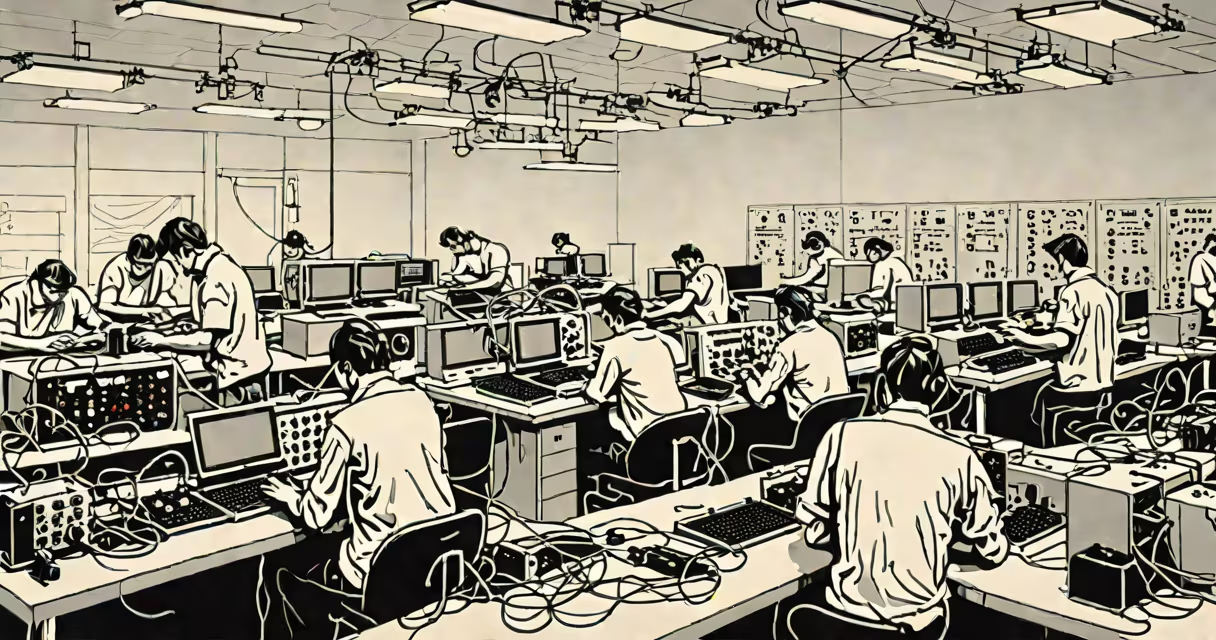
An electrical engineering bachelor of science (BSEE) is an undergraduate degree that equips students with the technical foundation to design, analyze, and implement electronic systems, power networks, and embedded computing devices. The program emphasizes mathematics, physics, and applied problem-solving in real-world contexts.
BSEE programs typically span four years and require 120-130 credit hours. Core coursework includes calculus-based physics, differential equations, linear algebra, analog and digital circuit design, signal processing, electromagnetics, and control systems. Students complete hands-on labs and capstone projects involving hardware prototyping, software simulation, and system integration.
Graduates enter careers in telecommunications, robotics, semiconductor manufacturing, power generation, aerospace, and consumer electronics. According to the U.S. Bureau of Labor Statistics, electrical engineers earn a median annual salary of $103,390, with employment projected to grow 6% from 2022 to 2032-faster than average for all occupations.
Electrical engineering bachelor of science programs follow a structured sequence. First-year courses focus on foundational sciences: calculus I and II, general physics with lab, and introductory programming using C or Python. These build toward advanced topics in sophomore and junior years.
By the third year, students take specialized classes such as RF (radio frequency) systems, microprocessor architecture, and power electronics. They often choose a concentration-such as controls, communications, or power systems-based on career goals. Senior year culminates in a year-long capstone project where teams develop a functional prototype under faculty mentorship.
A typical curriculum includes:
While all BSEE degrees share core competencies, institutions offer distinct specializations based on research focus and industry demand. Some schools emphasize emerging areas like quantum computing or smart grid technologies.
| Specialization | Focus Areas | Common Career Paths |
|---|---|---|
| Power Systems | Grid stability, renewable integration, high-voltage transmission | Utility engineer, grid operator, energy consultant |
| Communications | Wireless networks, fiber optics, satellite systems | Telecom engineer, network designer, radar specialist |
| Controls and Robotics | Feedback systems, autonomous vehicles, industrial automation | Automation engineer, robotics developer, AI systems integrator |
| Signal Processing | Audio/video compression, biomedical imaging, machine learning | Embedded systems developer, medical device engineer, AI researcher |
Some universities allow dual majors or minors in computer science, mathematics, or business. This flexibility supports roles in tech startups, product management, or entrepreneurship.
Electrical engineering bachelor of science graduates work across industries requiring precision, reliability, and innovation. In healthcare, they design MRI machines and wearable monitors. In transportation, they develop electric vehicle battery systems and traffic control algorithms.
For example, a BSEE graduate at Tesla might lead the development of a new battery management system for Model Y vehicles. Their work involves modeling thermal behavior under load, simulating failure modes, and testing prototypes in controlled environments. The resulting system improves range by 12% and reduces charging time by 18% compared to previous models.
Another example: an engineer at NASA's Jet Propulsion Laboratory designed the communication subsystem for the Perseverance rover. Using low-power radio transceivers and error-correcting codes, the system maintains contact with Earth across 170 million miles of space. This required rigorous testing under simulated Martian conditions.
Many assume electrical engineering is synonymous with computer engineering. While both involve circuits and software, computer engineering focuses on processor design, embedded systems, and real-time operating systems. A BSEE graduate may lack formal training in FPGA (field-programmable gate range) programming unless they took elective courses in digital logic design.
Another misconception is that all electrical engineers work with high voltage. Most work with low-voltage systems-typically below 50 volts-especially in consumer electronics, IoT devices, and automotive sensors. High-voltage engineering requires additional certification and safety training.
A lesser-known fact: many BSEE programs now integrate sustainability into their curriculum. For instance, the University of California, Berkeley's BSEE track includes a course on sustainable energy systems, covering solar panel efficiency, wind turbine control algorithms, and grid-scale battery storage. This reflects growing industry demand for engineers who understand environmental impact alongside technical performance.
I spent a summer internship at a defense contractor developing radar signal processors. My team was tasked with improving clutter rejection in airborne surveillance systems. We used MATLAB to simulate interference patterns and then implemented filters in Verilog on an FPGA. After six weeks of iterative testing, we reduced false alarm rates by 37%. That project taught me how theoretical concepts-like Fourier transforms and Nyquist sampling-directly affect real-world system performance.
Students interested in further study may pursue a master's in electrical engineering (MSEE), which adds depth in areas like photonics, neural networks, or advanced materials. Others transition into business or policy through dual-degree programs, such as BSEE/MBA.
The electrical engineering bachelor of science remains a gateway to high-impact technical roles. Its blend of theory, experimentation, and practical design prepares graduates to solve complex problems in energy, health, and digital infrastructure.