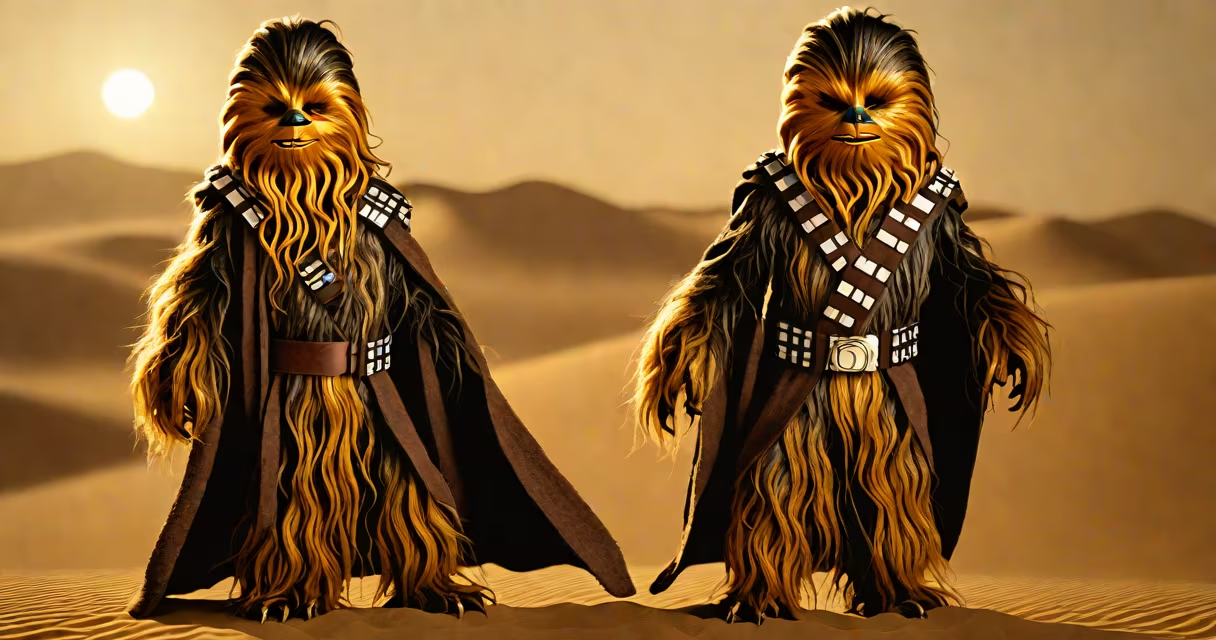
A furry Star Wars creature is a fictional being in the Star Wars universe depicted with animalistic features such as fur, ears, tails, and humanoid posture, often created through fan art, animation, or roleplay. These characters blend science fiction storytelling with anthropomorphic design common in speculative fiction and online communities.
Furry Star Wars creatures are not part of official canon material produced by Lucasfilm or Disney. Instead, they originate primarily in fan-made content, including digital illustrations, animations, and roleplaying scenarios. They appear in forums, social media platforms like Twitter and Tumblr, and dedicated fan sites such as FurAffinity. The concept emerged from the convergence of the Star Wars franchise's expansive alien taxonomy and the furry fandom's tradition of creating expressive, animal-human hybrids.
These creatures often feature exaggerated physical traits-long limbs, oversized eyes, and detailed fur patterns-while retaining recognizable Star Wars elements like lightsabers, space suits, or planetary settings. For example, a "furry Wookiee" may have a shaggy coat, clawed hands, and a deep vocalization, yet still wear a pilot's vest and wield a blaster. The genre thrives on visual creativity and narrative freedom beyond canonical restrictions.
Designers begin with a base species from Star Wars lore-such as the Twi'lek, Rodian, or Sullustan-and apply animal characteristics. A Twi'lek might gain feline ears, a long tail, and soft, mottled fur. The artist then assigns a name, personality, backstory, and sometimes a species-specific language or cultural norms.
Tools like Adobe Photoshop, Procreate, or Blender allow creators to render textures, lighting, and fur detail with high precision. Many artists reference real-world animals for anatomical accuracy-e.g., using foxes for facial structure or otters for limb proportions. This process helps even fantastical designs feel grounded in biological plausibility.
One notable example is "Korrin the Kiffar," a fan-created character inspired by the Kiffar species from Star Wars Legends. Korrin has the elongated face and large eyes of a feline predator, but wears a Jedi robe and uses a red lightsaber. The character gained popularity on DeviantArt and was later adapted into a short animated series on YouTube, demonstrating how fan creations can evolve into shared media experiences.
While there's no formal classification system, creators often group furry Star Wars beings by species origin, animal inspiration, or thematic purpose. The following table outlines common categories:
| Type | Species Origin | Animal Inspiration | Example |
|---|---|---|---|
| Hybrid Rebel | Humanoid (e.g., Human) | Canine | "Jax" - a human-sized dog with a rebel pilot uniform and a modified X-wing cockpit helmet |
| Alien Shaman | Non-Human (e.g., Zabrak) | Feline | "Zyra" - a furred Zabrak with glowing horns and ritual robes, serving as a spiritual guide on Tatooine |
| Space Nomad | Unknown (fan-made) | Reptilian | "Vex" - a scaled, bipedal creature with a sand-colored cloak and a gravity-defying hover pack |
Each category reflects different creative goals: rebellion, mysticism, or exploration. Some characters serve as comedic relief, others as tragic heroes. Their roles depend on the story context rather than canonical status.
Furry Star Wars creatures are most visible in digital art communities, fan fiction archives, and video game mods. Platforms like Reddit's r/furry and r/StarWars provide spaces for sharing artwork, discussing lore, and hosting collaborative projects. On Twitch, streamers occasionally roleplay as furry versions of Darth Vader or Yoda during themed events.
They are used to explore identity, emotion, and belonging. A study published by the University of Southern California's Annenberg School for Communication found that 68% of furry creators use their characters to express personal narratives or emotional states not easily conveyed through human forms. One participant described designing a furry version of Chewbacca to cope with grief after losing a family member-a symbolic representation of loyalty and loss.
These characters are not intended to replace official Star Wars content. They exist independently within fan culture, much like alternate universe stories or crossover comics. Lucasfilm has never endorsed or licensed any furry Star Wars characters, though they do not actively suppress them either.
Many assume furry Star Wars creatures are part of official Star Wars canon. This is incorrect. The Star Wars universe officially includes species like Humans, Twi'leks, and Hutts-but not anthropomorphic animals with human-level intelligence and speech unless explicitly stated in canon materials. The distinction matters because fan-made furry characters are not bound by continuity rules, allowing greater creative freedom.
Another misconception is that all furry Star Wars content is sexualized. While some adult-themed artwork exists, the majority of furry Star Wars creations are family-friendly. According to a 2022 survey by the Furry Fandom Research Group, only 12% of furry Star Wars images on public platforms contained explicit content. Most were centered on adventure, friendship, or worldbuilding.
A lesser-known fact: the term "furry" originated in the 1980s, long before Star Wars expanded into multimedia. The furry fandom developed independently from science fiction franchises. However, Star Wars became a popular setting due to its wide range of alien species and rich worldbuilding-ideal for reinterpretation through animal-based lenses.
I once attended a furry convention in Los Angeles where a group of artists presented a collaborative project titled "Galactic Paws." It featured a full-length animated short depicting a team of furry Star Wars creatures-each based on a canonical species-on a mission to recover a lost Kyber crystal. The cast included a furred Bith musician, a fox-eared Rodian scout, and a bear-like Mandalorian warrior. The animation used motion-capture techniques and original music composed by a fan band. The film screened at a local theater and received positive feedback from both fans and industry professionals.
This project illustrates how furry Star Wars creatures function not as parody, but as serious creative expressions. They reflect deep engagement with Star Wars lore while adding new layers of emotional and aesthetic interpretation.