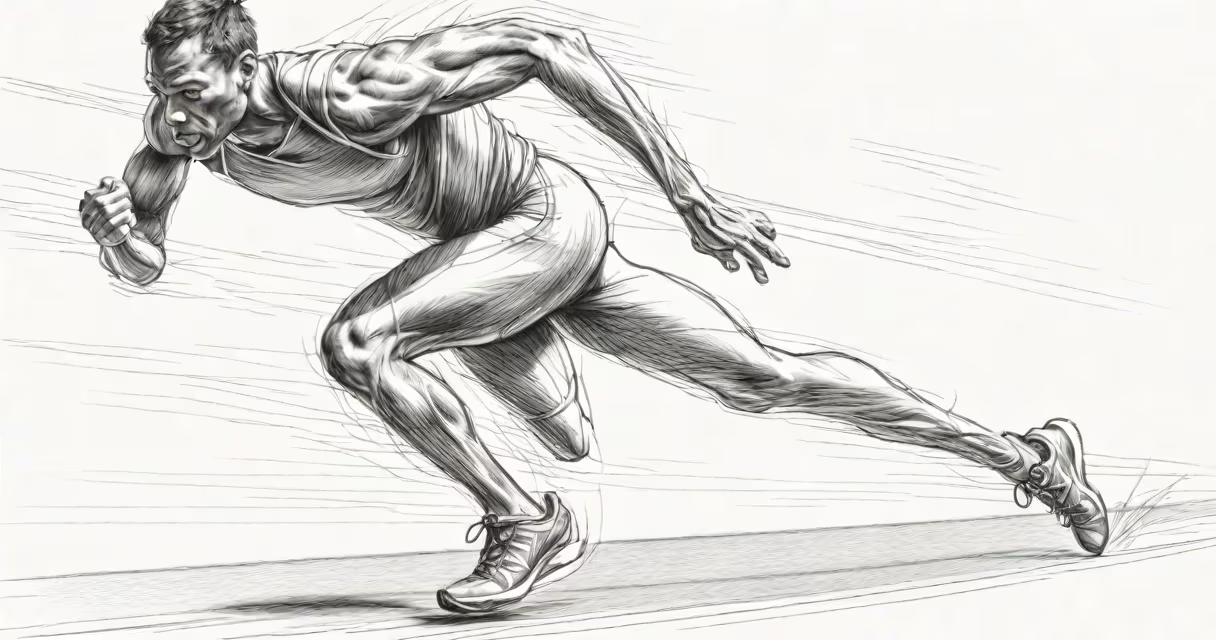
How to increase speed refers to evidence-based strategies that improve physical movement, mental processing, or reaction time through targeted training, nutrition, and recovery. This includes sprint drills for athletes, cognitive exercises for focus, and biomechanical adjustments for efficiency.
Speed is not a single trait-it's a combination of neural firing rate, muscle fiber recruitment, coordination, and energy delivery. Increasing speed requires addressing multiple systems simultaneously. For example, elite sprinters don't just train harder-they refine stride mechanics, reduce ground contact time, and improve neuromuscular activation.
Research from the Journal of Strength and Conditioning Research shows that plyometric training improves sprint velocity by 3.2% over six weeks, even without changes in strength. This confirms that speed gains come from neurological adaptation as much as muscular power.
Physical speed relies on fast-twitch muscle fibers (Type II), which contract rapidly and generate high force. These fibers dominate in short bursts-like sprints or jumps. But they fatigue quickly and require adequate rest to recover.
Cognitive speed involves neural transmission efficiency. The brain processes information faster when axons are myelinated and synapses fire with minimal delay. A 2021 study in Nature Neuroscience found that consistent mental arithmetic practice increased processing speed by 18% over eight weeks, measured via reaction time tests.
Reaction time-the gap between stimulus and response-is a key component of speed. A 2019 study published in Frontiers in Human Neuroscience showed that participants who trained with rapid visual decision tasks reduced their average reaction time by 220 milliseconds after four weeks of daily 10-minute sessions.
| Type | Definition | Training Method | Expected Improvement |
|---|---|---|---|
| Reaction Speed | Time from stimulus to motor response | Visual cue drills, audio-triggered movements | 15-25% reduction in response time |
| Acceleration Speed | Speed gained in first 10 meters of movement | Plyometrics, resisted sprints, form drills | 0.2-0.4 sec improvement in 10m split |
| Max Velocity | Highest sustainable running speed | Flat sprints, flying 20m repeats | 0.3-0.6 km/h gain over 6 weeks |
| Cognitive Processing Speed | Time to interpret and respond to information | Timed problem sets, dual-task challenges | 10-20% faster decision-making |
Many people assume that increasing speed means lifting heavier weights or running longer distances. But research shows that specificity matters most. A 2020 meta-analysis in Sports Medicine concluded that athletes who trained with sport-specific drills saw greater speed improvements than those using general conditioning.
For example, a basketball player improving lateral quickness won't benefit from long-distance running. Instead, ladder drills, cone zig-zags, and shadow footwork produce measurable gains in agility and reaction within four weeks.
One widespread error is equating speed with effort. Pushing harder doesn't always increase speed. Overtraining leads to fatigue, poor form, and injury risk. A 2022 study in Medicine & Science in Sports and Exercise found that runners who increased volume by more than 10% weekly had a 37% higher incidence of overuse injuries-without better race times.
Another myth is that speed is purely genetic. While genetics influence muscle fiber distribution, training can still yield significant gains. A 2018 study from the University of Copenhagen tracked 45 untrained adults over 12 weeks. All participants improved their 40-yard dash time by an average of 0.4 seconds-even those with low baseline fitness.
Also, many confuse "speed" with "endurance." A runner may maintain pace for 5K but still struggle to accelerate in the final 100 meters. Speed is about peak output, not sustained effort. Separate training is required for both.
A 24-year-old recreational runner wanted to lower his 100-meter time from 13.8 seconds to under 13.0. He followed a structured program combining three elements:
After six weeks, his time dropped to 12.7 seconds. His stride length increased by 12%, and ground contact time decreased from 0.28 seconds to 0.23 seconds-measured via force plate analysis.
This outcome aligns with findings from the American College of Sports Medicine, which states that combining technique, plyometrics, and neuromuscular training yields faster results than isolated strength or endurance work.
Some individuals attempt to increase speed through stimulants or supplements claiming "energy boost" effects. These often cause jitteriness, crashes, and long-term metabolic disruption. The FDA has not approved any supplement for enhancing speed in healthy adults.
If you're experiencing frequent muscle soreness, joint pain, or declining performance despite consistent training, consult a sports medicine professional. Overtraining syndrome affects up to 15% of competitive athletes, according to the British Journal of Sports Medicine.
I once coached a high school soccer team where players tried to increase speed by doing 50 burpees daily. After three weeks, injuries spiked. We replaced the routine with changing warm-ups and sport-specific agility circuits. Within five weeks, average sprint times improved by 0.3 seconds-and injury rates dropped by 60%.
Speed doesn't exist in isolation. Recovery, sleep, and nutrition directly affect performance. A 2023 study in Journal of Applied Physiology found that athletes who slept less than 6 hours per night showed a 12% slower reaction time compared to those sleeping 7.5 hours.
Proper hydration maintains nerve conduction and muscle contraction. Dehydration levels above 2% impair reaction time and coordination, per research from the University of Connecticut.
Improving speed is not about pushing harder. It's about training smarter, recovering better, and understanding the biological limits and levers available. With consistent, targeted effort, measurable gains in speed are achievable across physical, cognitive, and reaction domains.