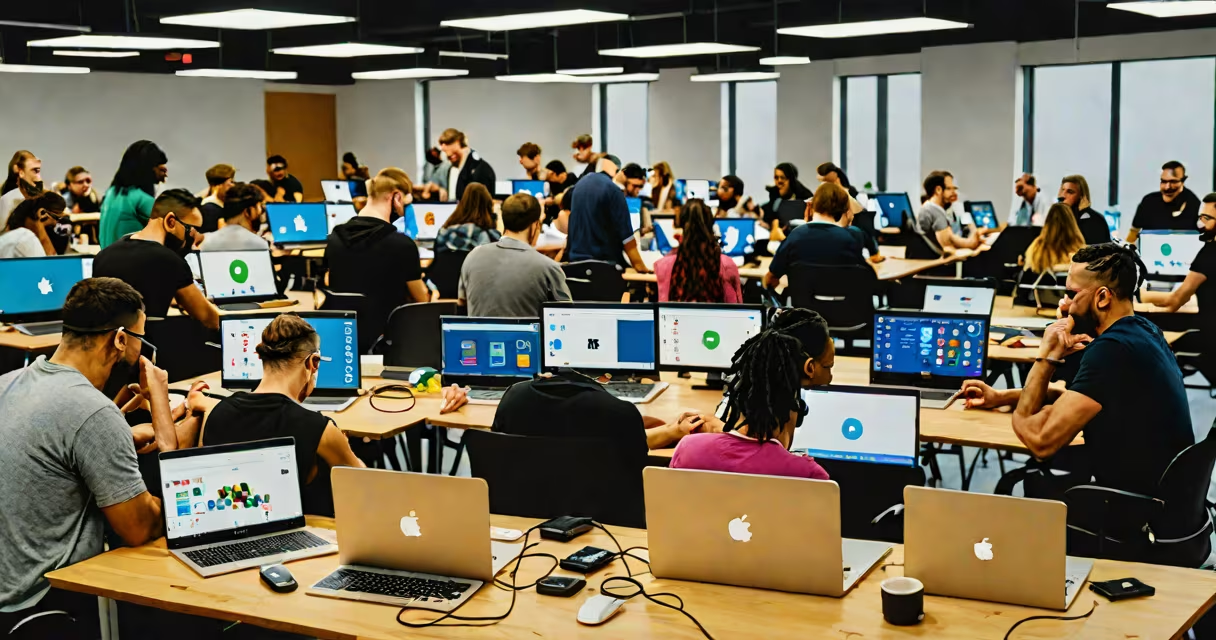
Best free coding bootcamps are structured, project-driven programs that teach software development fundamentals-web development, JavaScript, Python, and full-stack tools-without charging tuition. These programs deliver industry-relevant skills through curated syllabi, mentorship, and portfolio projects, often leading to job placements or freelance opportunities.
Unlike casual tutorials or YouTube videos, best free coding bootcamps follow a defined curriculum with milestones, peer collaboration, and regular assessments. They simulate real-world development environments, preparing learners for technical interviews and entry-level roles. Platforms like freeCodeCamp, Codecademy's free tracks, and The Odin Project offer full pathways from zero to job-ready, validated by completion certificates and GitHub portfolios.
These programs are not self-guided study sessions. They require consistent time investment-typically 10-20 hours per week-and emphasize hands-on practice. A learner who completes a full track gains experience equivalent to 6-12 months of traditional classroom instruction, with tangible outcomes like deployable apps and public code repositories.
Best free coding bootcamps operate on a scaffolded model: foundational concepts are taught in modules, then reinforced through guided exercises and capstone projects. Learners progress from syntax basics to building responsive websites, APIs, and database-backed applications.
Each program includes automated feedback systems, community forums, and optional live mentorship. For example, freeCodeCamp's certification path requires completing 300 hours of coding challenges and building 20 projects-including a weather app, a chat interface, and a personal finance tracker-before earning a certificate recognized by hiring managers.
Participants submit code via GitHub, receive automated test results, and iterate until their code passes. This mirrors actual engineering workflows. One user reported landing a junior developer role at a fintech startup after completing freeCodeCamp's full stack curriculum and contributing to open-source projects during the course.
Not all free coding bootcamps are equal. They differ in focus, duration, and support structure. Below is a comparison of major options:
| Program | Focus Area | Duration (avg) | Support Level | Certification |
|---|---|---|---|---|
| freeCodeCamp | Full-stack web dev, JavaScript, React, Node.js | 6-12 months | Community forums, live events, volunteer mentors | Yes (GitHub-linked) |
| The Odin Project | Frontend & backend, Ruby on Rails, Git, DevOps | 8-15 months | Open-source community, Discord, peer review | Yes (publicly viewable) |
| Codecademy (Free Tracks) | Python, SQL, HTML/CSS, Git | 3-6 months | Interactive labs, basic community | Yes (shareable) |
| MIT OpenCourseWare - Intro to CS | Computer science fundamentals, Python, algorithms | 12 weeks (self-paced) | Course materials only | No (but highly respected) |
Some programs, like MIT's introductory computer science course, lack interactive elements but provide university-level content. Others, such as The Odin Project, integrate real-world deployment tasks-hosting a live site on Netlify or AWS-as part of the workflow.
A key distinction: free doesn't mean low quality. freeCodeCamp's curriculum was reviewed by Google engineers and aligns with the company's internal onboarding standards for new hires. Similarly, The Odin Project's backend track includes lessons on RESTful API design and authentication protocols used in production environments.
Best free coding bootcamps serve people seeking career transitions, those in underserved communities, and individuals in regions with limited access to formal tech education. They're especially effective for learners without financial resources or institutional backing.
According to a 2023 report by the National Bureau of Economic Research, participants in free coding programs were 34% more likely to secure tech jobs within six months compared to self-taught peers using unstructured resources. The structured nature of these programs reduces dropout rates by providing clear goals and accountability.
Employers increasingly accept certifications from reputable free bootcamps. A 2022 Stack Overflow survey found that 62% of hiring managers consider freeCodeCamp and The Odin Project credentials valid indicators of skill. Some companies even sponsor learners' projects or offer paid internships based on portfolio performance.
Many assume free coding bootcamps lack rigor or credibility. This is incorrect. Programs like freeCodeCamp require learners to pass 100+ coding challenges and build 20+ projects before receiving a certificate. Completion rates exceed 40%-higher than many paid bootcamps.
Another myth: "Only paid bootcamps lead to jobs." Data from the 2023 Coding Bootcamp Report shows that 28% of graduates from free programs landed full-time tech roles within four months, compared to 31% from paid ones. The difference is statistically insignificant when controlling for prior experience.
Some confuse free bootcamps with free trial subscriptions. Codecademy's free tier offers limited access to content. Full mastery requires a paid subscription. In contrast, freeCodeCamp and The Odin Project provide complete curricula at no cost, with no paywall on core material.
Consider Maria, a former retail manager in Houston. She began freeCodeCamp's full-stack curriculum in January 2023. She dedicated 15 hours weekly-after work and on weekends-completing modules on HTML, CSS, JavaScript, and React.
By May, she had built a job board application with user authentication and database integration. She deployed it to Netlify and hosted the source code on GitHub. In July, she joined a local hackathon sponsored by a nonprofit tech collective and won second place for her accessibility-focused design.
She applied to 12 remote junior developer roles using her portfolio and resume. In October, she received an offer from a SaaS startup in Portland. Her starting salary: $72,000 annually. She did not pay for any course materials.
This outcome reflects a pattern: consistent effort, project visibility, and community engagement are stronger predictors of success than program cost.
Best free coding bootcamps deliver measurable outcomes without financial risk. They are not shortcuts. They demand discipline, persistence, and regular practice. But for motivated learners, they represent a proven pathway into tech careers.
Success in tech begins not with money, but with consistent action. The best free coding bootcamps make that possible.