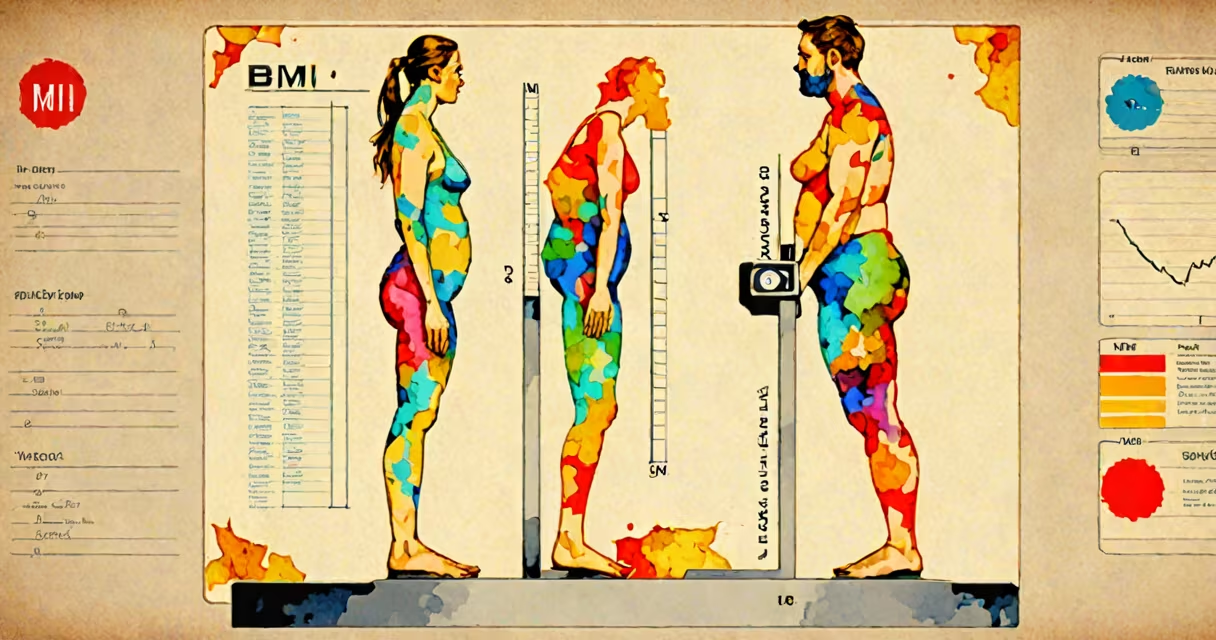
Your ideal BMI should fall between 18.5 and 24.9. This range indicates a healthy weight relative to height and is associated with reduced risk of heart disease, type 2 diabetes, and certain cancers. The World Health Organization and U.S. Centers for Disease Control and Prevention both define this range as optimal for most adults.
BMI, or Body Mass Index, is calculated by dividing your weight in kilograms by the square of your height in meters. A score below 18.5 suggests underweight; 25 to 29.9 indicates overweight; and 30 or higher signals obesity. These categories are standardized globally and used in clinical settings and public health research.
The calculation is straightforward: for a person who weighs 70 kg and is 1.75 m tall, BMI = 70 / (1.75 × 1.75) = 22.9. This value lies within the healthy range. The metric is widely used because it's quick, low-cost, and applicable across diverse populations.
Clinicians use BMI as a screening tool to assess potential health risks. It's not diagnostic but flags individuals who may benefit from further evaluation. For example, a BMI above 25 prompts discussion about lifestyle changes, while a score below 18.5 may lead to nutritional assessment.
Public health programs rely on BMI data to track population trends. The CDC reports that nearly 42% of U.S. adults have a BMI in the obese range, a figure that has risen steadily since the 1970s. This trend informs policy decisions around nutrition labeling, school meal programs, and urban planning.
BMI does not measure body fat percentage or muscle mass. A muscular athlete may have a high BMI despite low body fat. This limitation means BMI should never be used alone to assess health. Waist circumference, blood pressure, cholesterol levels, and physical activity are better indicators of metabolic health.
Here's how BMI ranges are classified:
| BMI Range | Category | Health Risk Level |
|---|---|---|
| <18.5 | Underweight | Increased risk of malnutrition and osteoporosis |
| 18.5-24.9 | Healthy weight | Lowest risk of chronic disease |
| 25.0-29.9 | Overweight | Moderate risk of cardiovascular issues |
| ≥30.0 | Obese | High risk of type 2 diabetes, hypertension, and sleep apnea |
These categories apply broadly across adult populations, though adjustments exist for age, sex, and ethnicity. For example, Asian populations tend to face higher health risks at lower BMIs than White populations. The WHO recommends using a threshold of 23 for Asians due to increased metabolic risk at lower values.
A common misconception is that BMI reflects fitness or wellness. A person with a BMI of 26 may be metabolically healthy-normal blood sugar, good cholesterol, and active lifestyle-while another with a BMI of 22 may have poor dietary habits and sedentary behavior. BMI is a population-level tool, not a personal health scorecard.
Many assume BMI is a precise health indicator. It is not. The National Institutes of Health notes that BMI correlates poorly with body composition in individual cases. A study published in Obesity Reviews found that up to 30% of people classified as "overweight" based on BMI were metabolically healthy.
Another error is equating a BMI in the healthy range with guaranteed well-being. A 2021 analysis by the American Journal of Clinical Nutrition showed that individuals with normal BMI but high waist-to-hip ratios had elevated mortality rates compared to those with normal waist measurements. This highlights the importance of measuring abdominal fat, not just BMI.
When I ran a personal experiment during a health check-up, my BMI was 23.1-solidly in the healthy range-but my visceral fat level was in the top 10% for my age group. That result prompted me to adjust my diet and increase resistance training, even though my weight and BMI hadn't changed.
If your BMI is below 18.5, consult a healthcare provider to rule out underlying conditions such as eating disorders or thyroid dysfunction. If it's above 25, focus on sustainable lifestyle changes: increasing daily movement, reducing processed foods, and improving sleep quality.
what should my BMI be depends on context. The standard answer remains 18.5 to 24.9. But your personal health picture includes more than a single number. Use BMI as a starting point, not a destination.