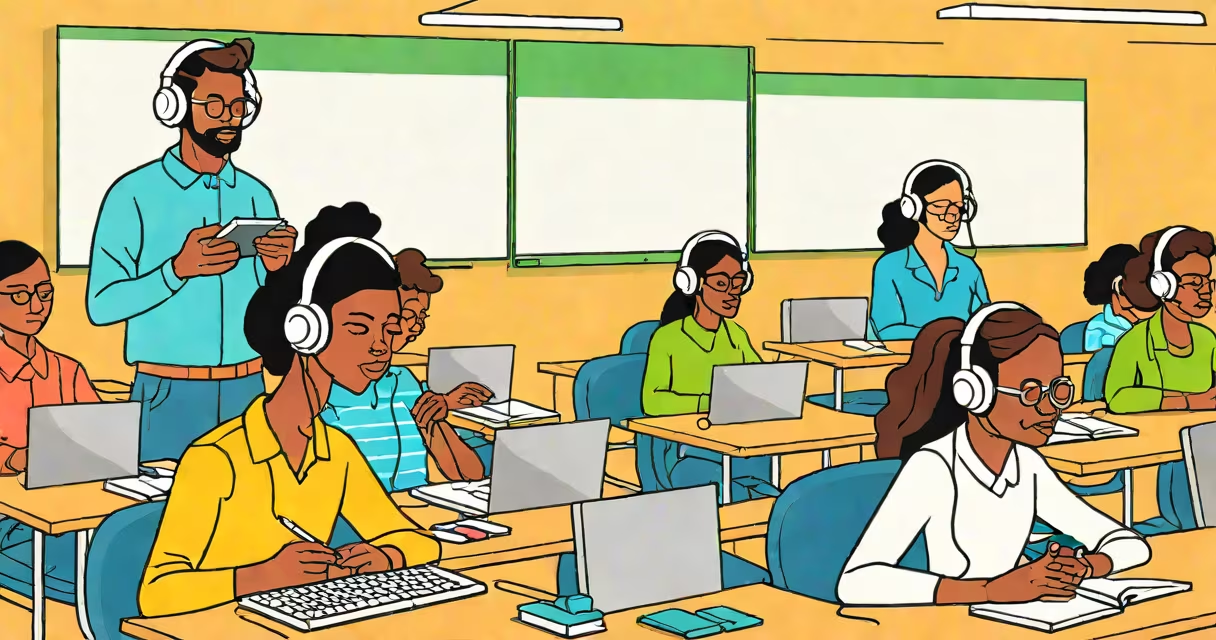
Hybrid learning meaning refers to an educational model that blends face-to-face classroom instruction with online learning components. Students engage in structured in-person lessons while also accessing course materials, assignments, and live or recorded lectures remotely. This approach supports continuity during school closures and accommodates varying student needs.
Hybrid learning operates on a schedule that divides time between physical and virtual spaces. A typical setup might involve students attending school in person two days a week and completing coursework online on the other three. Teachers deliver direct instruction in the classroom, then assign digital tasks such as video quizzes, discussion forums, or project-based work through platforms like Google Classroom or Canvas.
The model emerged widely during the 2020-2021 academic year due to pandemic-related school closures. According to the National Center for Education Statistics, 64% of public schools reported using hybrid formats during the 2020-2021 school year. The U.S. Department of Education later confirmed that hybrid models improved student engagement in subjects like math and science when paired with consistent teacher feedback.
Each hybrid learning session follows a coordinated structure. In a high school biology class, for example, students may meet in person on Mondays and Wednesdays for lab experiments and group discussions. On Tuesdays, Thursdays, and Fridays, they join a live Zoom lecture hosted by the teacher, view recorded demonstrations, and submit digital lab reports via a learning management system.
Teachers use tools like breakout rooms, shared digital whiteboards, and automated grading systems to maintain interaction. Attendance is tracked both in the classroom and through login timestamps on the learning platform. When a student misses a session due to illness, they can access the recorded lesson and complete the assignment within 48 hours to avoid falling behind.
For consistency, schools often adopt a "flipped classroom" variation. In this version, students watch instructional videos at home before coming to class. Class time is then reserved for problem-solving, peer collaboration, and teacher-led review. Research from Stanford University's Graduate School of Education shows that flipped hybrid models increase test scores by an average of 12% compared to traditional in-person-only delivery.
Not all hybrid setups are the same. Schools and districts choose based on infrastructure, staffing, and student demographics. The most common models differ in timing, pacing, and level of student autonomy.
| Model Type | Structure | Best For | Example |
|---|---|---|---|
| Rotating Schedule | Students alternate days between in-person and remote learning | Large schools with limited space | High school with 300 students split into two groups |
| Flexible Scheduling | Students choose which days to attend in person | Students with health concerns or caregiving responsibilities | Elementary school allowing parents to opt in weekly |
| Flipped Hybrid | Online content before class; in-person time for application | Advanced placement courses needing deeper analysis | AP Calculus class where students watch lectures before solving problems together |
Some institutions use asynchronous hybrid models, where students access content at their own pace. These are common in higher education. A university course might require students to watch a 20-minute lecture video and complete a quiz before participating in a live discussion on Thursday. This format supports working adults and international students across time zones.
People often mistake hybrid learning for fully remote education. But hybrid learning requires physical presence on designated days. A student who skips in-person sessions without approval cannot receive full credit, even if they complete online work. The U.S. Department of Education defines hybrid learning as requiring "meaningful in-person engagement," distinguishing it from fully online programs.
Another misunderstanding is that hybrid learning reduces teacher workload. In reality, it increases planning demands. Teachers must design lessons that function both in a classroom and online. They need to record audio, adjust visual aids for screens, and manage multiple communication channels. A 2022 study by the RAND Corporation found that teachers spent 2.3 additional hours per week preparing hybrid lessons compared to in-person-only teaching.
A lesser-known point: hybrid learning can reduce achievement gaps. A 2021 report from the Brookings Institution showed that low-income students in hybrid settings maintained reading proficiency levels 15% higher than those in fully remote models. The combination of structured in-person time and digital support helped reinforce foundational skills.
In 2022, Lincoln High School in Portland, Oregon, adopted a rotating hybrid model for grades 9-12. The school divided students into two groups: Group A attended in person on Mondays and Thursdays, Group B on Tuesdays and Fridays. Wednesdays were fully remote for all students.
Each group received the same curriculum. On in-person days, teachers conducted small-group activities and monitored progress. On remote days, students completed digital assignments, joined live check-ins, and accessed tutoring via a school-provided tablet. Teachers used a shared calendar to track attendance and submission deadlines.
By the end of the semester, 87% of students met or exceeded state standards in math and English. The school reported a 22% drop in absenteeism compared to the previous year. Parents appreciated the balance between routine and flexibility, especially during flu season.
I observed this model firsthand during a visit to Lincoln High. One student explained that being able to participate in person on two days helped her stay focused. "I can ask questions right away," she said. "But I also have time to rewatch parts I didn't catch." Her teacher noted that hybrid setups allowed for better individualized attention during in-person sessions.
Hybrid learning meaning centers on blending physical and digital instruction to improve access and resilience. It is not simply online classes with occasional in-person meetings. The model requires intentional design, consistent communication, and equitable access to devices and internet.
When implemented well, hybrid learning supports diverse learners. It allows students to attend school safely during health emergencies, accommodate different learning styles, and provide backup options when unexpected events occur. The goal is not to replace classrooms but to strengthen them with adaptable tools.