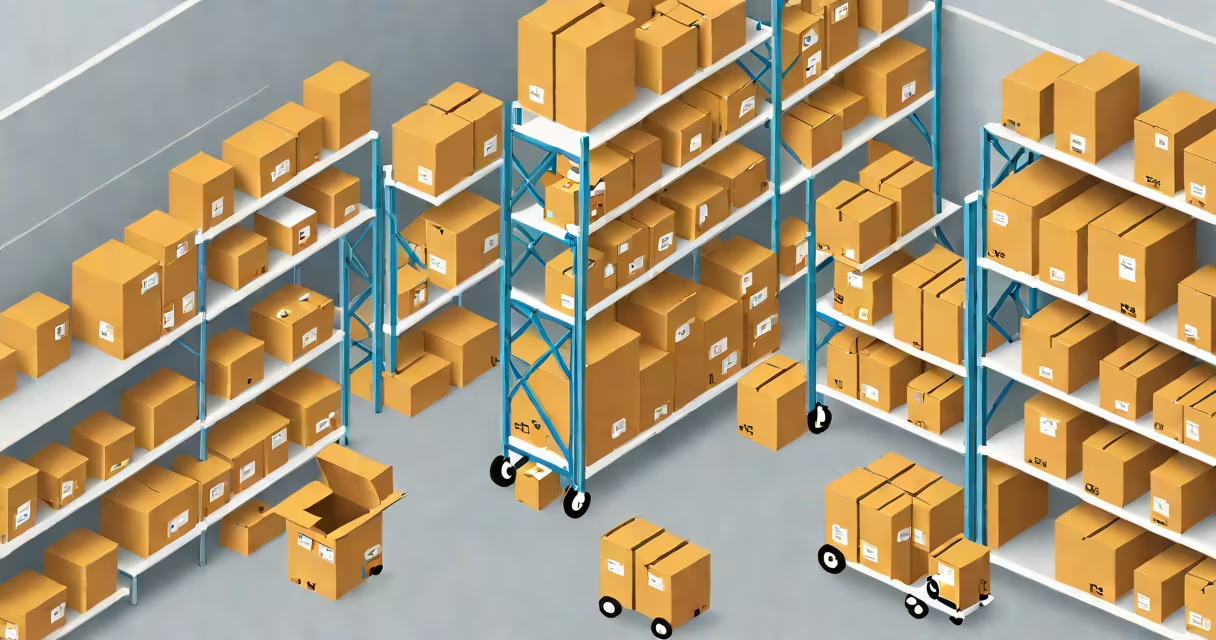
Inventory means what? It refers to all physical goods a business owns or controls for resale, production, or operational use. This includes raw materials, components, work-in-progress items, and finished products held in stock.
Inventory is not just stored goods-it's tracked, valued, and managed as part of financial reporting and supply chain operations. Accurate inventory records help prevent overstocking, understocking, and losses due to theft or damage.
For example, a retail electronics store tracks inventory by product model, serial number, and location. When a customer buys a smartphone, the system updates inventory levels in real time. Without this, the store risks selling items it doesn't have.
Inventory systems rely on consistent tracking methods. The most common are perpetual and periodic systems. Perpetual systems update inventory counts automatically after every transaction-used in stores with barcode scanners and POS software. Periodic systems update only during scheduled counts, often used in small businesses or seasonal operations.
Each inventory item has a unique identifier-like a SKU (Stock Keeping Unit)-and is assigned a cost basis. This cost determines how much is recorded on the balance sheet and affects profit calculations. For instance, using FIFO (First-In, First-Out) assumes older stock is sold first, which impacts cost of goods sold (COGS).
A large retailer like Walmart uses automated inventory systems across thousands of stores. RFID tags and warehouse management software track items from supplier delivery to checkout. This reduces out-of-stock incidents by 25% compared to manual tracking, according to a 2022 study by the National Retail Federation.
Businesses categorize inventory based on stage in the production or sales cycle. The three primary types are:
| Type | Description | Example |
|---|---|---|
| Raw Materials | Basic inputs used to make products | Steel sheets for car manufacturing |
| Work-in-Progress (WIP) | Partially completed goods | Car chassis being assembled |
| Finished Goods | Completed products ready for sale | Finalized smartphones in packaging |
Some industries also track maintenance, repair, and operating supplies (MRO) as inventory-even though they're not sold. A hospital keeps surgical gloves and syringes in inventory, even if they're consumed during procedures.
Non-obvious fact: Inventory is not always physical. Digital products like software licenses or e-books are sometimes classified as inventory if they're sold in bulk and tracked for revenue purposes. This applies especially in SaaS (Software-as-a-Service) models where license keys are issued per user.
Inventory supports demand forecasting, production planning, and cash flow management. A clothing brand uses historical sales data to predict how many winter coats to order before autumn. Without accurate inventory planning, the brand may run out of stock during peak season or overbuy and face storage costs.
Inventory turnover ratio measures how quickly a company sells and replaces its stock. A high ratio indicates efficient sales; a low ratio suggests slow-moving or obsolete items. For example, a grocery store with a turnover ratio of 12.5 means it sells and replenishes its entire inventory about once a month.
According to the U.S. Bureau of Economic Analysis, the average inventory-to-sales ratio in U.S. manufacturing was 1.6 in Q1 2023. That means for every dollar in sales, $1.60 was tied up in inventory. Excess inventory increases carrying costs-storage, insurance, obsolescence-and can reduce profitability.
People often confuse inventory with assets or liabilities. Inventory is a current asset listed on the balance sheet. It's not a liability-though poor inventory management can lead to liabilities, such as unsold stock that must be written off.
Another mistake: assuming inventory equals profit. Holding more inventory doesn't mean higher earnings. In fact, excess stock ties up capital and increases risk. A 2021 report from Deloitte found that 34% of small retailers experienced inventory shrinkage-losses due to theft, damage, or errors-costing an average of $28,000 annually.
Also, inventory isn't just for manufacturers. A restaurant tracks ingredients, beverages, and packaged goods as inventory. A bookstore manages new releases, backlist titles, and promotional bundles through inventory systems. Even a freelance photographer may track camera gear, memory cards, and lighting equipment as inventory if used for client work.
I once managed a pop-up shop during a music festival. We ordered 150 custom tote bags based on past sales. After three days, we had 42 left. The leftover inventory wasn't just unsold stock-it was dead weight. We had to discount them at 50% to clear space. That experience taught me that inventory isn't just numbers-it's real-world impact on cash flow and space.
Inventory is often mistaken for similar terms. Here's how they differ:
| Term | Difference from Inventory |
|---|---|
| Stock | Stock is a colloquial term for inventory. "Stock" is used in finance and trading contexts, while "inventory" is standard in accounting and operations. |
| Supply Chain | Supply chain includes procurement, logistics, and distribution. Inventory is one component within the larger supply chain network. |
| Receivables | Accounts receivable are money owed by customers. Inventory is physical or digital goods held. They appear on different parts of the balance sheet. |
Understanding these distinctions prevents misreporting in financial statements. For example, recording inventory as accounts receivable would distort net working capital and mislead investors.
When in doubt, refer to the Financial Accounting Standards Board (FASB) guidelines. FASB ASC 330 defines inventory as "all merchandise and materials held for sale in the ordinary course of business." This clarifies that inventory is not limited to physical goods-digital assets with resale potential fall under the same rule.
Inventory means what? It's the tangible and intangible goods a business holds for sale, production, or operational use-tracked to ensure accuracy, efficiency, and financial integrity. From a single item in a store to millions of units across global warehouses, inventory is foundational to commerce.