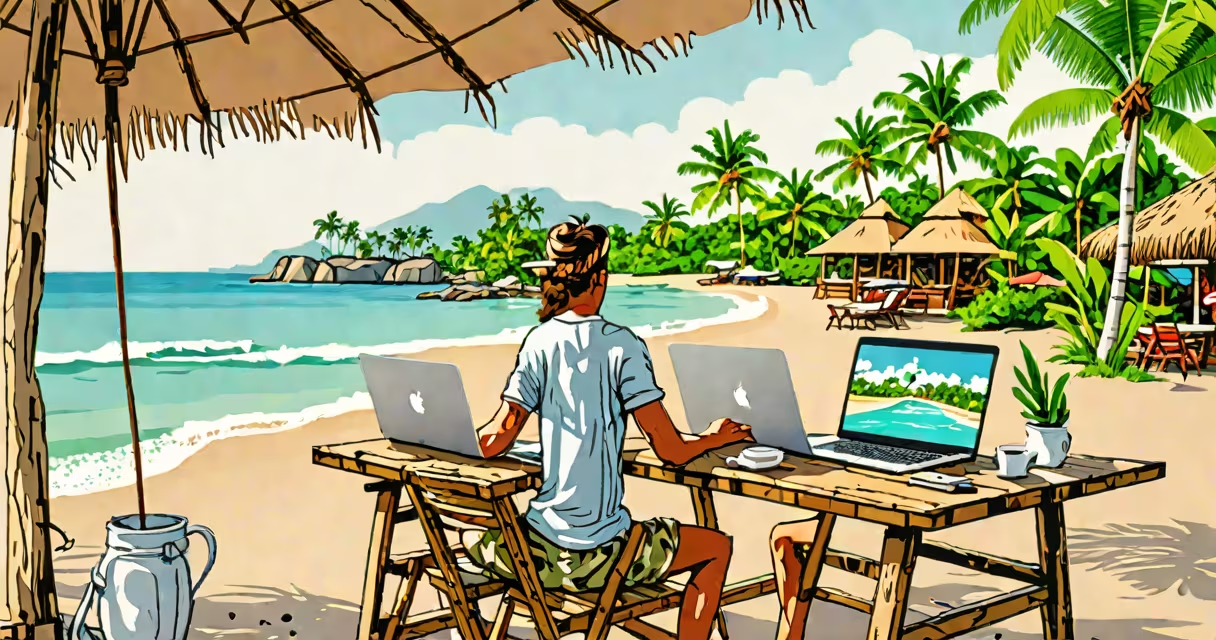
The digital nomad lifestyle is a work arrangement where individuals earn income remotely while living and traveling in different countries, using internet-connected devices to maintain their careers. This model relies on stable connectivity, flexible job roles, and personal discipline to sustain long-term mobility.
Remote work is the foundation of this lifestyle. Employees or freelancers perform tasks such as software development, graphic design, content creation, consulting, or online teaching from anywhere with a reliable internet connection. The rise of cloud-based tools like Slack, Zoom, Google Workspace, and project management platforms has made cross-border collaboration smooth and efficient.
According to the McKinsey Global Institute, 25% of workers in high-income countries reported doing some form of remote work during the pandemic, and 60% expressed interest in continuing it. This shift created the conditions for a growing number of people to adopt location-independent careers.
Digital nomads operate on a schedule they control. They typically set daily routines around time zones, client deadlines, and personal energy levels rather than office hours. Many use asynchronous communication to coordinate with teams across continents, minimizing disruptions caused by differing local times.
For example, a web developer based in Lisbon might work from 9 a.m. to 2 p.m. local time, then attend a client meeting scheduled at 8 p.m. their time, which aligns with 2 a.m. in Tokyo. Tools like Calendly and World Time Buddy simplify scheduling across regions.
Financial planning is critical. Nomads often manage multiple bank accounts in different currencies, use payment platforms like Wise or PayPal, and track expenses through apps like Expensify or QuickBooks. Some live on $1,500-$2,500 per month depending on the country, with lower costs in Southeast Asia and higher ones in Western Europe.
Not all digital nomads follow the same path. Their roles, income sources, and travel patterns vary. Here's a breakdown of common models:
| Type | Income Source | Typical Monthly Income | Travel Frequency |
|---|---|---|---|
| Freelancer | Client contracts via Upwork, Fiverr, or direct outreach | $2,000-$5,000 | High - moves every 1-3 months |
| Remote Employee | Full-time job with a company offering remote work | $4,000-$8,000 | Moderate - stays 3-6 months per location |
| Online Entrepreneur | Selling digital products, courses, or affiliate content | $3,000-$15,000+ | Variable - may stay in one place for years |
A real example: Sarah K., a UX designer from Toronto, left her full-time job in 2021 to freelance remotely. She now lives in Chiang Mai, Thailand, where she earns $4,200/month through a mix of contract work and a subscription-based design course she created. Her monthly expenses-rent, food, transport, health insurance-total about $1,800, leaving her with surplus income to reinvest or save.
Another pattern involves nomads who start in low-cost destinations like Medellín, Colombia, or Siem Reap, Cambodia, then move to more expensive cities like Berlin or Barcelona for short-term projects or networking events.
Many assume the digital nomad lifestyle is synonymous with constant travel and unlimited freedom. That's misleading. Most successful nomads spend significant time managing logistics-visas, health coverage, tax obligations, and internet reliability.
One overlooked issue is visa compliance. Countries like Thailand, Portugal, and Mexico offer digital nomad visas, but they require proof of income, health insurance, and sometimes a minimum stay. Failing to meet these requirements risks deportation or blacklisting.
Also, burnout is common. Without physical separation between work and rest spaces, many nomads struggle to disconnect. A 2023 survey by Glassdoor Research found that 41% of remote workers reported increased stress due to blurred boundaries between home and work environments.
I once stayed in a co-working space in Lisbon for six weeks. I watched a fellow freelancer collapse from exhaustion after working 14-hour days across three time zones. He wasn't chasing adventure-he was trying to survive a business model that demanded constant availability.
The digital nomad lifestyle is not a vacation. It's not "working from Bali" as a social media gimmick. It's not a way to avoid taxes or responsibilities. It requires consistent effort, financial planning, and emotional resilience.
It's also not suitable for everyone. People with dependents, chronic health issues, or jobs requiring physical presence (e.g., healthcare, manufacturing) face structural barriers. Even those with remote-capable jobs may lack the flexibility to leave their home country due to employer policies or immigration rules.
Some confuse it with "workation"-a temporary blend of work and leisure. A workation lasts 1-4 weeks and ends with a return to a permanent base. A digital nomad lifestyle involves sustained relocation, often spanning years.
To begin, identify a remote-capable skill. Common paths include writing, programming, marketing, video editing, translation, or virtual assistance. Build a portfolio and start applying to remote job boards like Remote.co, FlexJobs, or .
Next, choose a destination with affordable living, good internet, and favorable visa policies. Popular hubs include Bali (Indonesia), Chiang Mai (Thailand), Lisbon (Portugal), and Tbilisi (Georgia). Research local costs using Numbeo or Expatistan.
Finally, prepare legally. Open a multi-currency account (Wise, Revolut), buy international health insurance (SafetyWing, WorldNomads), and file taxes in your home country or under a foreign tax treaty. Some nomads register as independent contractors in countries like Estonia, which offers e-residency and low corporate tax rates.
There's no single path. But success hinges on treating the lifestyle as a career-not a trend. The most sustainable nomads don't chase novelty. They build systems, protect their well-being, and adapt to changing conditions.
Understanding what is digital nomad lifestyle means recognizing it as a practical, evolving choice rooted in technology, autonomy, and personal responsibility. It's not about escaping work-it's about redesigning it.