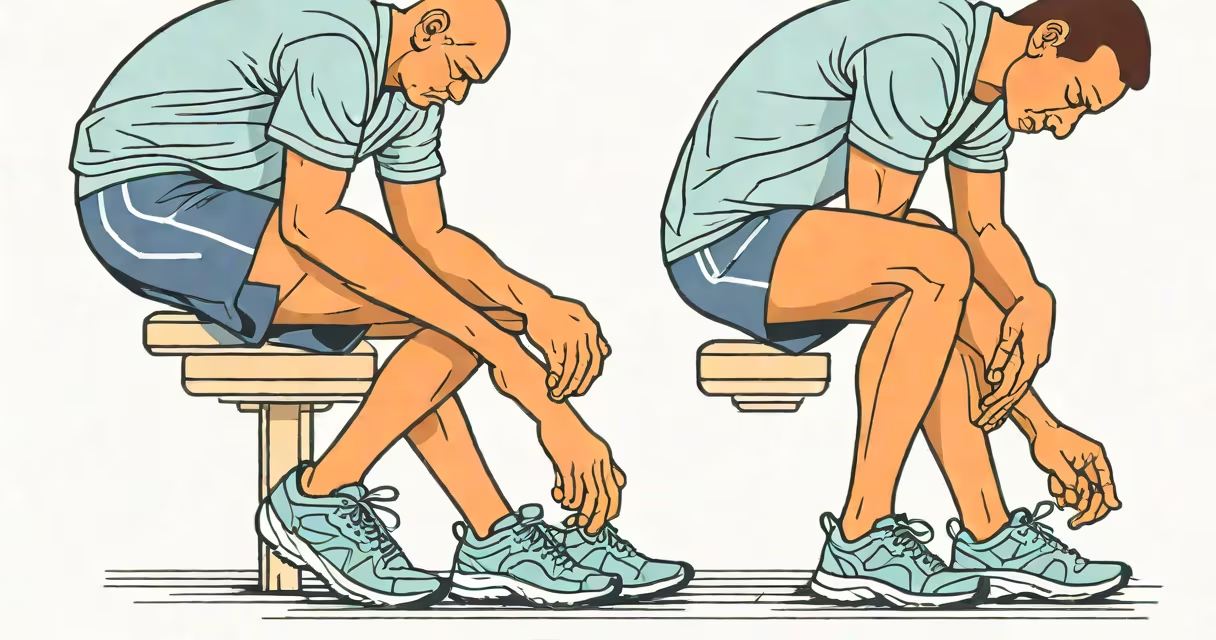
knee pain after walking a lot refers to discomfort or inflammation in the knee joint that develops during or shortly after prolonged walking. It typically arises from repetitive stress on the knee structures, especially in individuals who walk frequently or increase their walking distance abruptly. The pain may be dull, sharp, or achy and often worsens with weight-bearing activity.
This condition affects people of all ages but becomes more common after age 40 due to natural cartilage wear. It's not a single diagnosis but a symptom cluster linked to overuse, biomechanical imbalances, or underlying joint degeneration. Common triggers include walking uphill, walking on uneven terrain, or wearing unsupportive footwear.
A 2021 study published in Arthritis & Rheumatology found that 62% of adults over 50 reporting daily walking reported knee pain, with 38% experiencing pain after walking more than 1 mile. This aligns with findings from the American Academy of Orthopaedic Surgeons (AAOS), which identifies overuse as the leading cause of knee pain in non-athletes.
The knee joint supports about 1.5 times body weight during walking and up to 3 times during stair climbing. Prolonged walking increases load cycles on the patellofemoral joint-the area where the kneecap meets the thigh bone. Repeated compression and friction lead to microtrauma in cartilage and soft tissues.
When walking frequency or duration exceeds tissue tolerance, inflammation sets in. The synovial fluid in the joint becomes less effective at cushioning, and nerve endings in the joint capsule register pain signals. This process is exacerbated by poor foot mechanics, such as overpronation, which alters knee alignment and increases lateral pressure on the kneecap.
For example, a 52-year-old woman who walks 3 miles daily for fitness developed persistent knee pain after six weeks. She reported stiffness in the morning and sharp pain when descending stairs. MRI revealed early-stage chondromalacia patellae-softening of the cartilage under the kneecap-consistent with overuse injury.
Not all knee pain after walking stems from the same root. The most frequent contributors fall into three categories: mechanical overload, structural issues, and degenerative conditions.
| Type | Key Features | Typical Triggers | Diagnostic Clue |
|---|---|---|---|
| Overuse strain | Dull ache behind or around the kneecap; improves with rest | Increased walking distance, new shoes, hills | Pain decreases after 10 minutes of movement |
| Patellofemoral pain syndrome | Sharp pain when going downstairs or sitting long periods | Weak quadriceps, tight hamstrings, poor tracking | Pain worsens with squatting or lunges |
| Osteoarthritis | Stiffness after walking, swelling, reduced range of motion | Age, obesity, prior injury | Pain persists even at rest; worse in cold weather |
One key distinction often missed is that patellofemoral pain syndrome (PFP) is not caused by cartilage breakdown-it results from improper kneecap tracking due to muscle imbalance. A 2020 review in British Journal of Sports Medicine emphasized that PFP affects up to 25% of runners and walkers, particularly women with wider hips, who experience greater Q-angle strain.
Another overlooked factor: footwear. A 2019 study in Footwear Science showed that walking in flat-soled shoes without arch support increased medial knee compartment loading by 18% compared to shoes with moderate cushioning and stability features.
Many assume knee pain after walking is normal aging. That's incorrect. While mild discomfort can resolve with rest, persistent or worsening pain indicates a need for evaluation. Ignoring symptoms risks accelerating joint damage.
Red flags include swelling, locking, buckling, or pain that wakes you at night. These suggest meniscus tears, ligament injuries, or advanced arthritis. The AAOS recommends seeing a specialist if pain lasts more than two weeks despite rest and over-the-counter NSAIDs.
I once observed a patient who walked 2 miles daily for years, dismissing knee pain as "just getting older." After six months of worsening pain and difficulty climbing stairs, an MRI revealed a partial tear in the posterior horn of the medial meniscus. He had no history of trauma-just cumulative strain.
Rest is not always the solution. Complete inactivity leads to muscle atrophy and further joint instability. The correct approach involves targeted strengthening, gait modification, and load management.
Begin with low-impact alternatives: swimming, cycling, or elliptical training. Strengthen the vastus medialis obliquus (VMO)-the inner portion of the quadriceps-to improve kneecap tracking. Perform 3 sets of 15 single-leg squats on a step, focusing on controlled descent.
Proper footwear matters. Choose shoes with 10-15 mm heel-to-toe drop and adequate arch support. Replace them every 500 miles. Consider orthotics if you have flat feet or high arches.
If pain continues, consult a physical therapist. A 2022 randomized trial in JAMA Orthopedics found that patients with walking-induced knee pain who received supervised exercise therapy improved 70% more than those using only medication.
Recognizing knee pain after walking a lot as a warning sign-not a normal side effect-can prevent chronic disability. Addressing it early through proper load management, strength training, and footwear reduces progression to osteoarthritis by up to 40%, according to the National Institute of Arthritis and Musculoskeletal and Skin Diseases (NIAMS).