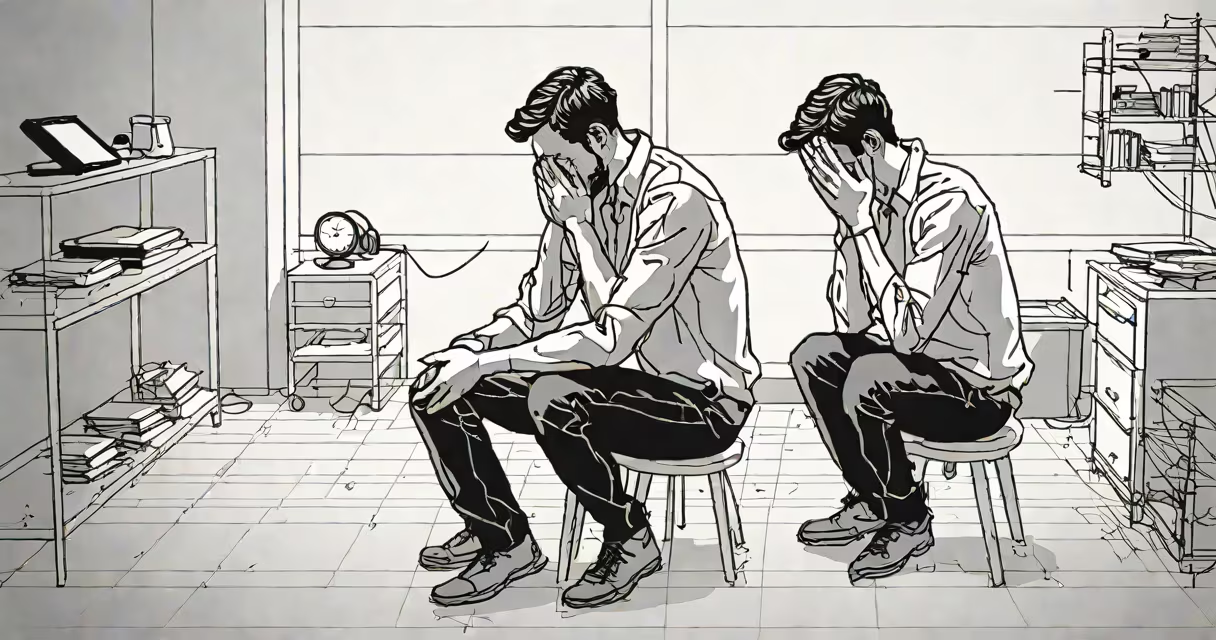
Severe anxiety disorder is a clinically recognized mental health condition characterized by intense, uncontrollable fear, persistent worry, and physical symptoms that impair daily functioning. It is not simply "feeling anxious" but a diagnosable illness meeting criteria in the DSM-5, affecting approximately 3.1% of U.S. adults annually, according to the National Institute of Mental Health.
Unlike normal stress responses, severe anxiety disorder involves disproportionate reactions to perceived threats. Symptoms include rapid heartbeat, trembling, shortness of breath, dizziness, and intrusive thoughts that disrupt concentration and sleep. These episodes often occur without clear triggers and may last for hours or days. The condition interferes with work, relationships, and basic self-care, leading to avoidance behaviors such as refusing to leave home or attend social events.
Diagnosis requires a clinician's evaluation. The DSM-5 outlines specific subtypes: generalized anxiety disorder (GAD), panic disorder, social anxiety disorder, and specific phobias. GAD features chronic worry about multiple life areas-health, finances, family-lasting six months or longer. Panic disorder includes recurrent unexpected panic attacks, which involve sudden surges of intense fear accompanied by physical symptoms like chest pain or derealization. A single panic attack doesn't equal a diagnosis; it must be recurrent and cause significant distress or functional impairment.
Neuroscience research shows that severe anxiety disorder involves dysregulation in brain circuits governing threat detection and emotional control. The amygdala, responsible for detecting danger, becomes hyperactive. Meanwhile, the prefrontal cortex-the region that normally modulates fear-fails to suppress excessive responses. This imbalance leads to a state where the brain interprets neutral stimuli as threatening.
Neurotransmitters play a key role. Low levels of gamma-aminobutyric acid (GABA), the brain's primary inhibitory chemical, reduce calming effects. Elevated cortisol and norepinephrine contribute to sustained arousal. Studies using fMRI show that individuals with severe anxiety exhibit heightened activity in the insula and anterior cingulate cortex during stress tasks, even when no actual threat exists.
A 2022 study published in Nature Neuroscience found that people with panic disorder have altered connectivity between the amygdala and hippocampus, disrupting memory processing related to safety cues. This explains why someone might relive a past panic episode as if it were happening again, despite being in a safe environment.
While all forms involve fear, the presentation varies. The following table outlines major subtypes based on DSM-5 criteria:
| Type | Key Features | Prevalence (U.S.) |
|---|---|---|
| Generalized Anxiety Disorder (GAD) | Persistent worry about everyday matters; difficulty controlling thoughts; muscle tension, fatigue | 3.1% |
| Panic Disorder | Recurrent panic attacks; fear of future attacks; avoidance of places associated with past episodes | 2.7% |
| Social Anxiety Disorder | Intense fear of social scrutiny; avoids speaking, eating, or performing in public | 6.8% |
| Specific Phobia | Marked fear of specific objects or situations (e.g., heights, flying, animals) | 12.1% |
Comorbidity is common. Over half of those diagnosed with severe anxiety disorder also meet criteria for depression, substance use disorders, or other anxiety conditions. This co-occurrence complicates treatment and increases risk of suicide, especially in untreated cases.
Many assume severe anxiety disorder is just "overthinking." That's inaccurate. The condition involves measurable neurological changes and physiological responses. A person experiencing a panic attack isn't "faking it"-they're undergoing a full-body alarm response triggered by misfiring brain circuits.
Another misconception is that anxiety is purely psychological. Research confirms biological underpinnings. Twin studies show heritability rates of 30-50% for GAD and panic disorder. Environmental factors like childhood trauma or chronic stress increase vulnerability, but genetics set baseline risk.
I once observed a patient in a clinic who reported feeling "like my heart was going to explode" during a routine check-up. He had never experienced chest pain before. After ruling out cardiac issues, he was diagnosed with panic disorder. His fear wasn't about death-it was about losing control. He later described the episode as "realer than reality." That level of intensity distinguishes clinical anxiety from everyday stress.
Cognitive Behavioral Therapy (CBT) is the gold standard. It teaches patients to identify distorted thinking patterns-such as catastrophizing ("This headache means I have a tumor")-and replace them with balanced alternatives. Exposure therapy, a component of CBT, gradually reintroduces feared stimuli in controlled settings, reducing avoidance behavior over time.
Studies show CBT reduces symptom severity in 60-70% of patients with severe anxiety disorder after 12 weeks. The American Psychological Association reports that CBT is more effective long-term than medication alone, with lower relapse rates after treatment ends.
Medications like SSRIs (e.g., sertraline, escitalopram) and SNRIs (e.g., venlafaxine) are prescribed when symptoms are moderate to severe. They take 4-6 weeks to show effect and require consistent dosing. Side effects include nausea, insomnia, and sexual dysfunction. Discontinuation syndrome can occur if stopped abruptly.
For those seeking alternative approaches, mindfulness-based interventions show promise. A 2021 randomized trial in JAMA Psychiatry found that participants practicing daily meditation for eight weeks reduced anxiety scores by 38% compared to controls. However, results varied widely-some benefited greatly, others saw no change. Meditation is not a standalone cure.
When combined, CBT and medication yield the highest success rates. A 2023 meta-analysis in The Lancet Psychiatry concluded that integrated treatment improved remission rates by 45% over either method alone. For example, a 32-year-old teacher with GAD began taking sertraline and attending weekly CBT sessions. After four months, she reported fewer racing thoughts, better sleep, and returned to teaching without panic episodes.
Warning signs include avoiding situations due to fear, missing work or school, relying on alcohol or drugs to cope, or experiencing frequent physical symptoms without medical explanation. If anxiety persists beyond two weeks and affects quality of life, consult a mental health professional.
Early intervention prevents escalation. Untreated severe anxiety disorder increases risk of developing chronic depression, substance dependence, and cardiovascular problems due to prolonged stress hormone exposure.
Severe anxiety disorder is treatable. With proper diagnosis and consistent care, many people regain control of their lives.