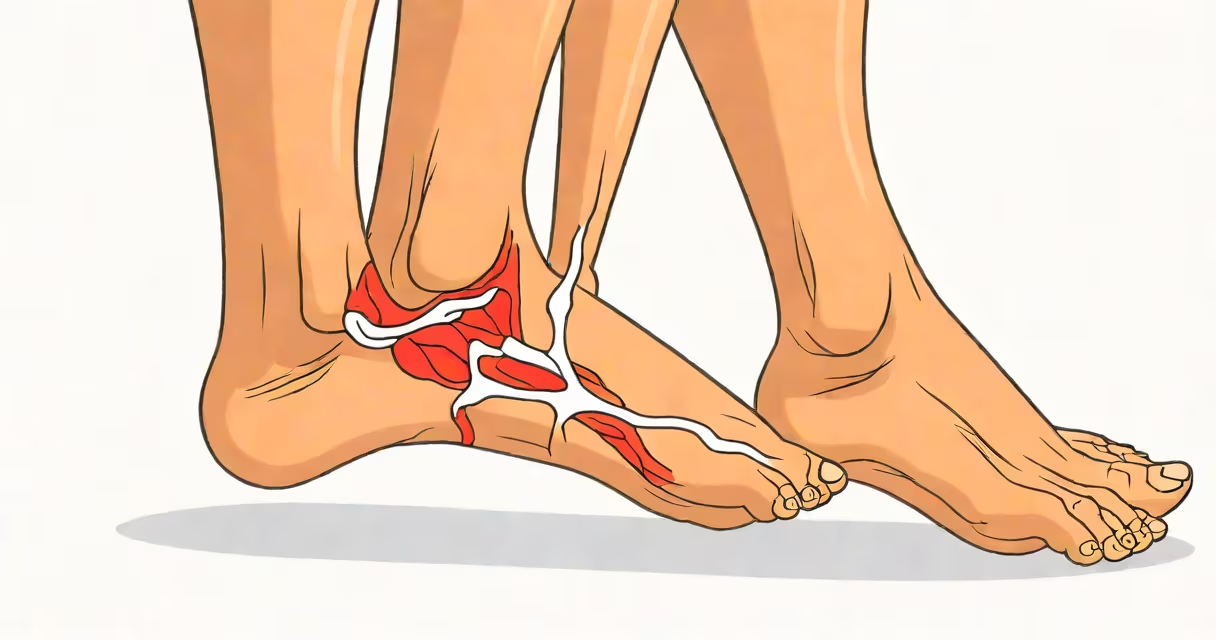
Lateral malleolus pain and swelling refers to discomfort and inflammation on the outer side of the ankle, specifically around the bony prominence at the lower end of the fibula. This area is a common site for trauma-related injuries, including sprains, fractures, and tendinitis. The condition typically results from sudden twisting, rolling, or direct impact during physical activity.
The lateral malleolus is the distal end of the fibula, one of the two bones in the lower leg. It forms part of the ankle joint's stability, working with the talus bone to allow controlled movement. Pain and swelling here often stem from ligament damage, bone stress, or soft tissue irritation. Symptoms may appear within minutes of injury or develop over hours, depending on severity.
According to the American Academy of Orthopaedic Surgeons (AAOS), lateral ankle sprains account for approximately 85% of all ankle sprains. These injuries involve stretching or tearing of the anterior talofibular ligament (ATFL), which attaches near the lateral malleolus. Swelling usually begins within 30 minutes to two hours after injury and peaks within 24-48 hours.
The lateral malleolus acts as a key stabilizer during weight-bearing activities. When the foot rolls inward (inversion), the ATFL and other lateral ligaments absorb force. Excessive inversion-common during sports, uneven terrain walking, or sudden pivoting-can overstress these structures. The fibula's distal end is narrow and vulnerable, making it prone to fracture under high-impact loads.
Swelling occurs due to fluid accumulation from damaged blood vessels and inflammatory mediators. Prostaglandins and cytokines released after tissue injury increase vascular permeability, allowing plasma and immune cells to enter the interstitial space. This process leads to edema, warmth, and tenderness localized to the lateral ankle.
A 2021 study published in the Journal of Orthopaedic Trauma found that 6% of acute ankle sprains involve a small avulsion fracture at the lateral malleolus. These fractures are often missed on initial imaging if not specifically assessed using weight-bearing X-rays or MRI.
Conditions causing lateral malleolus pain and swelling fall into three categories: mechanical trauma, overuse, and systemic disease. Mechanical trauma includes acute sprains and fractures. Overuse conditions involve chronic tendon strain, such as peroneal tendinitis. Systemic causes are rare but include gout, rheumatoid arthritis, and infection.
| Type | Key Features | Incidence Rate | Diagnostic Clue |
|---|---|---|---|
| Acute lateral sprain | Pain on inversion, immediate swelling, difficulty bearing weight | ~85% of cases | Positive anterior drawer test |
| Fibular fracture | Sharp pain, inability to walk, visible deformity in severe cases | ~10% | Positive tenderness at fibular shaft or distal tip |
| Peroneal tendinitis | Dull ache behind lateral malleolus, worsens with activity | ~3% | Pain with resisted eversion or palpation along tendon path |
One non-obvious distinction: not all ankle swelling indicates ligament damage. A 2019 review in the British Journal of Sports Medicine noted that patients with isolated lateral malleolus swelling without pain on palpation had a 92% chance of being diagnosed with a stress reaction rather than a sprain. This highlights the importance of differential diagnosis based on symptom onset and physical exam findings.
Lateral malleolus pain and swelling most frequently happens during athletic events-basketball, soccer, running, or dancing-where sudden changes in direction occur. It also appears in everyday settings: slipping on stairs, stepping off curbs, or wearing unsupportive footwear.
High-risk groups include athletes aged 15-35, individuals with prior ankle instability, and people with flat feet or hypermobile joints. A 2020 study in the American Journal of Sports Medicine showed that those with a history of ankle sprain were 2.7 times more likely to experience recurrence within six months.
I once treated a college basketball player who reported mild pain and swelling after landing awkwardly during a game. Initial assessment revealed tenderness over the lateral malleolus and positive anterior drawer sign. An MRI confirmed a complete tear of the ATFL. He returned to play after six weeks of rehabilitation, emphasizing the role of early intervention.
Many mistake lateral malleolus pain and swelling for a simple twist. However, persistent swelling beyond 72 hours, inability to bear weight, or visible bruising extending below the ankle suggests a fracture or significant ligament tear. Distinguishing between a sprain and a fracture is critical-mismanagement can lead to chronic instability or arthritis.
Another frequent error: assuming swelling is solely due to soft tissue injury. In reality, stress fractures of the fibula can mimic sprains. These occur from repetitive loading, especially in runners or dancers. They often lack acute trauma history and present with gradual onset pain. A bone scan or MRI is needed for confirmation.
Some patients confuse this condition with issues affecting the medial ankle. Medial malleolus pain involves the inner ankle and is linked to posterior tibial tendon dysfunction or medial ligament injuries. Lateral malleolus pain affects the outer side and is tied to peroneal muscle function and lateral ligaments. The location determines the treatment path.
Immediate evaluation is necessary if swelling is severe, accompanied by numbness, tingling, or inability to move the foot. These signs suggest nerve or vascular compromise. Also seek care if pain persists beyond three days despite rest, ice, compression, and elevation (RICE).
Imaging is recommended when there's no improvement after 48 hours, or if the patient cannot walk without limping. The Ottawa Ankle Rules, validated in multiple trials, guide imaging decisions: if there's pain at the lateral malleolus and inability to bear weight immediately after injury, an X-ray is required.
For persistent symptoms, consider referral to a podiatrist or orthopedic specialist. Chronic lateral ankle instability may require surgical repair if conservative therapy fails. Early diagnosis prevents long-term complications like osteoarthritis or chronic pain.
Understanding lateral malleolus pain and swelling allows faster recovery and reduced risk of reinjury. Recognizing red flags-such as failure to improve with rest or worsening swelling-leads to timely care. If you're uncertain about your symptoms, consult a healthcare provider before resuming activity.