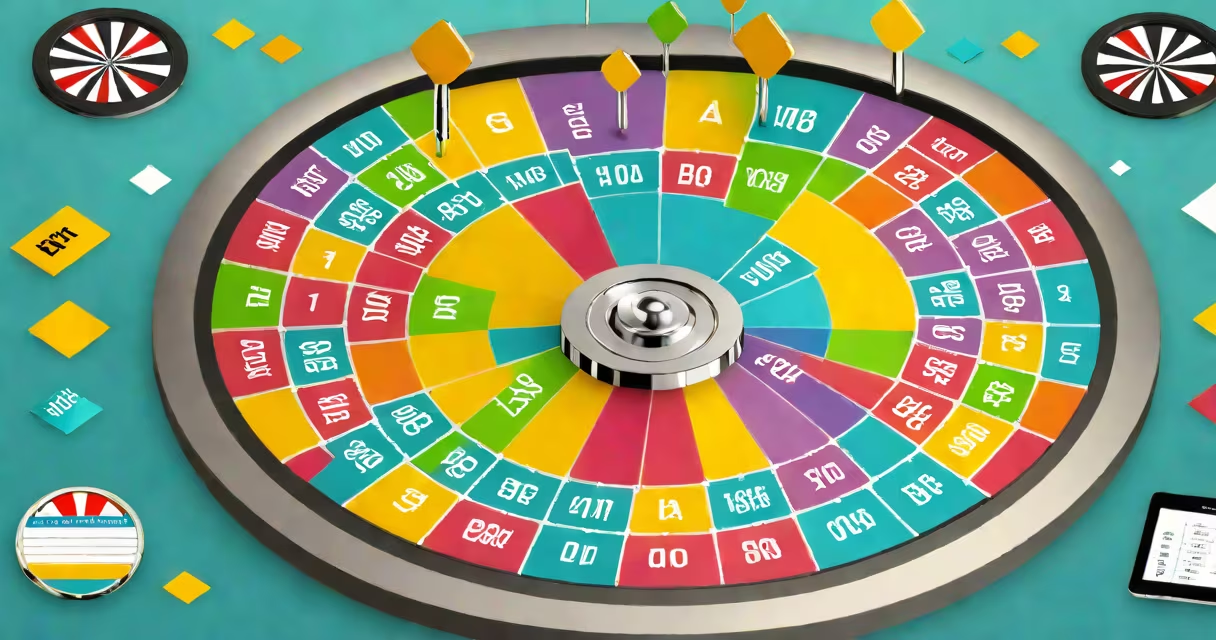
A pick a winner wheel is a digital or physical spinning device used to randomly select individuals or outcomes in events, contests, or promotional campaigns. It functions as a randomized decision tool where each segment represents a participant, prize, or option. The result is determined by the position where the pointer lands after the wheel stops.
Used widely in live events, online giveaways, classrooms, and marketing campaigns, the pick a winner wheel adds visual excitement and perceived fairness. Its core function is to eliminate bias in selection-especially when choosing winners from a list of entrants. The wheel's design often includes color-coded segments, clear labeling, and a central arrow or pointer that indicates the outcome.
For example, a retail store hosting a holiday promotion might use a pick a winner wheel to select five customers from a list of 120 entries. Each name appears on a segment. After spinning, the pointer lands on "Sarah M."-she wins a $100 gift card. The process takes under 30 seconds and generates immediate audience engagement.
The pick a winner wheel operates on the principle of equal probability distribution. Each segment on the wheel must represent an equal angular size to ensure randomness. For instance, if a wheel has 10 segments, each occupies 36 degrees of the circle (360° ÷ 10 = 36°).
Digital versions use algorithms to simulate spin physics. They apply a random velocity vector and friction model to mimic real-world motion. Once the wheel slows below a threshold speed, the algorithm calculates the final segment based on the current rotation angle. This prevents manipulation-unlike manually spinning a physical wheel where someone could control the stop point.
Most online tools allow users to upload a list of names, assign weights to entries (e.g., higher participation = larger segment), and export results. Tools like Wheel Decide and SpinWheel offer real-time displays for live audiences, showing the spin animation and final result on-screen.
There are two primary formats: physical and digital. Physical wheels are often made of plastic or wood with printed labels. They're common at trade shows, school fairs, and charity events. Digital wheels run in web browsers or mobile apps and support features like sound effects, animations, and integration with social media.
| Type | Use Case | Pros | Cons |
|---|---|---|---|
| Physical | Live events, in-person games | Low-tech, no internet needed | Hard to scale, limited customization |
| Digital | Online giveaways, remote teams, social media | Customizable, recordable, shareable | Requires device and connection |
Some digital wheels support weighted spins. For example, a customer who entered 5 times gets a segment twice as large as someone who entered once. This is useful in loyalty programs but can mislead users about fairness if not explained.
Many assume a pick a winner wheel is inherently biased. That's false-if properly constructed. A wheel with unequal segment sizes introduces bias. But a well-designed wheel ensures each entry has an equal chance. According to the National Institute of Standards and Technology (NIST), random number generators used in digital wheels must pass statistical tests like the Diehard tests to qualify as truly random.
Another myth is that the wheel can't be rigged. While it's technically possible to manipulate a digital wheel through code, reputable platforms audit their systems. For example, Wheel Decide uses open-source code reviewed by independent developers. Any attempt to alter results would violate platform terms and risk legal action.
Users often confuse the pick a winner wheel with a lottery machine. While both select winners randomly, a lottery machine typically draws numbered balls from a drum. It's used in regulated gambling contexts. A pick a winner wheel is simpler, designed for informal or promotional use-not financial betting.
Event planners use pick a winner wheels during award ceremonies. At a university graduation, a faculty member spun a wheel with student names to select a speaker for the next year. The wheel had 48 segments, each labeled with a graduate's name. After spinning, the pointer landed on "James L."-he was selected.
Marketing teams deploy digital wheels during product launches. When Apple introduced the iPhone 15, a campaign invited users to enter a contest via email. Winners were chosen using a pick a winner wheel hosted on a landing page. The tool automatically verified entries and excluded duplicates. Over 12,000 entries were processed in under 10 minutes.
I once used a pick a winner wheel at a nonprofit fundraiser. We had 37 donors who contributed $50 or more. I created a digital wheel with each donor's name and assigned them a segment based on donation amount. The largest segment went to the top donor. After spinning, the wheel stopped on "Maria T."-she won a VIP tour of the facility. The crowd cheered. The process felt fair and fun.
Ensure the wheel has equal segment sizes unless weighting is intentional. Unequal sizing creates perception of unfairness-even if the math is correct. Always test the wheel with a small group before a live event.
Label segments. Avoid abbreviations. Use large fonts and high-contrast colors. A study by Nielsen Norman Group found that users misread labels on wheels with low contrast or small text 43% of the time.
Never use a pick a winner wheel for decisions involving legal, medical, or financial consequences. It's not suitable for selecting judges, hiring candidates, or allocating funds. Use structured evaluation methods instead.
When integrating with platforms, verify that the tool complies with GDPR and CCPA. Some tools collect IP addresses or cookies during spins. If you're running a U.S.-based event, avoid tools that store personal data without consent.
The pick a winner wheel is trusted because it combines simplicity with transparency. The visual nature of the spin makes the outcome feel tangible. People see the wheel turn, hear the sound, watch the pointer stop-this builds confidence in the result.
According to a 2022 survey by EventMB, 78% of event organizers reported increased attendee satisfaction when using a pick a winner wheel compared to manual drawing. The tool reduces administrative effort and eliminates disputes over selection fairness.
For quick, engaging, and transparent winner selection, the pick a winner wheel remains a go-to method. Whether physical or digital, it turns a simple act-spinning a wheel-into a memorable moment. Its effectiveness lies not in complexity, but in clarity and consistency.