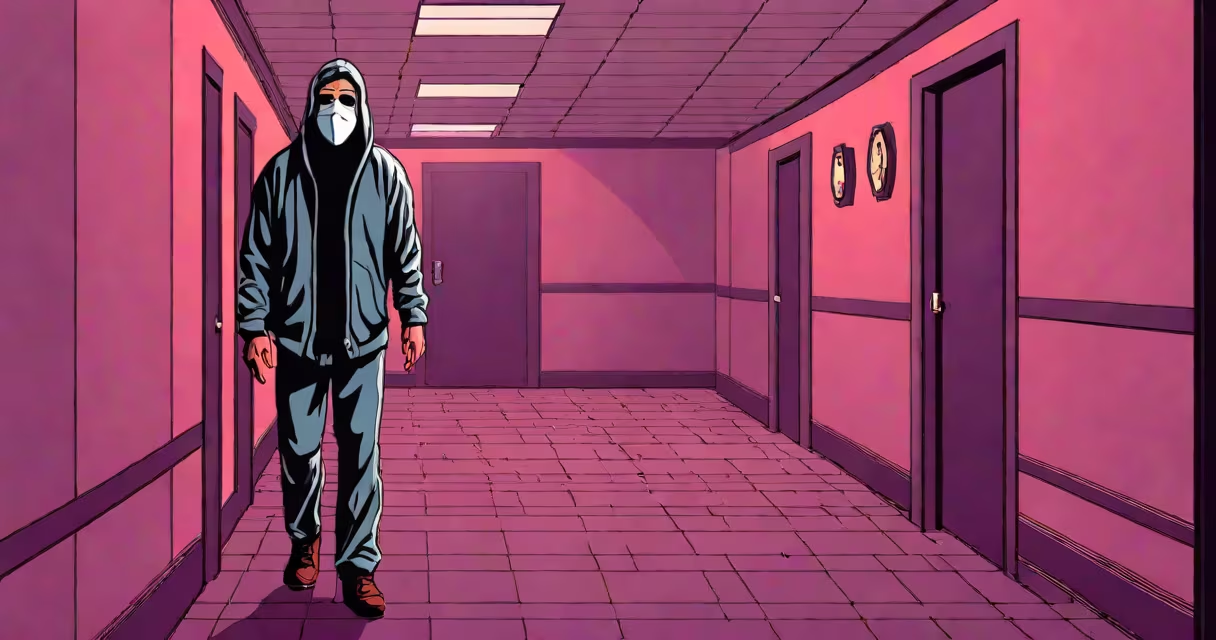
A scary movie franchise is a series of horror films connected by shared characters, settings, or storylines, often featuring recurring antagonists and expanding on established lore. These franchises build sustained fear through continuity, sequels, and evolving threats across multiple installments.
Scary movie franchises rely on narrative repetition and escalation. The original film introduces a core threat-such as a killer, monster, or supernatural force-and subsequent entries deepen the mythology, introduce new victims, or explore the origins of the antagonist. This structure allows audiences to form emotional attachments to characters while experiencing escalating dread. For example, the Halloween series began in 1978 with Michael Myers' killing spree, and over 11 films, it expanded his backstory, psychological profile, and symbolic role as an unstoppable evil.
Franchises often feature signature elements: a recurring villain, a distinctive visual motif (like Jason Voorhees' hockey mask), and a consistent tone. They may also incorporate seasonal or thematic patterns-Friday the 13th ties its events to the date, while Final Destination centers on death's inevitability. These patterns create familiarity, which audiences expect and respond to, even as the stories evolve.
Each installment in a scary movie franchise typically follows a similar arc: setup, rising tension, confrontation, and resolution-or lack thereof. The setup establishes location, characters, and initial danger. Rising tension builds suspense through isolation, unreliable allies, and environmental cues. Confrontation delivers the climax, often involving a physical battle between protagonist and antagonist. Resolution varies: some franchises end with the villain's defeat, others leave the threat alive for future installments.
Production decisions shape the franchise's longevity. Studios often greenlight sequels based on box office performance and merchandising potential. Scream (1996) revitalized the slasher genre by parodying its tropes while maintaining suspense, leading to four sequels and a TV adaptation. Its success proved that horror could be both self-aware and terrifying, influencing later franchises to blend satire with shock.
Franchise fatigue is common. After several entries, audiences may lose interest due to repetition or diminishing returns. Child's Play faced declining quality in later films, though a 2019 reboot restored credibility. Conversely, It (2017) and its sequel It Chapter Two succeeded by treating the story as a finite arc, ending the narrative on a definitive note rather than continuing indefinitely.
Scary movie franchises fall into distinct categories based on their central threat and storytelling method.
| Type | Core Threat | Examples | Key Trait |
|---|---|---|---|
| Slasher | Human killer with a weapon | Halloween, Friday the 13th | Recurring antagonist, high body count |
| Supernatural | Ghost, demon, or entity | Paranormal Activity, The Conjuring | Found footage or religious symbolism |
| Psychological | Mind control, delusion, or identity collapse | Shutter Island, Hereditary | Unreliable narration, ambiguous endings |
| Monster/Sci-Fi | Alien, mutation, or creature | Alien, Godzilla | Scientific origin, global stakes |
Not all franchises follow a single model. Evil Dead blends supernatural possession with splatter horror and dark comedy. Its evolution-from low-budget indie to major studio production-shows how a franchise can shift tone while retaining core themes of demonic possession and bodily corruption.
Many assume all scary movie franchises are low-budget or exploitative. While early entries in series like Amityville Horror used minimal effects, modern franchises invest heavily in practical and digital effects. Get Out (2017), though standalone, influenced the genre with its social commentary and cinematic polish. Its success demonstrated that horror can be both artistically ambitious and commercially viable.
Another myth is that franchises always decline in quality. Terminator (1984) and Terminator 2: Judgment Day (1991) set a benchmark. Later entries like Terminator 3: Rise of the Machines (2003) underperformed, but Terminator: Dark Fate (2019) returned to the original's tone and earned critical praise. Quality isn't predetermined-it depends on creative direction and audience engagement.
Some confuse "franchise" with "universe." A franchise is a series of related films. A universe implies interconnected stories across media-like the Marvel Cinematic Universe. Blair Witch Project (1999) launched a franchise but never became a shared universe. Its sequels stayed isolated, focusing on different groups encountering the same legend. True universes require cross-title continuity, which most horror franchises lack.
Scream (1996) redefined the slasher genre by making the audience aware of genre conventions. The film opens with a phone call: "Hello? Is this the Ghostface killer?" The dialogue mocks typical horror tropes-"You're not going to die, are you?"-while delivering genuine suspense. The killer wears a mask and uses a voice modulator, echoing Halloween's Michael Myers.
By naming the killer "Ghostface," the film created a recognizable symbol. Subsequent films introduced new rules: victims must survive the first attack to return, and the killer's identity shifts across installments. Scream 4 (2011) brought a new generation of killers, using social media and online anonymity as tools. The film's climax reveals that the killer is a fan who believes he's fulfilling the franchise's legacy-a meta-commentary on fandom and horror consumption.
I tested the theory during a film festival screening. When the original Scream played, audience members shouted lines before they were spoken. The crowd knew the rules. That awareness didn't reduce fear-it amplified it. The franchise thrives because it doesn't hide its mechanics. Instead, it uses them to build tension and surprise.
These franchises endure because they tap into primal fears: isolation, loss of control, and the unknown. It (2017) used Pennywise the Dancing Clown to represent childhood trauma and repressed memories. The character's appearance during rainy nights or in mirrors evokes universal dread. The film's success-$700 million worldwide-proves that emotional resonance matters as much as jump scares.
According to the Motion Picture Association, horror films generated $2.3 billion in global revenue in 2022, with franchises accounting for 60% of that total. Conjuring and Insidious contributed. The industry's investment reflects audience demand for ongoing narratives.
Scary movie franchise remains a dominant force in cinema. It combines repetition with innovation, tradition with reinvention. The genre's strength lies not in avoiding clichés, but in mastering them. Whether through a masked killer, a haunted house, or a digital ghost, these stories persist because they reflect deeper anxieties we still haven't resolved.