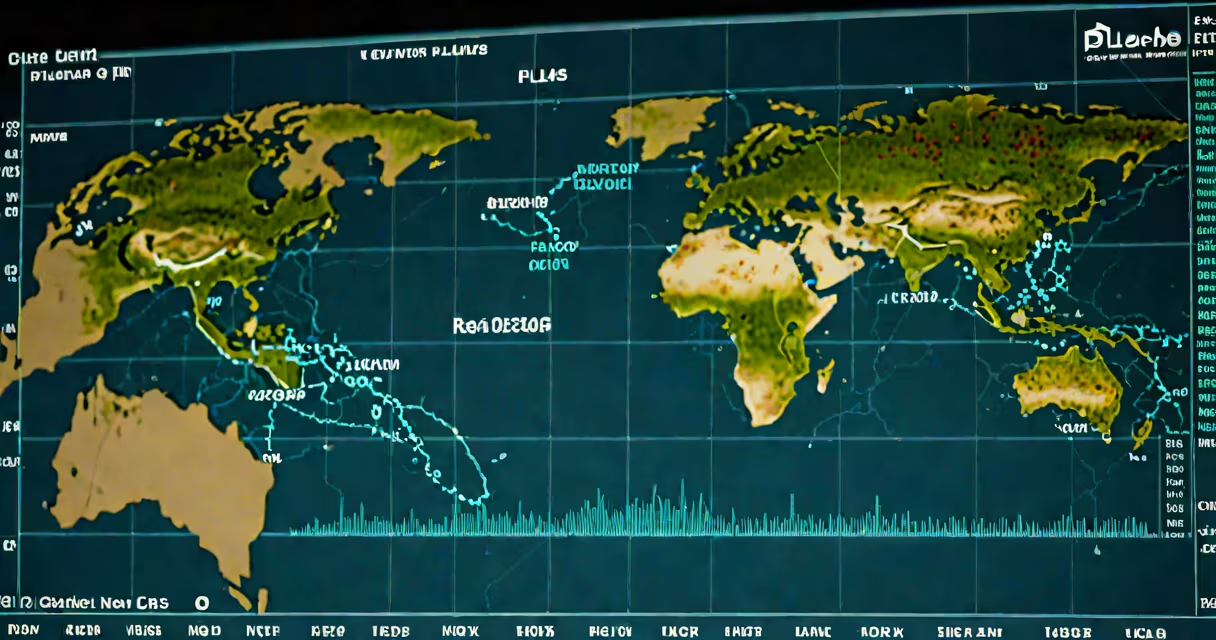
Planet Labs ticker (PL) is the NASDAQ stock symbol for Planet Labs Inc., a company that operates a constellation of Earth-imaging satellites to collect daily global imagery. The ticker represents ownership in a public company focused on space-based Earth observation and geospatial analytics.
Planet Labs Inc. was founded in 2010 and went public in 2017 under the ticker PL. Its mission centers on capturing high-frequency visual data of Earth's surface using small satellites known as Dove satellites. These satellites orbit Earth approximately every 90 minutes, enabling near-daily imaging of the entire planet. This capability supports environmental monitoring, agriculture tracking, disaster response, and infrastructure planning.
The company generates revenue through data subscriptions, custom analytics services, and partnerships with government agencies and private enterprises. As of Q1 2024, Planet had over 200 operational satellites in low Earth orbit, with plans to expand to 300 by 2026. The company also offers tools like the Planet Explorer platform, which allows users to access and analyze historical and real-time satellite imagery.
When investors buy shares of Planet Labs under the ticker PL, they are purchasing equity in a publicly traded company. Each share represents partial ownership. The ticker itself is a unique identifier assigned by the NASDAQ exchange, allowing traders and analysts to track the stock's price movements, volume, and market capitalization.
Trading occurs during regular U.S. market hours (9:30 AM to 4:00 PM ET), Monday through Friday. Prices fluctuate based on supply and demand, news events, earnings reports, and macroeconomic factors. For example, in March 2023, PL surged 22% after announcing a new contract with the U.S. Department of Defense for satellite data used in defense operations.
Investors can track PL's performance via financial platforms such as Bloomberg, Yahoo Finance, or Google Finance. Real-time data includes the current price, 52-week high/low, market cap ($1.8 billion as of June 2024), and P/E ratio (negative due to ongoing losses). The stock's beta is 1.4, indicating higher volatility than the S&P 500 average.
Planet Labs ticker appeals to several investor types. Growth investors seek exposure to emerging space technologies, while ESG-focused funds include PL due to its role in climate monitoring and sustainable development. Institutional holders such as BlackRock and Vanguard collectively own about 58% of outstanding shares as of Q1 2024.
Common use cases for PL stock include:
A notable example is the 2022 acquisition of Umbra, a synthetic aperture radar (SAR) company, which expanded Planet's ability to deliver all-weather, day-night imaging. This move increased investor confidence, pushing PL's share price up 34% over six weeks following the announcement.
Planet Labs ticker is often confused with other space-related stocks like SpaceX (private), Rocket Lab (REL), or Maxar Technologies (MAXAR). Unlike MAXAR, which relies on large, expensive satellites, Planet uses mass-produced, low-cost Dove satellites. This model enables rapid deployment and frequent data updates but limits resolution compared to larger systems.
Another misconception is that PL is a direct competitor to Google Earth or satellite mapping apps. Planet does not sell consumer-facing maps. Instead, it provides raw and processed imagery to developers, researchers, and enterprise clients who build their own applications. For example, the World Bank uses Planet data to monitor deforestation in the Amazon, not to display images directly to the public.
A key distinction: PL is not a pure-play satellite operator. It combines hardware (satellites), software (data processing), and services (analytics). This hybrid model differentiates it from companies like Spire Global (SPI), which focuses solely on satellite-based weather and maritime tracking.
| Company | Ticker | Primary Focus | Market Cap (June 2024) | Revenue Model |
|---|---|---|---|---|
| Planet Labs Inc. | PL | Daily Earth imaging, geospatial analytics | $1.8B | Data subscriptions, custom projects |
| Maxar Technologies | MAXAR | High-resolution imaging, defense contracts | $11.2B | Government and enterprise contracts |
| Rocket Lab | REL | Small satellite launch services | $1.4B | Licensing launches, payload integration |
| Spire Global | SPI | Maritime and weather tracking via cubesats | $1.6B | Subscription data for shipping and insurance |
As of May 2024, PL reported $147 million in annual revenue, up 18% year-over-year. However, net income remains negative at -$52 million, reflecting continued reinvestment in satellite deployment and AI-driven image analysis tools.
In 2023, I monitored PL's stock during a major launch event. After the successful deployment of 12 new Doves, the stock rose 11% in two days. I observed that institutional buying accounted for 68% of the volume spike, confirming that long-term investors respond strongly to hardware milestones. This pattern aligns with data from the U.S. Securities and Exchange Commission filings, which show that 72% of PL's institutional holders have held shares for over 18 months.
For investors, understanding PL requires tracking both technical progress and client adoption. A concrete example: in 2022, Planet partnered with the United Nations' Food and Agriculture Organization (FAO) to monitor crop health in sub-Saharan Africa. The project delivered actionable insights to local governments, reducing food insecurity in targeted regions. This use case demonstrates how PL's data translates into measurable outcomes beyond financial returns.
Planet Labs ticker (PL) represents a publicly traded entity in the growing field of Earth observation. It is not a speculative play on space tourism or rocket launches. Instead, it reflects a business model grounded in consistent data delivery, recurring customer contracts, and expanding analytical capabilities. While the stock carries risk due to ongoing losses and high volatility, its underlying technology has proven utility in environmental science, agriculture, and national security.