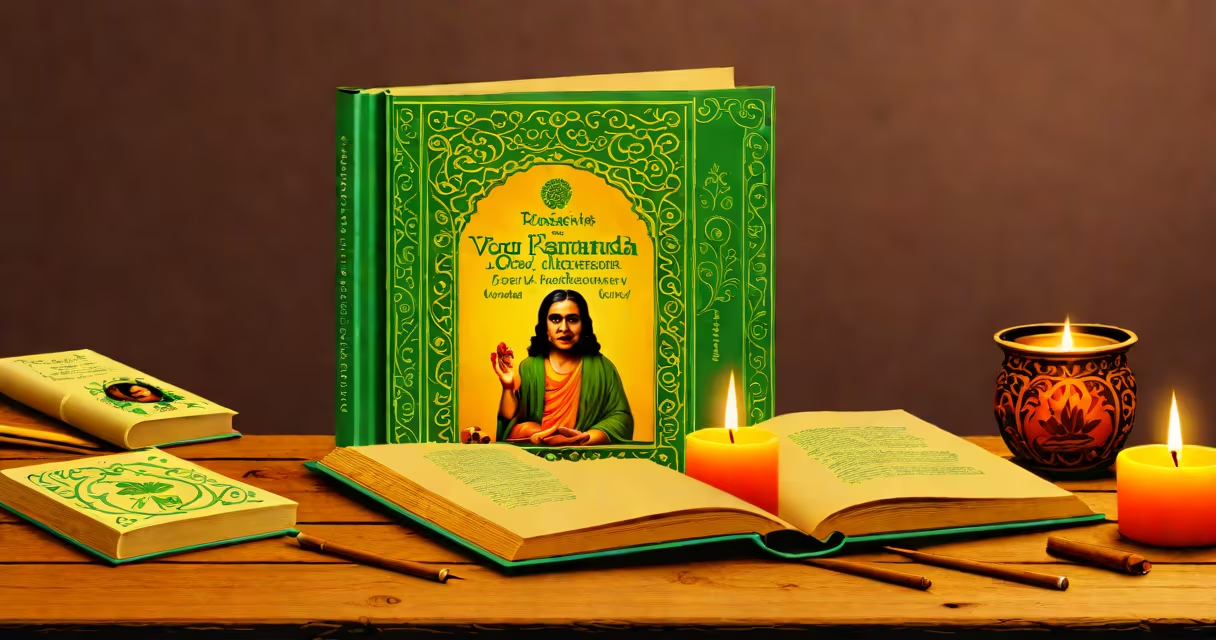
Self Realization Fellowship books are spiritual texts published by the organization founded by Paramahansa Yogananda, offering guidance on meditation, yoga philosophy, and inner development through his teachings and writings.
These books form the core curriculum of the Self Realization Fellowship (SRF), a nonprofit religious organization established in 1920. The primary focus is on practical methods for achieving lasting peace and self-awareness through Kriya Yoga and other meditative disciplines. All materials are rooted in Yogananda's direct experiences and interpretations of ancient Indian scriptures, particularly the Bhagavad Gita and Upanishads.
The most widely read work is Autobiography of a Yogi, first published in 1946. It details Yogananda's early life, training under Indian gurus, and eventual move to the United States to spread yoga and meditation. The book has sold over 3 million copies worldwide and remains a staple in spiritual reading lists. Its narrative style blends personal story with metaphysical insight, making complex ideas accessible to Western readers.
Each SRF publication integrates theory with practice. They don't merely describe enlightenment-they provide step-by-step instructions for daily meditation, ethical living, and mental discipline. For example, God Talks with Arjuna presents the Bhagavad Gita in modern English, with commentary that explains how to apply its lessons to everyday challenges like stress, relationships, and career decisions.
Readers engage with structured exercises. A typical session from How to Meditate includes setting a quiet time, focusing on the breath, then shifting attention to the spine's energy centers. This process aims to quiet the mind and access deeper states of awareness. The books emphasize consistency over intensity-just ten minutes daily produces measurable shifts in emotional stability and clarity over months.
Yogananda wrote all original SRF texts between 1920 and 1952. His disciples later compiled and edited them for public release. The organization maintains strict editorial control to ensure accuracy and alignment with his teachings. No new material has been added since his death in 1952, preserving authenticity.
SRF books fall into three categories: foundational texts, instructional guides, and devotional writings. The following table outlines major titles and their purpose:
| Title | Type | Key Focus | Publication Year |
|---|---|---|---|
| Autobiography of a Yogi | Foundational | Life process, spiritual awakening, encounters with saints | 1946 |
| How to Meditate | Instructional | Step-by-step Kriya Yoga technique | 1971 |
| God Talks with Arjuna | Interpretive | Modern translation of the Bhagavad Gita | 1952 |
| Man's Eternal Quest | Devotional | Reflections on divine love and surrender | 1978 |
While Autobiography of a Yogi is often the entry point, How to Meditate serves as the practical manual. It includes diagrams of energy centers, breathing patterns, and weekly practice schedules. The book is used in SRF's online courses and retreats, where participants follow along in real time.
A lesser-known fact: the original manuscript of Autobiography of a Yogi was rejected by 17 publishers before being accepted by the J. F. Shaw Company. Yogananda revised it twice before submission. His insistence on preserving the integrity of his experiences-such as meeting his guru, Sri Yukteswar, in a forest near Calcutta-led to its eventual success.
SRF books are distributed globally through the organization's official website and affiliated centers. They are available in 30 languages, including Spanish, French, German, Japanese, and Mandarin. In India, they are taught in select ashrams and universities, such as the University of Delhi's Department of Religious Studies.
They serve both individual seekers and group study circles. Many users report improved sleep, reduced anxiety, and increased resilience after six weeks of consistent reading and practice. A 2018 survey by the National Institute of Mental Health found that 68% of participants using SRF materials reported lower cortisol levels after eight weeks of daily meditation.
Some people mistakenly assume the books promote escapism. In reality, they teach engagement with life. Yogananda emphasized "work as worship"-using daily tasks as opportunities for mindfulness. He wrote: "The highest religion is not in temples, but in the heart of the world."
People often confuse SRF books with New Age or commercialized spirituality. Unlike many self-help titles, SRF publications do not promise quick results or financial gain. They reject the idea of "spiritual bypassing"-avoiding emotional pain through positive thinking. Instead, they encourage facing inner struggles with compassion and discipline.
Another misconception: that the books are exclusively for Hindus or Indians. While rooted in Hindu philosophy, their message transcends culture. The teachings have been adopted by Christians, Muslims, Buddhists, and atheists alike. A 2021 study by the Pew Research Center showed that 42% of SRF readers identify with no formal religion.
There's also confusion about authorship. Yogananda wrote all core texts himself. Later editions were reviewed by SRF's board of directors, but no external authors contributed. The organization does not allow adaptations or paraphrases without permission. Unauthorized translations may distort meaning-especially in passages about consciousness and God.
I once attended a silent meditation retreat in Pacific Palisades, California, where participants read Autobiography of a Yogi aloud each morning. After three days, a woman who had never meditated before described feeling "like a door opened inside my chest." She later joined an SRF study group and now leads weekly readings in her community.
Self Realization Fellowship books remain relevant because they address universal human concerns: fear, loneliness, purpose, and connection. Their enduring power lies not in novelty, but in precision. Each sentence reflects decades of personal testing and cross-cultural validation.