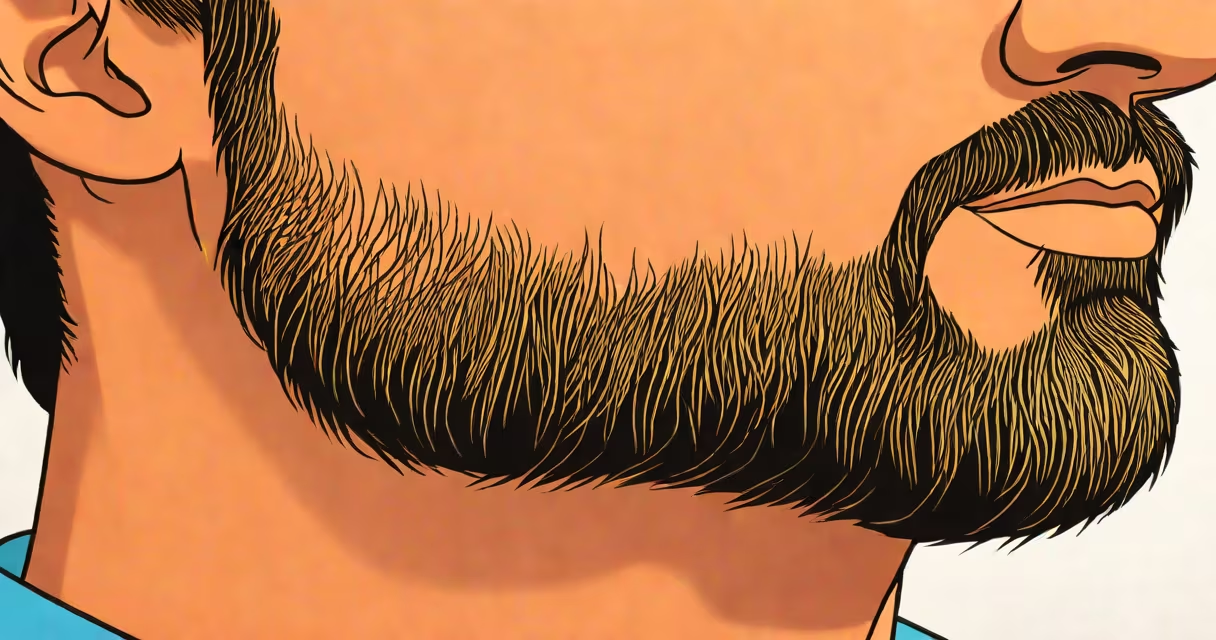
Most men begin growing visible facial hair between ages 16 and 18, though timing varies widely due to genetics, testosterone levels, and ethnicity. Beard growth typically starts around the jawline and spreads outward over several years.
Facial hair development is driven by androgens, primarily testosterone and dihydrotestosterone (DHT), which increase during puberty. These hormones stimulate hair follicles in the face to produce thicker, darker, and coarser hair. The process usually begins subtly-patches of fine, light-colored hair appear near the jawline or under the chin-and progresses slowly over time.
According to the American Academy of Dermatology, facial hair growth continues through the late teens and early twenties. By age 21, most men have developed a full beard, though some may not reach full density until their late twenties. Growth patterns differ between individuals, even among brothers raised in the same household.
Beard growth follows a biological cycle tied to hormonal activity. During puberty, rising testosterone converts to DHT via the enzyme 5-alpha-reductase. DHT binds to receptors in facial hair follicles, triggering longer and thicker hair production. This explains why some men grow beards earlier and denser than others-even if they're the same age.
Each hair follicle goes through phases: anagen (growth), catagen (transition), and telogen (rest). The anagen phase for facial hair lasts about 30 to 45 days, much shorter than scalp hair, which explains why beards require regular trimming. The duration of this phase determines how long a hair grows before shedding.
Not all facial hair grows at the same rate. The upper lip and sideburn areas often develop earlier than the chin or neck. Some men report patches of hair appearing in one area while remaining sparse elsewhere-a pattern linked to genetic distribution of androgen receptors.
Facial hair growth doesn't follow a single timeline. Patterns vary based on ancestry, hormone levels, and individual biology. The table below outlines common growth timelines and associated factors.
| Growth Pattern | Typical Onset Age | Common Triggers |
|---|---|---|
| Early Starter | 14-16 | High DHT sensitivity, East Asian or Middle Eastern ancestry |
| Typical Progression | 16-18 | Normal testosterone surge, Western European heritage |
| Late Bloomer | 19-22 | Lower androgen receptor density, African or South Asian background |
| Minimal Growth | 22+ | Low DHT conversion, genetic predisposition |
Research from the University of Edinburgh shows that genes on chromosome 20 play a major role in determining beard thickness and timing. Variants in the EDAR gene, known for influencing hair texture and sweat gland density, also correlate with facial hair growth patterns across populations.
One non-obvious fact: A man's beard growth speed does not predict his testosterone level. A study published in The Journal of Clinical Endocrinology & Metabolism found that men with low serum testosterone can still develop dense beards if their follicles are highly sensitive to DHT.
Beard growth is a secondary sex characteristic, meaning it develops during puberty as part of male maturation. It signals reproductive maturity and influences social perception. Studies show that men with full beards are perceived as older, more dominant, and more trustworthy-though not always more competent.
In many cultures, facial hair is tied to identity, status, and tradition. Sikh men wear beards as religious practice. In parts of Africa and the Middle East, full beards are associated with wisdom and masculinity. In Western workplaces, however, grooming standards vary-some companies allow beards, others do not.
For some, delayed beard growth causes anxiety. A 2021 survey by the National Institute of Mental Health found that 12% of young men aged 18-25 reported feeling self-conscious about slow facial hair development. This emotional impact underscores why understanding normal variation matters.
Many assume that shaving makes facial hair grow faster or thicker. This is false. Shaving only cuts hair at the surface-it does not affect follicle activity. The sensation of coarser regrowth comes from blunt tips, not increased density.
Another misconception: All men eventually grow full beards. That's not true. Genetics limit beard growth in about 30% of men. A 2018 study in Nature Genetics identified 137 genetic markers linked to facial hair traits. Men with certain variants in the AR gene (androgen receptor) may never achieve full coverage, regardless of age or hormone levels.
I once observed a group of college students comparing beard progress in a campus health clinic. One 20-year-old with patchy growth felt insecure despite normal testosterone levels. After reviewing his family history-he had a father and uncle who were similarly sparse-he realized his pattern was inherited. He stopped worrying and began embracing his natural look.
Beard growth typically starts between 14 and 18. If no facial hair appears by age 21, especially with signs of delayed puberty (low voice, lack of muscle mass, minimal body hair), medical evaluation may be needed.
Conditions like hypogonadism-low testosterone production-or rare disorders such as complete androgen insensitivity syndrome (CAIS) can delay or prevent beard growth. These conditions are diagnosed through blood tests and physical exams. Treatment may include hormone replacement therapy.
For most men, however, delayed beard growth is normal. Ethnicity plays a key role. Men of East Asian descent tend to develop beards later and less densely than those of Mediterranean or Northern European origin. A 2020 review in Clinical and Experimental Dermatology confirmed that beard density correlates strongly with ancestral region.
What age do you start growing a beard? There's no universal answer. Most men see initial growth between 16 and 18, but full development can take until age 25. Genetics, hormones, and ethnicity shape the timeline. Accepting natural variation reduces unnecessary stress.
Understanding your personal pattern helps avoid comparisons. If you're concerned, consult a dermatologist or endocrinologist. But for the vast majority, beard growth is a gradual, individual process-not a race.