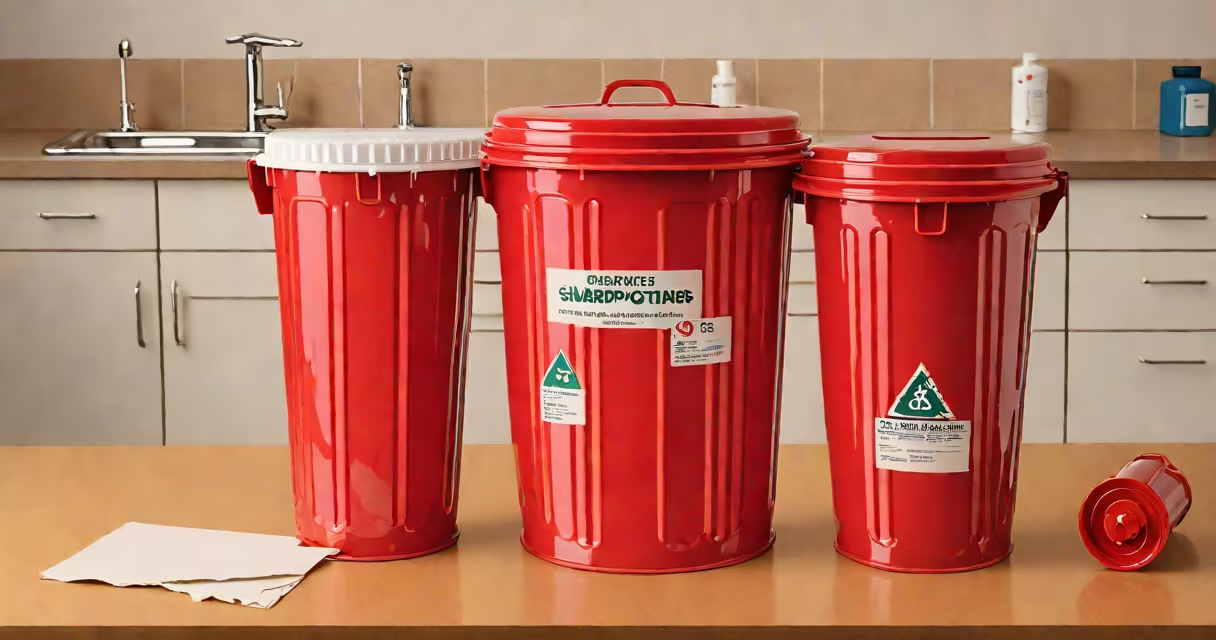
A sharps disposal container is a rigid, puncture-resistant, leak-proof container used to safely store used needles, syringes, scalpels, and other sharp medical devices. These containers are designed to prevent accidental injuries and reduce the risk of bloodborne pathogen exposure during disposal.
Used in healthcare facilities, pharmacies, and private homes, sharps disposal containers meet federal and state regulations for handling regulated medical waste. They are typically made of high-density polyethylene (HDPE) plastic, colored red or yellow to signal biohazard content, and labeled with universal biohazard symbols.
The U.S. Occupational Safety and Health Administration (OSHA) mandates that sharps must be discarded in approved containers within one meter of the point of use. Failure to comply increases the risk of needlestick injuries and disease transmission. According to the Centers for Disease Control and Prevention (CDC), approximately 385,000 needlestick injuries occur annually among U.S. healthcare workers-many preventable with proper disposal practices.
Sharps disposal containers are engineered to contain sharp objects without puncturing through the walls. The container's thick plastic walls resist penetration even under pressure. The lid aims to close securely and often includes a locking mechanism to prevent tampering or accidental opening during transport.
Once filled to the fill line (usually marked at 3/4 capacity), the container must be sealed and disposed of through a licensed medical waste handler. Overfilling increases the risk of spills and needlesticks during handling. Containers are never reused or repurposed-even if empty.
For home users, many states require that used sharps be returned via mail-back programs or dropped off at designated collection sites such as pharmacies, hospitals, or law enforcement offices. Some states mandate that residents not dispose of sharps in household trash due to public health risks.
Sharps disposal containers come in several forms based on use environment and regulatory requirements:
| Type | Use Case | Regulatory Standard | Key Features |
|---|---|---|---|
| Wall-mounted | Hospitals, clinics, dental offices | OSHA 29 CFR 1910.1030 | Fixed to wall, large capacity, often with foot pedal |
| Free-standing | Home use, small clinics | ANSI/HEPA 1000-2020 | Stable base, compact size, child-resistant lid |
| Mail-back kits | Home patients using insulin or injectable medications | FDA-approved packaging | Prepaid shipping label, durable outer box, absorbent lining |
Not all containers are equal. A study published in *The American Journal of Infection Control* found that 14% of improperly labeled containers failed to meet ANSI standards for puncture resistance. Always verify that your container bears the mark of a recognized standard-such as NSF International or UL certification.
Many people assume that any hard plastic container with a lid qualifies as a sharps disposal container. This is false. Household containers like detergent bottles or yogurt tubs lack puncture resistance and do not meet regulatory standards. Using them increases the risk of injury and may result in fines under state environmental laws.
Another common error is flushing sharps down the toilet. This is illegal in most states and poses serious hazards to sanitation workers and water treatment systems. In 2021, the EPA reported 12 confirmed cases of needle contamination in municipal wastewater systems linked to improper disposal.
I once observed a patient in a rural clinic attempt to reuse a sharps container after emptying it. The lid had warped from heat exposure, and the container was later found to have a 2mm hole near the base. It passed inspection only because the facility had trained staff who flagged the defect. That incident reinforced my belief that visual checks and regular replacement are essential.
Consider a diabetic patient using insulin injections daily. After each injection, they place the used needle into a free-standing sharps container. Once the container reaches the fill line (typically 3 inches below the rim), they seal it with a tamper-evident band and mail it back via a prepaid service like Sharpsmart or MedMinder.
The company then transports the container to a licensed medical waste incinerator. Incineration destroys pathogens and reduces volume by over 90%. The process is monitored by the Environmental Protection Agency (EPA) under RCRA Subtitle C regulations.
Without this system, the patient would face legal liability for improper disposal. In California, violating medical waste laws can result in fines up to $10,000 per incident. The container ensures compliance, safety, and environmental protection.
Containers are available at pharmacies, medical supply stores, and online retailers. Look for FDA-cleared products with clear labeling. Avoid generic "medical waste" bins sold on marketplaces unless they carry official certifications.
Disposal options vary by location. In New York City, residents can drop off sharps at over 200 designated drop-off points, including libraries and community centers. In Texas, the Department of State Health Services operates a statewide sharps collection program with 150 drop-off locations.
Using a sharps disposal container is not optional-it is a legal and ethical requirement in nearly all settings involving medical procedures. These containers protect individuals, healthcare providers, and the public from harm caused by improperly discarded sharp objects.
Always select a container that meets current regulatory standards, follow fill limits, and use approved disposal channels. When in doubt, consult your local health department or a certified medical waste provider.
Proper sharps disposal prevents injury, controls infection, and supports public health infrastructure. The container is not just a storage unit-it is a critical tool in safeguarding lives.