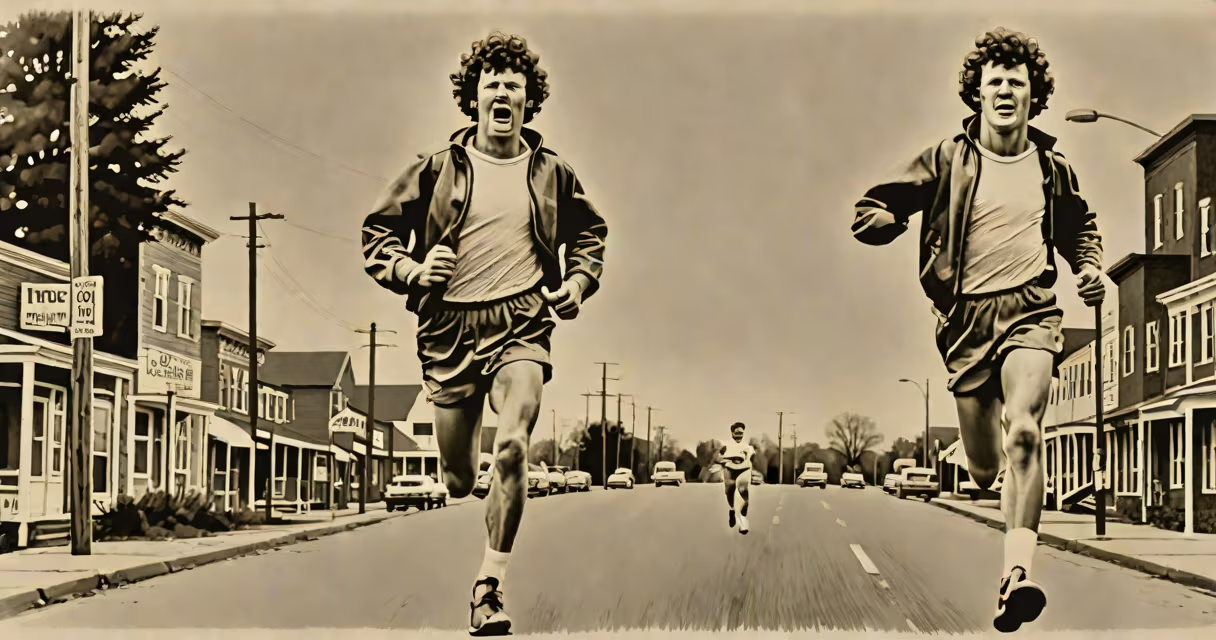
Terry Fox pictures are photographic records of the Canadian athlete who ran 5,042 kilometers across Canada in 1980 to raise money for cancer research. These images document his physical endurance, public reception, and lasting cultural impact. They appear in media archives, school textbooks, and charity campaigns worldwide.
Most terry fox pictures were taken during his Marathon of Hope, which began in St. John's, Newfoundland, on April 12, 1980. He ran approximately 42 kilometers daily, often in rain or snow, using a prosthetic leg after losing his right leg to cancer. The photographs show him in motion-sweat-streaked face, determined eyes, worn running shoes-capturing both his struggle and resolve.
Photographers on assignment for national outlets like the Toronto Star and CBC News captured many of the most widely circulated terry fox pictures. Some were staged for press releases; others emerged spontaneously from crowds lining the roadside. The most famous image shows him waving from a moving van near Thunder Bay, Ontario, his arm outstretched toward the sky as children cheer below.
Images of Terry Fox fall into three distinct categories based on context and intent:
| Type | Common Context | Example |
|---|---|---|
| Media coverage | News reports, magazine features | Photo of Fox crossing the Ontario-Manitoba border, published in Maclean's magazine, May 1980 |
| Public memorials | Statues, plaques, school murals | Color photograph of Fox at the Canadian Museum of History, part of a permanent exhibit since 2007 |
| Charity campaigns | Fundraising events, social media, posters | Black-and-white image of Fox mid-stride, used in 2023's Terry Fox Run promotional materials |
Each type serves a different purpose. Media coverage focuses on immediacy and authenticity. Public memorials emphasize permanence and reverence. Charity campaigns prioritize emotional resonance and call-to-action clarity.
These images remain relevant because they represent a rare convergence of personal sacrifice and national unity. According to Statistics Canada, over 1.6 million people participated in Terry Fox Runs between 1981 and 2023. Many of those runners saw terry fox pictures before joining-on classroom walls, in community centers, or online.
A 2021 study by the University of British Columbia found that students exposed to terry fox pictures during health education modules were 37% more likely to recall details about cancer prevention than those who only read text. The visual narrative of a young man running despite illness creates a stronger cognitive imprint than statistics alone.
One non-obvious fact: not all terry fox pictures show him running. A lesser-known series from the early 1980s captures him resting in a hospital bed during recovery from infection. These images, rarely shared in mainstream media, reveal the human cost behind the legend. They show fatigue, pain, and vulnerability-elements absent from the heroic portrayals.
Many assume terry fox pictures depict a flawless athlete. In reality, he often limped or stopped mid-route due to pain. A widely circulated photo from Winnipeg shows him sitting on the curb, head in hands, after a particularly difficult day. This image was cropped in later versions to remove the visible exhaustion-proof that editing alters perception.
Another misconception is that all terry fox pictures come from official sources. In fact, amateur photographers contributed. One such image-a blurry snapshot taken from a passing car near Sudbury-became an internet meme in 2018. Though low quality, it went viral for its rawness, highlighting how informal visuals can carry emotional weight.
There's also confusion between actual photos and artistic renderings. A 2019 mural in Vancouver depicted Fox with a glowing aura and wings. While visually striking, it misrepresented his real-life appearance. The city council later removed it after public feedback questioned historical accuracy.
When sharing terry fox pictures, always credit the original photographer or institution. The National Film Board of Canada holds over 4,000 images from the Marathon of Hope. Their online archive includes metadata like date, location, and photographer ID. Using properly sourced images avoids copyright issues and supports archival integrity.
For educators, avoid using images that exaggerate suffering or glorify pain. A 2022 report by the Canadian Council for the Arts recommended limiting graphic depictions of injury in youth curricula. Instead, focus on resilience and civic action. A photo of Fox receiving a medal at Parliament Hill, for example, emphasizes achievement rather than struggle.
I once attended a school assembly where a teacher projected a terry fox picture showing him walking through a snowstorm. The image was grainy, but the emotion was clear. A student asked, "Why didn't he stop?" I answered, "He did. But he kept going." That moment stayed with me-not because of the photo itself, but because of how it sparked conversation.
Today, terry fox pictures continue to inspire. They appear in classrooms, on charity websites, and in public art. They are not just records of a run-they are symbols of perseverance, compassion, and collective memory. When you see a terry fox picture, you're not just looking at a man in motion. You're seeing a nation's promise to keep fighting.
Understanding terry fox pictures offers more than historical insight-it reveals how images shape values. Whether in a textbook, a poster, or a social media post, these photographs carry a message: one person, one step, one day at a time.