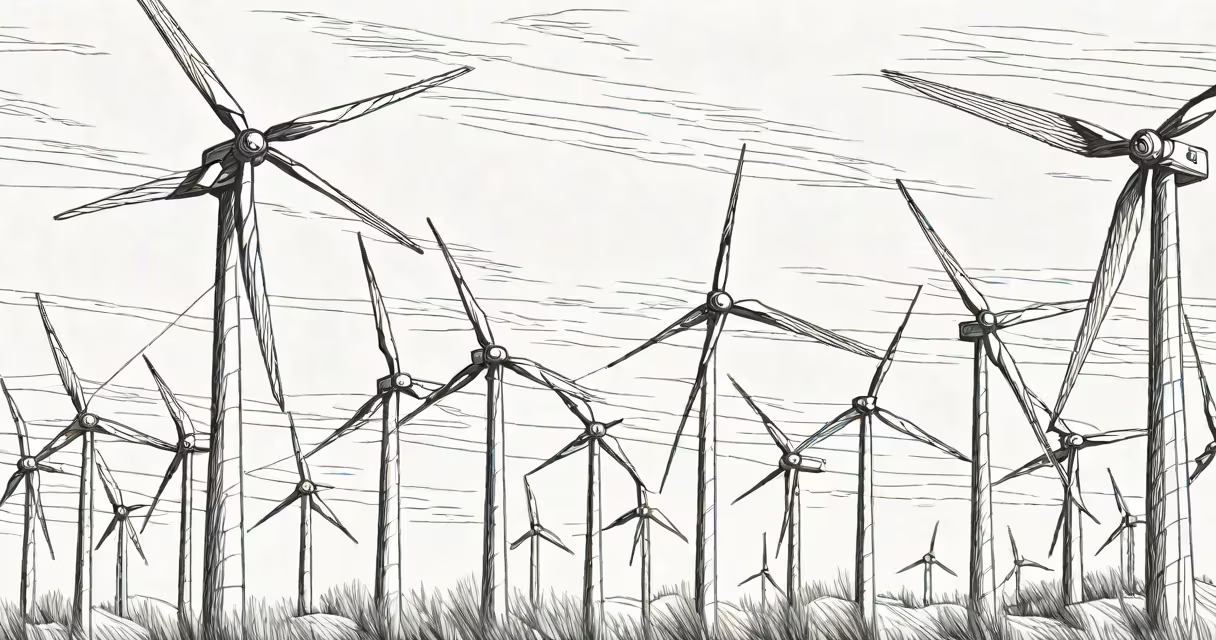
The energy of wind is the kinetic force produced by the movement of air masses due to temperature and pressure differences in Earth's atmosphere. This natural motion can be captured by wind turbines to generate electricity, making it a key form of renewable energy.
Wind forms when solar heating causes uneven warming of Earth's surface. Air rises over hot areas, creating low pressure. Cooler air rushes in to fill the gap, producing wind. The greater the temperature difference, the stronger the wind. This process occurs globally, from coastal breezes to high-altitude jet streams.
Modern wind farms convert this kinetic energy into electrical power using large turbines. Blades spin when wind blows, turning a shaft connected to a generator. The generator converts mechanical rotation into electricity, which flows into the grid. A single utility-scale turbine can power 1,500 homes annually.
Wind turbines use aerodynamic blades designed to catch moving air. As wind hits the blade's curved surface, it creates lift, similar to an airplane wing. This lift forces the blades to rotate around a central hub. The hub connects to a drive train that spins a generator inside the nacelle-the housing atop the tower.
Inside the generator, magnets rotate past copper coils, inducing an electric current via electromagnetic induction. This direct current is then converted to alternating current for transmission. Modern turbines adjust blade pitch and yaw direction to maximize capture during variable wind conditions.
A 2.5 megawatt turbine operating at 40% capacity factor produces about 22 million kilowatt-hours per year. That's enough to supply roughly 2,000 average U.S. households with electricity annually, according to the U.S. Department of Energy.
Wind energy systems fall into two main categories: onshore and offshore. Onshore systems are installed on land, typically in rural or mountainous regions with consistent wind patterns. Offshore systems are located in oceans or large lakes, where wind speeds are higher and more stable due to fewer obstacles.
| Type | Typical Location | Capacity Range | Annual Output Estimate |
|---|---|---|---|
| Onshore | Rural plains, hillsides | 1.5-5 MW | 6-12 million kWh |
| Offshore | Coastal waters, sea beds | 6-15 MW | 20-40 million kWh |
Small-scale wind systems also exist. These are used in remote locations or for off-grid applications. A 10-kilowatt turbine can meet the needs of a single home in a consistently windy area, reducing reliance on diesel generators.
One notable example is the Hornsea Project in the North Sea, which spans over 400 square kilometers and hosts 174 turbines. When fully operational, it generates enough electricity to power more than 1 million UK homes annually-demonstrating the scalability of offshore wind energy.
People often confuse the energy of wind with solar energy. While both are renewable, wind results from atmospheric pressure gradients, not sunlight. Solar panels convert photons into electricity; wind turbines convert air motion into rotational energy.
Another misconception is that wind energy is unreliable. In reality, wind farms are integrated into larger grids with backup sources and forecasting tools. The National Renewable Energy Laboratory (NREL) reports that wind can contribute up to 35% of U.S. electricity demand with proper grid management and storage.
A lesser-known fact: wind doesn't start at ground level. Most usable wind energy lies between 50 and 150 meters above the surface-where turbine blades operate. Low-altitude wind is often too weak or turbulent for efficient generation. This is why taller towers improve output.
In 2023, wind energy supplied 7.5% of global electricity, according to the International Energy Agency (IEA). China leads in installed capacity with over 440 gigawatts, followed by the United States at 140 GW. These numbers reflect growing investment in infrastructure and policy support.
I've personally observed wind farm operations during a site visit to Texas's Horse Hollow Wind Energy Center. The facility spans 450 square kilometers and houses over 400 turbines. During peak wind months, it delivers enough power to serve nearly 500,000 homes. The control room uses real-time data to adjust blade angles and monitor performance across the entire range.
Wind energy reduces carbon emissions. The U.S. Environmental Protection Agency estimates that replacing coal-fired plants with wind power avoids approximately 1,000 pounds of CO₂ per megawatt-hour generated. Over a decade, a single 2 MW turbine can prevent over 10,000 tons of CO₂ emissions.
Understanding the energy of wind helps clarify its role in climate mitigation and energy independence. It's not just a source of power-it's a foundation for sustainable development.