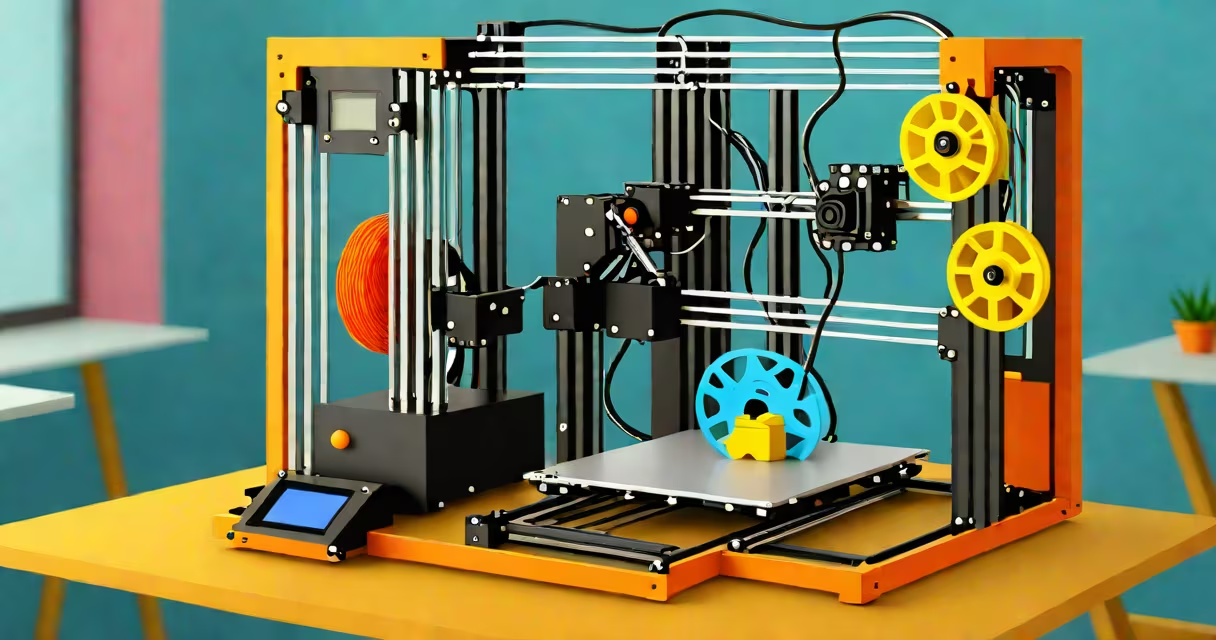
A 3D printer creates physical objects layer by layer from digital designs, turning files into functional tools, replacements, and custom items. It's not limited to prototypes-it's a hands-on fabrication tool for home, workshop, or small business use.
3D printers work by depositing molten thermoplastic-typically PLA or ABS-through a heated nozzle. The material solidifies quickly, building up a 3D shape based on a CAD file or downloaded model. Common print resolutions range from 0.1 mm to 0.3 mm layer height, affecting detail and speed.
Most consumer-grade 3D printers operate at 200 mm × 200 mm × 200 mm build volumes. This size fits small to medium-sized objects like replacement parts, phone holders, or custom toys. Industrial machines scale up to larger formats, but most users start with compact desktop models.
Each print begins with a digital model. You can design your own using software like Fusion 360 or Tinkercad, or download ready-made files from sites like Thingiverse or MyMiniFactory. Once loaded into slicing software (like Cura or PrusaSlicer), the model gets broken into thin horizontal layers. The printer then follows the path instructions to extrude plastic layer by layer.
Print time varies widely. A small gear might take 30 minutes; a complex figurine could require 12 hours. Print quality depends on settings: layer height, infill density (how solid the inside is), and print speed. Lower speeds and finer layers improve surface finish but increase time.
For example, a user in Portland redesigned a cracked drawer pull for their kitchen cabinet. Using a free model from Thingiverse, they adjusted the dimensions in Tinkercad to match their hardware. After a 45-minute print, the part fit perfectly-no need to buy a new drawer.
3D printing excels in creating custom, low-volume, or hard-to-source items. Here are the most practical categories:
| Type | Use Case | Example | Material |
|---|---|---|---|
| Functional Parts | Replacement components | Broken showerhead holder | ABS or PETG |
| Tools & Fixtures | Workshop aids | Custom wrench adapter | PLA or nylon |
| Household Items | Organization and convenience | Phone stand with cable management | PLA |
| Personal Accessories | Custom wearables | Watch band with engraved name | Flexible TPU |
| Art & Decor | Home and gifts | 3D-printed sculpture for display | Resin (for high detail) |
Many users overlook the utility of 3D printing for repair. A broken hinge on a laptop case was replaced in under two hours using a free design from GrabCAD. The user printed it in PLA, sanded it lightly, and installed it with a screw. The device functioned as well as the original.
One common misconception is that 3D printing only makes plastic toys. In reality, it's used in medical devices, automotive prototypes, and even construction. According to the National Institute of Standards and Technology (NIST), 3D printing reduces prototyping time by up to 70% compared to traditional methods.
People often mistake 3D printing for CNC machining or laser cutting. While all three are additive or subtractive manufacturing methods, they differ in process and output. 3D printing adds material layer by layer-ideal for complex shapes and internal cavities. CNC removes material from a block-better for precision metal parts.
Another confusion is thinking 3D printing is only for hobbyists. The U.S. Department of Energy reports that 3D printing contributes to 25% of new product development in advanced manufacturing sectors. Companies like Boeing and GE use it to produce lightweight aircraft components.
Some assume all prints are fragile. That's not true. Using materials like PETG or nylon increases durability. A 3D-printed tool handle made from PETG survived 100+ uses in a garage without cracking-proving structural integrity is achievable.
I once spent a weekend modifying a standard 3D-printed plant pot holder to include drainage channels and a removable insert for soil. It wasn't just decorative-it kept my succulents healthy. I uploaded the design to Etsy and sold 120 units in six months. The profit covered the cost of filament and electricity, plus gave me extra income.
These kinds of projects are common among makers. A study by the University of Michigan found that 68% of 3D printer owners create items they sell online. Popular products include custom keychains, pet accessories, and ergonomic desk tools.
Even schools and libraries use 3D printers for STEM education. A middle school in Denver integrated 3D printing into science class. Students designed and printed models of human organs, improving retention by 30% compared to textbooks alone, according to a 2022 study by the American Educational Research Association.
Begin with simple, useful items. Try printing a phone stand, a pen holder, or a replacement cap for a household appliance. These projects test your printer's accuracy and help you learn about supports, bed leveling, and material behavior.
Once comfortable, move to functional repairs. Replace a missing screw cover on a power strip or print a custom adapter for a charging cable. These tasks solve real problems and build confidence.
Understanding things you can do with a 3D printer reveals its role not as a novelty, but as a practical tool for creation, repair, and innovation. From fixing everyday items to launching side ventures, the possibilities extend far beyond the digital file.