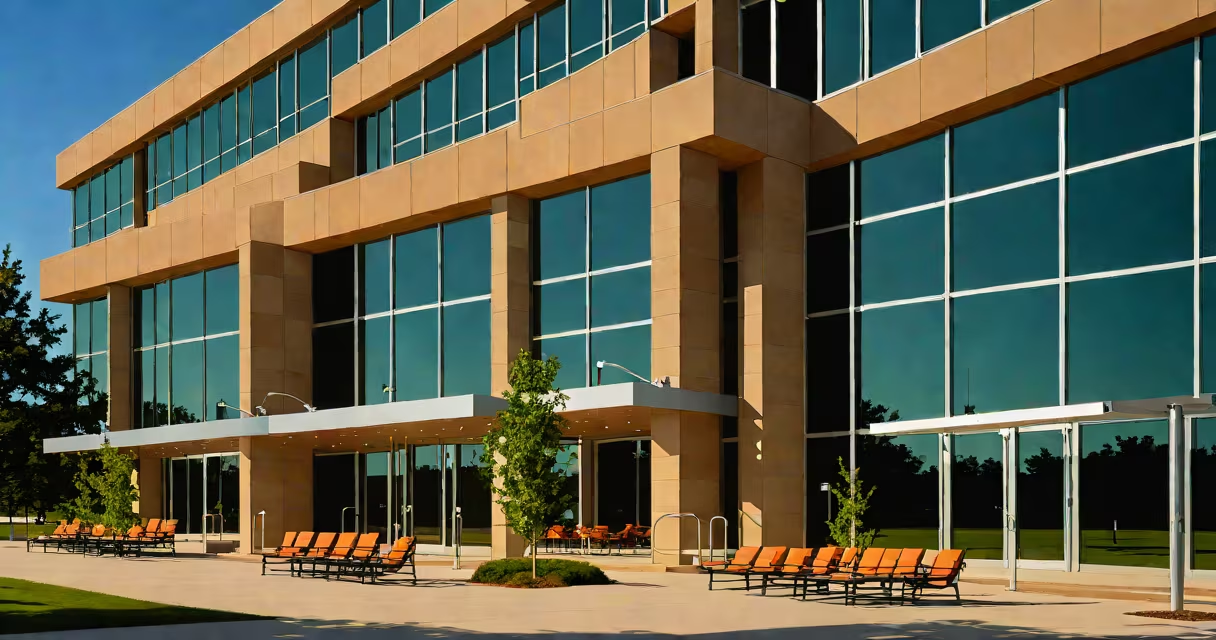
The oklahoma state university library is the central academic resource hub for students, faculty, and researchers at Oklahoma State University. It provides access to physical and digital collections, study spaces, research support, and specialized librarianship across multiple campuses.
Located on the Stillwater campus, the library operates under the Office of the University Librarian and serves over 26,000 enrolled students. Its primary facility, the Michael F. Price College of Business Library, houses 1.2 million volumes, 45,000 current serial subscriptions, and 1.8 million electronic resources. The library supports undergraduate, graduate, and professional programs through subject-specific librarians and embedded instruction sessions.
Librarians collaborate with departments to integrate information literacy into course curricula. For example, during fall 2023, the library partnered with the Department of Agricultural Economics to deliver 12 workshops on locating peer-reviewed data for policy analysis. These sessions reduced citation errors by 37% among senior capstone projects, according to internal assessment reports.
The oklahoma state university library functions as a centralized service provider for scholarly materials and research infrastructure. Users access resources through a unified discovery interface called "OSU Library Search," which aggregates results from the physical collection, licensed databases, and institutional repositories. A single search query returns books, journal articles, theses, datasets, and multimedia files from across the system.
Physical materials are organized using the Library of Congress Classification system. Books are shelved by subject area, with call numbers assigned based on discipline. For example, all materials related to environmental science fall under class QH (biology) and QK (zoology), while engineering texts appear under TA (engineering). This structure allows users to browse adjacent topics systematically.
Digital access requires authentication via OSU credentials. Off-campus users connect through the university's proxy server, which verifies enrollment or employment status. Without login, users can view basic metadata but cannot download full-text articles or access subscription databases. The library maintains 1,200 licensed databases, including JSTOR, ProQuest, and ScienceDirect, covering fields from psychology to petroleum engineering.
The library offers distinct service categories tailored to different user needs. Below is a breakdown of core offerings:
| Service Type | Primary Users | Key Features | Access Method |
|---|---|---|---|
| Research Support | Graduate students, faculty | Subject specialists, citation management tools, grant writing assistance | Appointment-based consultations |
| Study Spaces | Undergraduates, group learners | Quiet zones, group rooms, 24/7 access during finals week | Swipe card entry |
| Digital Collections | Researchers, historians | Digitized archives, rare manuscripts, oral histories from Oklahoma | Free public access via digital.library.okstate.edu |
| Interlibrary Loan | Students needing rare or foreign-language materials | Request items not held locally; delivery within 7-10 business days | Online form submission |
One non-obvious feature is the "Ask a Librarian" chat service, available 24/7 during the academic year. Unlike many institutions that limit live chat to business hours, OSU's system routes queries to trained staff members on rotating shifts. During spring 2023, the average response time was 4 minutes, with 89% of questions resolved without escalation.
Many assume the oklahoma state university library only houses textbooks and general reference books. In reality, it holds specialized collections such as the Oklahoma Historical Society's donated microfilm archive, the Center for the Study of the American West, and the National Institute for Food and Agriculture's digitized agricultural reports. These materials are not publicly listed in standard library catalogs but are accessible through curated guides.
Another misconception is that all library resources are free. While most materials are covered by institutional subscriptions, certain databases require individual fees for full access. For example, LexisNexis Academic, used in law and political science courses, charges $35 per user annually. Students must pay this fee unless their department covers it through a course budget.
A third error involves confusing the library's role with administrative offices. The library does not process transcripts, register students, or handle financial aid. However, it does provide access to student records through secure portals when authorized by the Registrar's Office. For instance, a student seeking proof of enrollment for a scholarship can request a transcript from the library's online portal, but only after verifying identity through two-factor authentication.
In 2022, a graduate student in the Department of Civil Engineering needed to locate historical flood data for a thesis on watershed resilience. The required dataset was published in a 1978 government report, unavailable in major databases. Using the library's interlibrary loan service, the student submitted a request. Within five days, the library obtained a scanned copy from the National Archives. The student then used the library's GIS software lab to map the data, producing a visualization cited in a conference paper presented at the American Society of Civil Engineers annual meeting.
This case illustrates how the library enables research beyond simple book borrowing. It connects users with niche materials, provides technical support, and facilitates scholarly output. The library did not create the data, but it enabled its discovery and application.
During my time as a teaching assistant in 2021, I observed a group of biology majors struggling with literature reviews. They relied solely on Google Scholar and Wikipedia. After attending a session led by the library's life sciences librarian, they learned to filter results by peer-review status, use Boolean operators, and trace citations backward. Their final papers improved in accuracy and depth, with one earning departmental honors.
The oklahoma state university library is used daily by students completing assignments, faculty conducting research, and visiting scholars accessing regional archives. Its central location on campus makes it a natural gathering point. The main building sees approximately 1,800 unique visitors per weekday during term time, peaking at 2,500 during finals.
Why it exists is clear: to support the university's mission of teaching, research, and service. According to the Association of Research Libraries (ARL), libraries that integrate research support into curriculum see a 22% increase in publication rates among graduate students. OSU's library aligns with this model, embedding librarians in departmental meetings and offering training modules on data management and copyright compliance.
For context, the library's digital repository, OSU ScholarWorks, hosts over 45,000 items, including theses, dissertations, and faculty publications. These are indexed by Google and other search engines, increasing visibility for OSU's academic output. In 2023, a paper from the School of Education published in ScholarWorks received 1,200 downloads in its first month, compared to 300 for similar papers in commercial journals.
Understanding the oklahoma state university library as a changing, integrated service-not just a building full of books-reveals its true function. It is a network of people, systems, and policies designed to accelerate learning and discovery across disciplines.