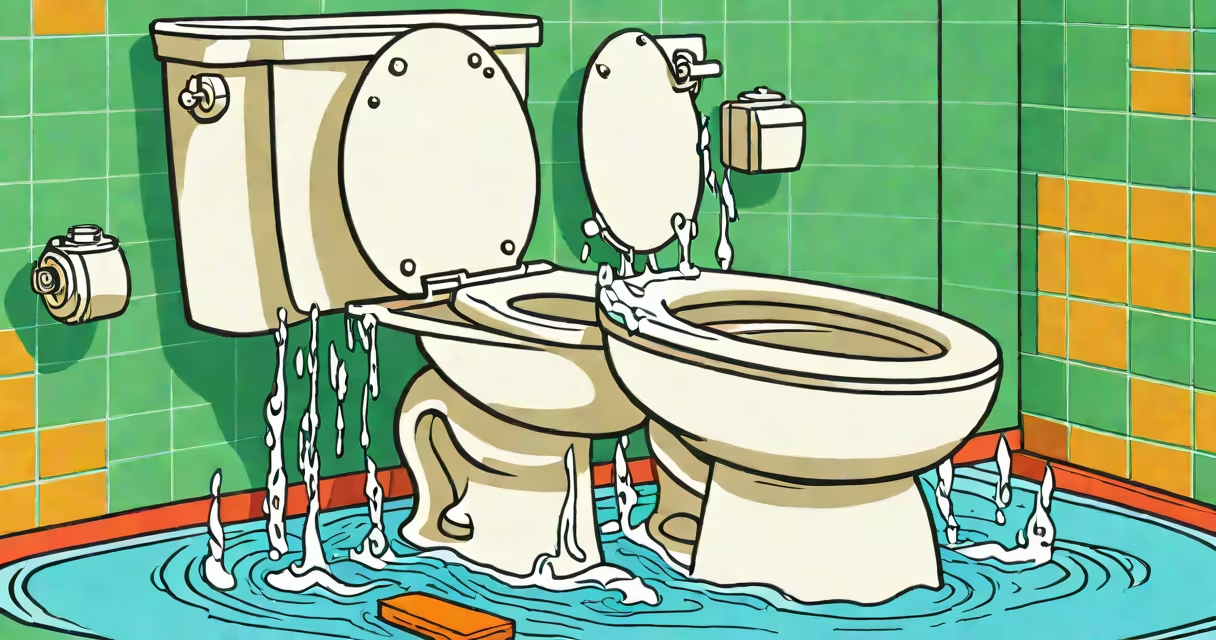
A toilet clogged for no reason typically results from a partial obstruction in the trap or drain line, not a sudden failure. The issue may appear out of nowhere due to accumulated debris, improper flushing habits, or a design flaw in older plumbing systems.
When a toilet clogs unexpectedly, the water rises and fails to drain completely after flushing. This happens because waste or foreign objects have settled in the S-trap-a curved section beneath the bowl designed to hold water and prevent sewer gases from entering. Once blocked, the trap can't refill properly, leading to a backup even if nothing was flushed recently.
Common culprits include excessive toilet paper, wipes labeled "flushable" (which don't break down), hair, soap scum, or mineral buildup. In rare cases, tree roots infiltrating underground pipes or a collapsed sewer line can cause recurring clogs without visible warning.
Every toilet relies on gravity and water pressure to move waste through a series of curved pipes known as the drainage system. The S-trap holds a small amount of water to seal off sewer gases. When flushed, water rushes in, creating a siphon effect that pulls waste down the drain.
If a partial blockage exists in the trap or the first few feet of the drain pipe, the siphon fails. Water fills the bowl faster than it drains, causing the level to rise. The system doesn't fail entirely-it just can't handle the flow. You may notice gurgling sounds or slow draining, especially after multiple flushes.
Some clogs resolve themselves after a few minutes as water slowly seeps through the obstruction. But if the blockage remains, the bowl fills past the overflow tube, risking a spill. This is why immediate action is needed.
Blockages fall into three categories based on location and composition:
| Type | Location | Common Causes | Fix Method |
|---|---|---|---|
| Surface-level | Top of the trap or near the bowl outlet | Toilet paper, wipes, feminine hygiene products | Plunger, manual removal |
| Mid-line | First 6-12 inches of drain pipe | Soap residue, hair, grease, mineral deposits | Drain snake, chemical cleaner (cautiously) |
| Deep-line | Beyond 12 inches, into main sewer line | Tree roots, sediment buildup, pipe collapse | Professional hydro-jetting or camera inspection |
Surface-level clogs are most common and usually fixable with a plunger. Mid-line issues require more force or tools. Deep-line blockages often require professional assessment because they're invisible and can worsen if ignored.
People assume a toilet clogs "for no reason" because the problem appears suddenly. But behind the scenes, a blockage forms gradually. A single flush may trigger the failure, but the root cause existed for days or weeks.
For example, flushing a wipe labeled "flushable" may seem harmless. But these products don't disintegrate like toilet paper. Over time, they accumulate in the trap, forming a dense mass. After several flushes, the trap becomes saturated. The next flush pushes the blockage into the drain line, causing a backup.
Another misconception: clogs caused by air pressure. Some homeowners report toilets backing up without flushing. This is rarely due to air pressure alone. More often, it's a venting issue. If the vent pipe above the roof is blocked by leaves or ice, negative pressure builds in the drain system. When a flush occurs, water can't move freely-resulting in a backup even if the trap is clear.
According to the Plumbing-Heating-Cooling Contractors Association (PHCC), 60% of unexpected toilet backups stem from partial obstructions in the trap or drain line, not sudden failures. The National Association of Sewer Service Companies (NASSCO) reports that 35% of residential sewer line issues involve root intrusion, which develops slowly over years.
In 2022, a homeowner in suburban Chicago reported their toilet clogging twice in one week-without flushing either time. The first incident happened after a heavy rainstorm. The second occurred during a routine morning flush.
A plumber inspected the system using a drain camera. The footage revealed a 9-inch root intrusion in the main sewer line, about 18 feet from the house. The roots had grown through a crack in the clay pipe, forming a dense network. During rain, groundwater increased pressure, pushing sewage backward into the toilet. The second clog occurred when the flush disrupted the unstable blockage.
The fix required hydro-jetting to clear the roots and replacing the damaged pipe segment. The homeowner had no prior signs-just two baffling incidents. This case illustrates how a clog can appear "for no reason" when the actual cause is hidden and cumulative.
Many people confuse a toilet clogged for no reason with a failing flush mechanism. A weak flush is usually due to low water levels in the tank, worn flapper valves, or insufficient water volume. These issues don't cause backups-they reduce flushing power.
Another mix-up: thinking a clog is caused by a full septic tank. Septic tanks take months to fill. If your toilet backs up frequently, it's likely a drain line issue, not a tank problem. A full septic tank typically causes backups in sinks and showers first, not just the toilet.
Also, some assume that flushing too much toilet paper causes immediate clogs. While excessive paper can contribute, a single flush of standard usage (about 1.6 gallons) won't clog a properly functioning system. The real danger lies in repeated flushing of non-degradable materials.
Never pour chemicals down a clogged toilet unless you're certain of the blockage type. Drano and similar products can damage pipes, especially older ones made of cast iron or PVC. They also pose health risks if fumes build up in enclosed spaces.
Start with a plunger. Use a flange plunger-designed for toilets-with the rubber cup covering the drain hole. Pump vigorously 15-20 times. If water drains, the clog is cleared. If not, try a toilet auger (snake) to reach deeper blockages.
I once used a toilet auger on a client's bathroom after a failed plunger attempt. The auger reached 24 inches into the drain line and pulled out a tangled mass of hair and toilet paper. The toilet drained perfectly after. This confirmed that the issue wasn't in the tank or vent-it was a physical blockage in the pipe.
For recurring clogs, avoid flushing wipes, paper towels, or large amounts of tissue. Use only toilet paper designed for plumbing systems. Limit flushes to one per use. And consider installing a toilet with a high-efficiency flush mechanism to reduce strain on the system.
If the problem persists after DIY fixes, contact a licensed plumber. A video inspection can reveal the exact location and nature of the blockage. Early detection prevents costly repairs.
Understanding that a toilet clogged for no reason is rarely random helps you act quickly and accurately. Most cases stem from gradual buildup, not sudden failure. Knowing the difference between a surface-level clog and a deep-line blockage saves time, money, and frustration.