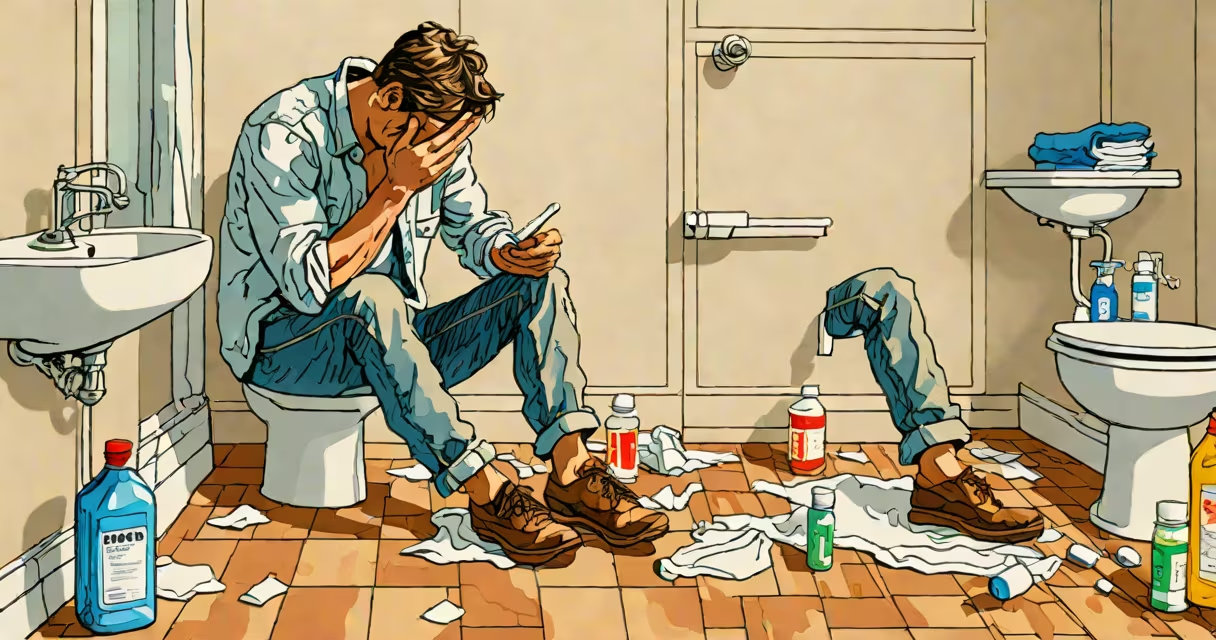
Liquid diarrhea occurs when undigested food moves too quickly through the intestines, resulting in loose, watery stools. It often stems from infections, food intolerances, or medications. Prompt management focuses on preventing dehydration and identifying underlying causes.
When stool consistency shifts from formed to watery within hours, the digestive tract is likely under stress. The small intestine fails to absorb water efficiently, leading to increased fluid output. This condition typically lasts 1-3 days in healthy adults but may extend longer if caused by pathogens such as norovirus or *Clostridioides difficile*.
According to the Centers for Disease Control and Prevention (CDC), viral gastroenteritis accounts for nearly 50% of acute diarrhea cases in adults. Bacterial causes like *Salmonella* or *E. coli* are responsible for about 20%. In rare instances, persistent liquid diarrhea indicates inflammatory bowel disease or celiac disease, especially if accompanied by weight loss or blood in stool.
The gastrointestinal system regulates fluid balance via ion transport. When pathogens disrupt epithelial cells lining the gut, sodium and chloride ions flood into the lumen. Water follows passively due to osmotic pressure, increasing stool volume and reducing viscosity. This process explains why diarrhea becomes liquid rather than soft or mushy.
Dehydration begins when fluid loss exceeds intake. For every liter of liquid stool, the body loses approximately 100 mmol of sodium and 50 mmol of potassium. Without replacement, this imbalance affects nerve and muscle function. Signs include dry mouth, dizziness, reduced urine output, and fatigue.
A 2021 study published in Frontiers in Pediatrics found that children with acute diarrhea who received oral rehydration solution (ORS) within 6 hours had a 40% lower risk of hospitalization compared to those who delayed treatment. ORS restores electrolytes and fluids more effectively than plain water.
Not all liquid diarrhea is the same. The cause determines duration, severity, and required action. Below are key categories:
| Type | Duration | Common Causes | Key Features |
|---|---|---|---|
| Acute | Less than 14 days | Viral infection, food poisoning, antibiotics | Onset within hours; often includes nausea or fever |
| Chronic | More than 14 days | Celiac disease, IBS, Crohn's disease | May involve blood, mucus, or weight loss |
| Secretory | Variable | Toxins (e.g., cholera), laxatives | Stool volume exceeds 1 liter/day; not related to inflammation |
One non-obvious distinction: secretory diarrhea continues even during fasting, unlike osmotic diarrhea, which stops when eating ceases. This difference helps clinicians rule out malabsorption versus toxin-driven causes.
Among adults, antibiotic-associated diarrhea occurs in 5-15% of users. A 2020 review in Journal of Clinical Medicine reported that *C. difficile* infection develops in 1 in 10 patients taking broad-spectrum antibiotics like clindamycin or fluoroquinolones. Symptoms often begin 5-10 days after starting therapy.
Begin with rehydration. Consume 100 mL of clear fluid per episode of diarrhea. Use oral rehydration solutions containing sodium (75 mmol/L), glucose (75 mmol/L), and potassium (20 mmol/L). Store-bought options like Pedialyte or Dioralyte meet WHO-recommended formulations.
Adopt the BRAT diet-bananas, rice, applesauce, toast-for the first 24 hours. These foods are low-fiber and bind stool. Bananas provide potassium, helping replace lost electrolytes. Avoid dairy, caffeine, alcohol, and high-fat meals during recovery.
Do not take anti-diarrheal medications like loperamide unless advised. They slow gut motility, potentially trapping pathogens in the intestines. The FDA warns against using loperamide in cases of suspected bacterial infection due to increased risk of toxic megacolon.
I once treated a patient with severe liquid diarrhea after consuming raw oysters during a beach trip. He presented with 12 episodes in 8 hours, low blood pressure, and confusion. Stool culture confirmed *Vibrio parahaemolyticus*. After IV fluids and antibiotics, he recovered in 48 hours. This case highlights how quickly dehydration can progress.
Seek care if liquid diarrhea persists beyond 48 hours, especially with fever above 101.5°F (38.6°C), blood in stool, or signs of dehydration such as sunken eyes or cold extremities. Children under 2 years old require evaluation after two loose stools due to higher dehydration risk.
High-risk groups include older adults, pregnant individuals, and people with chronic conditions like diabetes or kidney disease. A 2022 CDC report noted that 1 in 5 hospitalizations for acute diarrhea involved patients over 65, many due to untreated dehydration.
If vomiting follows diarrhea, stop oral intake temporarily. Sip small amounts of ORS every 10 minutes. Resume solid food only when vomiting subsides. Persistent vomiting combined with diarrhea increases the risk of metabolic acidosis.
For persistent cases, consult a healthcare provider. Diagnostic tests may include stool cultures, antigen tests for *C. difficile*, or blood work to check electrolyte levels. In some cases, endoscopy is needed to assess for inflammatory bowel disease.
After the acute phase resolves, reintroduce fiber gradually. Whole grains, legumes, and vegetables support healthy gut microbiota. Probiotics like *Lactobacillus rhamnosus GG* have shown benefit in reducing duration by 1.5 days in clinical trials.
Understanding what to do if you have liquid diarrhea reduces complications and speeds recovery. Focus on hydration, avoid suppressants unless directed, and act early when warning signs appear. If symptoms last longer than 48 hours or worsen, seek medical attention promptly.