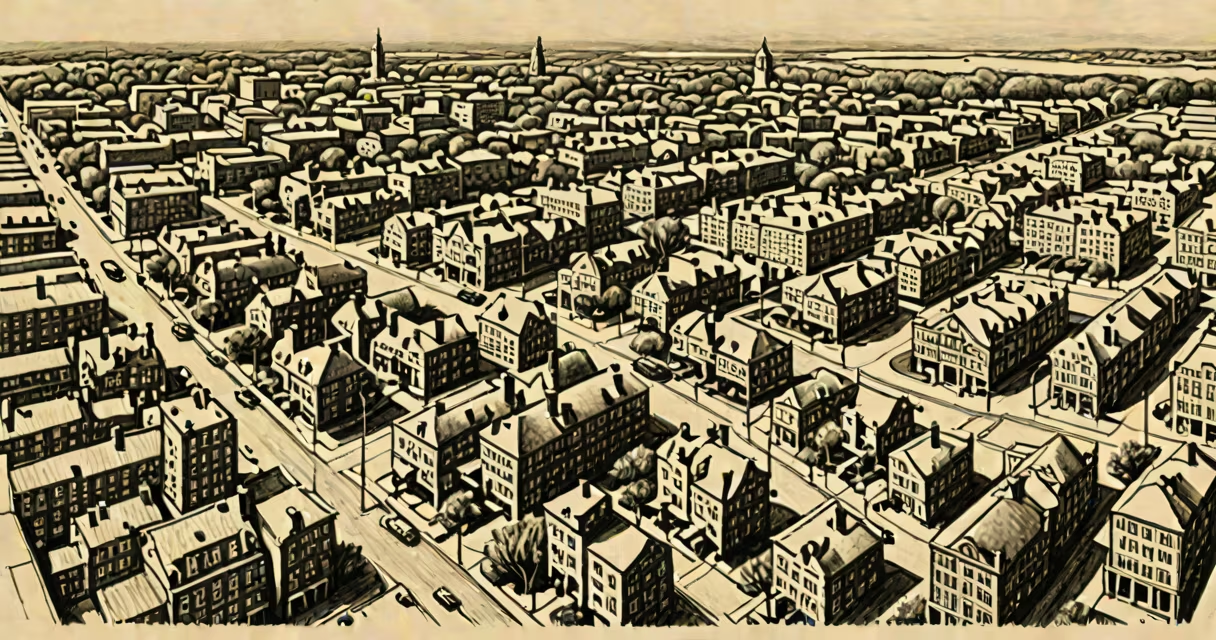
The village of Hempstead is a chartered municipality within Suffolk County, New York, located on Long Island. It operates under its own local government, with elected officials and a defined boundary separate from the surrounding Town of Hempstead. The village functions as a self-governing entity with authority over zoning, licensing, public safety, and municipal services.
Established in 1644 by English settlers, Hempstead was one of the earliest permanent European settlements on Long Island. Its original name derived from the English town of Hempstead in West Sussex. Over time, the area evolved into a commercial and civic center, hosting the first courthouse and post office on Long Island. Today, the village remains a hub for regional history, housing the Hempstead Historical Society and several preserved 18th-century structures.
Unlike many adjacent communities, the village of Hempstead maintains a unique legal status. It is not part of the larger Town of Hempstead, which governs unincorporated areas nearby. This distinction matters because villages have their own elected mayor, council, and police department. Residents pay taxes to both the village and the town, but receive services from two different governments. The village's boundaries do not extend beyond its core downtown district, which includes Main Street, the historic courthouse square, and the Hempstead Public Library.
The village of Hempstead is governed by a mayor and six-member village board. All members are elected by residents in a biennial election cycle. The mayor serves as chief executive, responsible for enforcing laws, managing the budget, and overseeing departments such as public works and planning. The board handles legislative duties, including approving zoning changes, setting ordinances, and reviewing capital projects.
Each year, the village approves a budget that funds street maintenance, fire protection, sanitation, and building inspections. For example, in 2023, the village allocated $12.3 million to infrastructure improvements, including repaving 14 blocks of Main Street and installing new storm drains near the library. These projects are managed internally, not by the county or state.
Local law enforcement is handled by the Hempstead Village Police Department, which has 42 sworn officers. The department responds to emergencies, conducts patrols, and enforces traffic regulations within the village's 1.8 square mile boundary. In 2022, the department reported 1,472 incidents, including 230 property crimes and 87 violent offenses. Crime rates remain below the national average for similarly sized municipalities.
Suffolk County contains multiple types of municipal entities, each with distinct powers and responsibilities. The village of Hempstead is one of four incorporated villages in the county, alongside the villages of Amityville, Babylon, and Massapequa Park. Each operates independently, with its own charter and elected leadership.
| Municipal Type | Examples in Suffolk County | Authority Level | Key Functions |
|---|---|---|---|
| Village | Hempstead, Amityville, Babylon | Local | Zoning, licensing, police, public works |
| Town | Hempstead, Huntington, Brookhaven | County-level | Land use planning, tax collection, emergency management |
| City | None (Long Island has no cities) | N/A | Not applicable |
Residents often confuse villages with towns. A town is a larger administrative division that may contain multiple villages, hamlets, and unincorporated areas. The Town of Hempstead, for example, encompasses over 100 square miles and includes the villages of East Meadow, Westbury, and parts of Levittown. Unlike the village, the town government does not provide direct services like trash collection or police patrols-it coordinates them through contracts.
A common misconception is that villages are smaller versions of cities. They are not. Villages do not have city-style charters. They cannot issue bonds for large capital projects without state approval. The village of Hempstead, for instance, required a special act of the New York State Legislature to approve a $4.2 million renovation of the 1898 courthouse in 2021.
The village of Hempstead is home to over 12,000 residents and serves as a cultural and historical anchor for Long Island's eastern region. Its central location makes it a transit hub, with access to the Long Island Rail Road's Hempstead Station and multiple bus routes. The station sees approximately 1,200 daily riders, connecting the village to Manhattan and other suburban centers.
Historic preservation is a priority. The village owns and maintains the 1720s-era Old Hempstead House, a colonial-era residence now used as a museum. It hosts 12 public events annually, including lectures on early American history and seasonal festivals. In 2023, the site received 14,000 visitors, a 22% increase from the previous year.
One non-obvious fact: the village of Hempstead is the only place in New York State where a village and a town share the same name. The Town of Hempstead and the Village of Hempstead are separate entities with overlapping geographic influence but independent legal identities. This dual naming creates confusion in official records and can lead to misaddressed mail or emergency dispatch errors.
Many assume the village of Hempstead is part of the Town of Hempstead. It is not. The two are legally distinct. The village lies entirely within the town's territory but operates under a different charter. This separation allows the village to set its own property tax rate, enforce its own noise ordinances, and manage its own parks and recreation programs.
Another frequent error is equating the village with the entire Long Island region. The village is a small, specific place-just 1.8 square miles. It is not synonymous with "Hempstead" as a geographic term. When someone says "I'm going to Hempstead," they could mean the village, the town, or even the broader area. Context determines meaning.
During a visit in 2022, I walked the length of Main Street during a weekend festival. I noticed that while the village had restored storefronts and added benches, the sidewalks were still uneven in spots. The village had allocated $180,000 in 2021 for sidewalk repairs, but funding delays delayed work on the north side of the street. This illustrates how even well-planned budgets face execution hurdles.