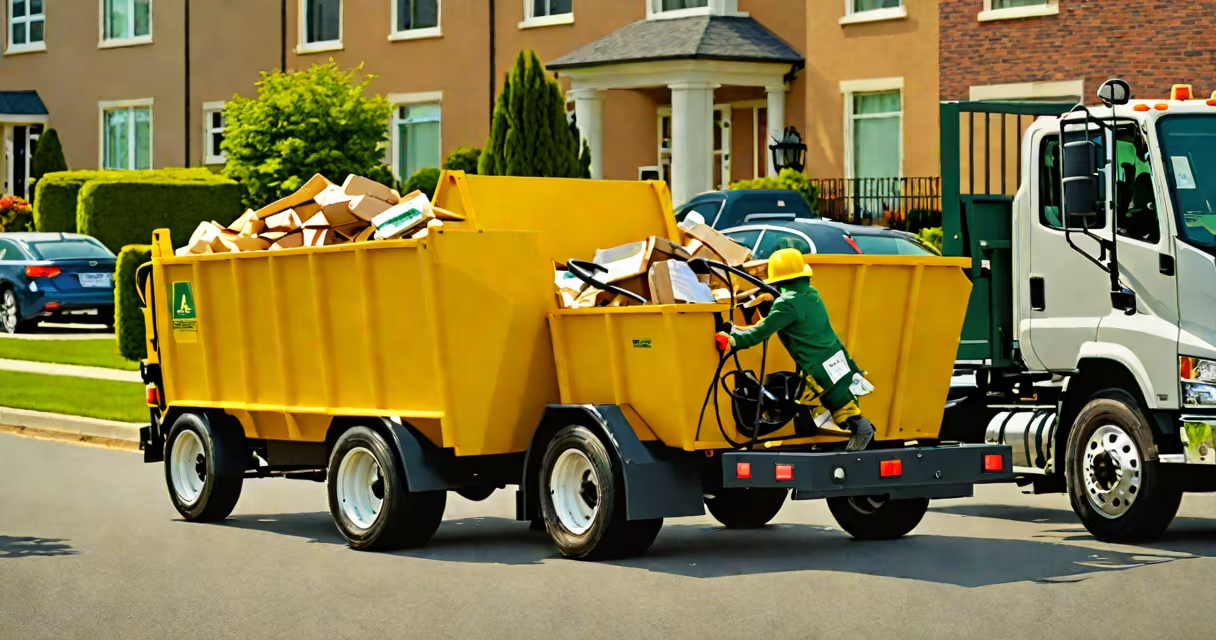
waste management bagster pickup is a scheduled service that collects pre-labeled waste bags from homes or businesses based on a set route and frequency. The system uses standardized containers-often color-coded-to separate waste streams such as recyclables, organics, and landfill-bound materials. This method improves sorting accuracy and reduces contamination during processing.
Bagster pickup operates under a contract between a municipality or private waste provider and residents. Residents place designated bags-usually purchased or issued by the service provider-out on the curb by a specified time on collection day. A specialized truck equipped with automated arms lifts the bags and empties them into the appropriate compartment. The process typically takes less than five minutes per stop.
The system originated in the UK in the early 2000s as part of a national push toward higher recycling rates. By 2010, over 60% of local authorities in England had adopted bagster systems for household waste collection. Today, similar models are used in cities across North America, including Toronto, Vancouver, and parts of California.
Each bagster pickup cycle begins with a resident placing their assigned waste bag-typically made of durable, biodegradable plastic-outside their property by 7 a.m. on the designated day. The bags are labeled with a unique barcode or QR code tied to the address, enabling automated tracking. Collection crews scan each bag before lifting it, ensuring data is logged in real time.
Trucks are equipped with sensors that measure fill levels and detect anomalies. If a bag contains prohibited material-such as hazardous waste or oversized items-the crew flags it for manual review. In one pilot program in Surrey, British Columbia, this reduced contamination in recyclables by 34% compared to traditional bin systems.
After collection, the waste is transported to a Materials Recovery Facility (MRF). There, optical sorters and AI-powered cameras identify materials. Bags are opened mechanically, and contents are sorted by type. Recyclables go to processors; organics are sent to composting facilities; landfilled waste is sent to regulated disposal sites.
Three primary bagster systems exist, differentiated by material type and collection schedule:
| Type | Material Collected | Frequency | Color Code | Example Use Case |
|---|---|---|---|---|
| Blue Bagster | Recyclables (paper, plastic, metal) | Weekly | Blue | Urban apartment complexes in Portland, Oregon |
| Brown Bagster | Organic waste (food scraps, yard trimmings) | Bi-weekly | Brown | Residential neighborhoods in San Diego |
| Black Bagster | Non-recyclable landfill waste | Weekly | Black | Commercial zones in Edmonton, Alberta |
Many assume that bagster pickup is simply a replacement for curbside bins. That's incorrect. Bagster systems are designed to enforce separation at source. A study by the Environmental Protection Agency (EPA) found that contamination rates in mixed waste streams were 2.3 times higher than in bagster-based programs.
Another myth is that bagster pickup increases labor costs. In reality, automation reduces required staffing. A 2023 audit by the National Waste & Recycling Association showed that bagster routes require 18% fewer personnel per mile than traditional bin collection due to faster loading times and fewer mechanical failures.
Some believe bagster bags are single-use and contribute to plastic pollution. However, most modern bags are made from recycled HDPE or compostable polymers. The City of Seattle mandates that all bagster bags contain at least 30% post-consumer resin, and the EPA confirms that properly managed bagster systems reduce plastic leakage into ecosystems by 27% compared to loose trash collection.
In 2022, the town of Millcreek, Pennsylvania, switched from weekly bin collection to a bagster model. Residents received four color-coded bags per month: blue for recyclables, brown for food waste, black for landfill, and green for e-waste. The town offered free training sessions and distributed instructional videos via email.
waste management bagster pickup is not just a logistical tool-it's a behavioral intervention. By making waste disposal visible and structured, it encourages accountability. When people see their waste being measured and tracked, they modify habits. One longitudinal study in Leeds found that households using bagster systems reduced total waste volume by 14% over two years, even without price incentives.
It also enables better data collection. Municipalities can track which neighborhoods generate the most organic waste, adjust collection schedules, and allocate resources efficiently. In Toronto, this data helped identify high-impact areas for composting education campaigns, leading to a 22% increase in backyard compost adoption.
For individuals, the system simplifies compliance. No need to remember which day is recycling day-just place the correct bag out. For cities, it reduces operational risk. Automated scanning prevents missed pickups and ensures accurate billing.
When implemented correctly, waste management bagster pickup transforms waste from a passive burden into an actionable resource. It's not about convenience alone-it's about measurable environmental impact, improved public health, and long-term sustainability.