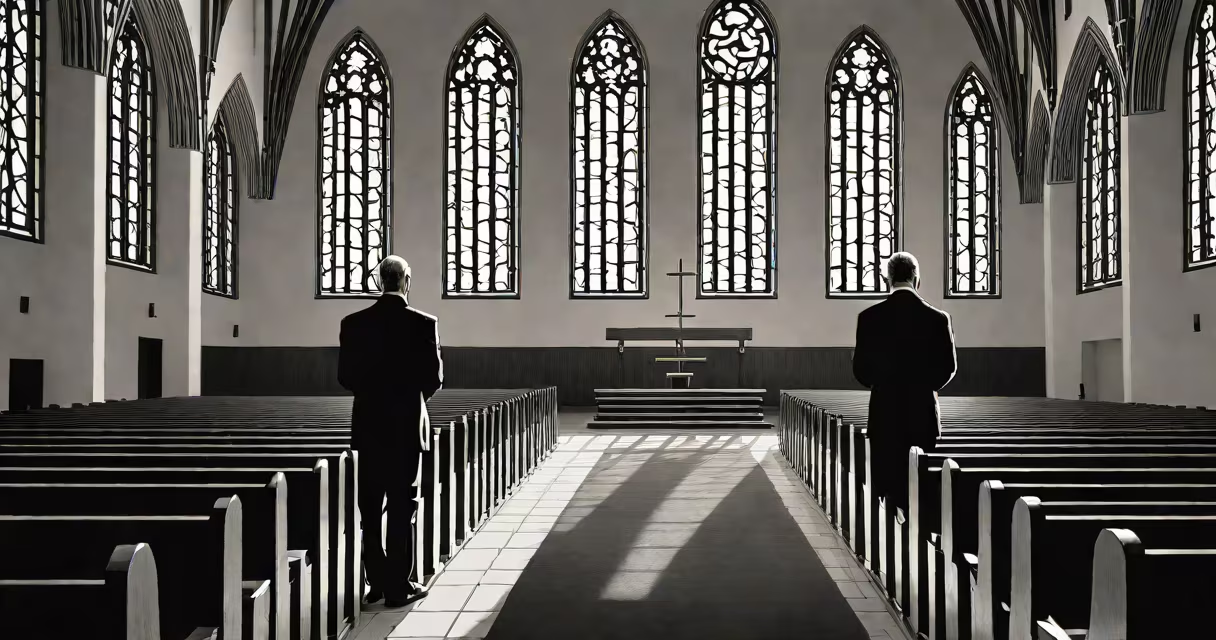
Opus Dei meaning refers to a Catholic personal prelature established in 1928 by Spanish priest Josemaría Escrivá, dedicated to helping people find holiness through ordinary life, especially through their professional work and daily responsibilities.
Founded in Madrid during the early years of the 20th century, Opus Dei emerged as a response to what its founder saw as a growing spiritual emptiness in secular society. He taught that sanctity was not reserved for priests or religious but accessible to anyone who lived their everyday tasks with integrity, prayer, and love. This idea-work as a form of worship-became central to its mission.
Opus Dei is not a religious order, nor is it a sect. It is a canonical structure within the Roman Catholic Church known as a personal prelature, which means it operates under direct authority from the Pope rather than local bishops. Its members are laypeople and priests who live in the world-working in offices, schools, hospitals, and homes-while committing themselves to spiritual growth through prayer, service, and moral discipline.
Members of Opus Dei do not wear distinctive clothing or live in communities. They maintain regular jobs and family lives. Their spiritual practice centers on daily Mass, private prayer, and participation in retreats and formation programs. The organization provides structured courses in theology, philosophy, and ethics, often held in evenings or weekends.
Each member commits to living according to principles outlined in Escrivá's writings, particularly *The Way*, published in 1939. The book emphasizes that God is present in the details of life-the act of cleaning, the honesty in accounting, the patience in parenting. These aren't distractions from holiness; they are the very ground of it.
A key feature is the absence of formal vows. Members are not required to give up possessions or take monastic vows. Instead, they make a promise of fidelity to the teachings of Opus Dei and the Catholic Church, along with a commitment to ongoing spiritual development. This allows them to remain integrated into society while deepening their faith.
Opus Dei is organized into local groups called "centers," located in cities worldwide. As of 2023, it operates in over 80 countries, including major urban centers such as New York, Tokyo, Lagos, and Buenos Aires. Each center is led by a priest appointed by the prelate, who reports directly to the Vatican.
The central governing body is based in Rome, where the prelate-appointed by the Pope-oversees all activities. The current prelate, Bishop Javier Echevarría, has served since 1994. Unlike many Catholic movements, Opus Dei does not accept donations from the public. Funding comes entirely from members' personal contributions and internal resources.
| Type | Description | Examples |
|---|---|---|
| Lay members | Secular individuals who work full-time in professions or family roles. They are not ordained. | Teachers, engineers, doctors, homemakers. |
| Priests | Ordained clergy who serve in leadership, pastoral care, and teaching roles. | Diocesan priests assigned to Opus Dei centers. |
| Students | Young adults studying at universities or seminaries. They participate in formation programs. | Undergraduates in Madrid, Chicago, or Sydney. |
Opus Dei is frequently misrepresented in media and popular culture. A persistent myth is that it recruits aggressively or uses psychological pressure. According to the Vatican's Congregation for Bishops, no evidence supports coercive recruitment. Membership is voluntary and requires multiple years of discernment, including participation in orientation sessions and spiritual direction.
Another widespread error is equating Opus Dei with secrecy. While it maintains privacy around internal processes, it is not a secret society. All documents, membership criteria, and official teachings are publicly available through the official website. The organization has been transparent about its finances and governance since its recognition by the Holy See in 1982.
A lesser-known fact: Opus Dei has no formal hierarchy beyond its prelature. There are no regional leaders or national branches. Decisions are centralized in Rome. This structure prevents fragmentation and ensures doctrinal consistency. For example, a member in Nairobi follows the same formation curriculum as one in Oslo.
In 2019, Dr. Elena Mendoza, a pediatrician in Lima, Peru, joined Opus Dei after attending a weekend retreat. She had long felt spiritually unfulfilled despite her success. After six months of weekly meetings and spiritual reading, she began praying before each patient visit and reflecting on her work as a form of service to God.
She now leads a small group of fellow medical professionals in her city. They meet monthly to discuss ethical dilemmas in healthcare, share prayer practices, and support one another in balancing demanding careers with spiritual life. Her story reflects the core of Opus Dei: integrating faith into the mundane, not escaping from it.
Opus Dei is not a cult. It does not isolate members from families or discourage critical thinking. It does not promote extreme asceticism or financial dependence. It does not require celibacy or renunciation of worldly goods. Its members are married, have children, and live in diverse cultural settings.
It is also not a political or social movement. Though some members are involved in public service, Opus Dei does not endorse candidates or parties. Its focus remains on individual spiritual transformation, not collective action. The organization explicitly discourages political involvement in its internal guidelines.
One common confusion arises from the term "personal prelature." This is a legal category created by Pope John Paul II in 1986 to allow certain groups to operate independently of diocesan boundaries. Other personal prelatures include the Ordinariate for the Faithful of Eastern Rites and the Personal Prelature of the Holy Trinity. The structure exists to serve specific spiritual missions, not to bypass church authority.
I attended a formation session in Madrid in 2017. The room held 30 people-doctors, accountants, students. We discussed the concept of "spiritual combat" not as conflict with demons, but as resisting complacency, pride, and distraction in daily routines. The conversation was calm, reflective, and grounded in scripture. No one wore robes. No one spoke in slogans. The atmosphere was quiet, intentional.
Later, I spoke with a woman who had left a high-paying job in finance to return to her hometown and teach math. She said, "I didn't leave because I wanted to escape money. I stayed because I realized God was in the classroom too." That moment captured the essence of Opus Dei meaning: holiness is not found in grand gestures, but in showing up, faithfully, every day.