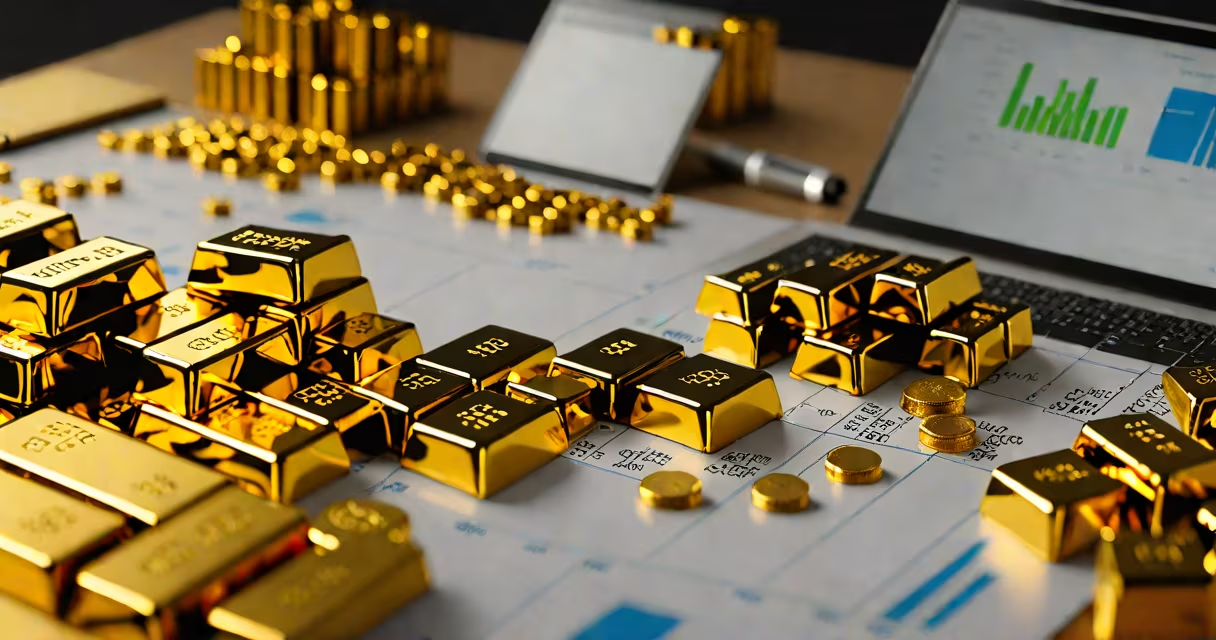
Commodities in finance are standardized raw materials or primary agricultural products traded on regulated exchanges. They include assets like crude oil, gold, natural gas, wheat, and copper. These items serve as foundational inputs for global industry and consumer goods, and their prices fluctuate based on supply, demand, weather, geopolitics, and macroeconomic shifts.
Unlike stocks or bonds, commodities represent physical goods rather than ownership in a company or debt obligation. Investors trade them through futures contracts, spot markets, or exchange-traded funds (ETFs). The Chicago Mercantile Exchange (CME) and Intercontinental Exchange (ICE) host major commodity trading platforms where daily volumes exceed $1 trillion.
Commodities in finance act as inflation hedges and portfolio diversifiers. When stock markets decline, gold often rises. During energy crises, oil prices spike. Understanding this changing helps investors manage risk across asset classes.
Commodity trading occurs in two primary forms: cash (spot) markets and derivatives markets. In spot markets, buyers and sellers exchange physical goods at current market prices. For example, a bakery might buy wheat at today's price to bake bread. This transaction settles within days.
Futures contracts dominate institutional trading. A farmer might sell corn futures to lock in a price six months ahead. Meanwhile, a cereal manufacturer buys those same contracts to secure input costs. Both parties agree to deliver or take delivery of the commodity at a set date and price, regardless of market swings.
These contracts are traded on exchanges like the CME Group. Each contract specifies quantity, quality, delivery location, and settlement method. For instance, one crude oil futures contract on NYMEX covers 1,000 barrels of West Texas Intermediate (WTI) oil. Traders don't always take physical delivery-they close positions before expiry.
Commodities fall into four categories: energy, metals, agriculture, and livestock. Each serves distinct industrial and economic roles.
| Type | Examples | Primary Use | Major Trading Exchange |
|---|---|---|---|
| Energy | Crude oil, natural gas, gasoline | Fuel for transportation, heating, electricity generation | CME (WTI), ICE (Brent) |
| Metal | Gold, silver, copper, aluminum | Jewelry, electronics, construction, monetary reserves | COMEX (gold), LME (copper) |
| Agriculture | Wheat, corn, soybeans, coffee | Food production, animal feed, beverages | CBOT (Chicago Board of Trade) |
| Live Cattle | Feeder cattle, live hogs | Meat processing, protein supply chain | Chicago Mercantile Exchange (CME) |
Gold stands out as both a commodity and a store of value. While most commodities depreciate over time due to consumption, gold retains purchasing power. Central banks hold gold reserves as a buffer against currency devaluation. In 2023, central banks purchased 1,136 tonnes of gold-the highest annual amount since 1971, according to the World Gold Council.
Many confuse commodities with equities. Stocks represent ownership in a business. Commodities do not. You cannot vote with your gold bar or receive dividends from wheat. Ownership in a commodity is limited to possession or contractual rights.
Another misconception is that commodities are only for producers. While farmers and miners use futures to hedge risk, retail investors also trade them. ETFs like SPDR Gold Shares (GLD) allow individuals to gain exposure without handling physical metal. GLD holds over 1,000 metric tons of gold and trades over 10 million shares daily.
Commodities are not interchangeable with "raw materials" in everyday language. In finance, a commodity must meet strict standardization criteria: uniform quality, fungibility, and broad market acceptance. A rare gemstone may be valuable but isn't a commodity because it lacks standardization.
In April 2020, WTI crude oil futures dropped below zero for the first time in history. The May 2020 contract settled at -$37.63 per barrel. This occurred because storage capacity was exhausted during the pandemic-induced demand collapse. Traders paid others to take the oil off their hands.
At the time, U.S. oil storage facilities were at 95% capacity. With refineries idling and airlines grounded, demand vanished. Producers couldn't store excess output. As a result, traders holding long positions had to pay to exit contracts.
This event revealed a core truth: commodity prices reflect real-world constraints. Storage limits, geopolitical tensions, and logistical bottlenecks can override theoretical supply-demand models. It also showed that even highly liquid markets aren't immune to extreme volatility.
In 2022, I monitored copper prices while researching infrastructure projects. Copper is essential for electric vehicles and renewable energy systems. Global demand rose 8% year-over-year, driven by EU green initiatives and U.S. clean energy legislation.
Meanwhile, Chilean mines faced labor strikes and water shortages. Output fell 12%. Spot prices jumped from $8,000 to $10,500 per metric ton in eight weeks. I observed that futures markets began pricing in scarcity well before news broke. This confirmed that commodity markets anticipate disruptions faster than headlines report them.
Allocating 5-10% of a diversified portfolio to commodities can reduce volatility. According to a 2021 study by the Federal Reserve Bank of New York, portfolios with commodity exposure showed lower drawdowns during market corrections compared to equity-only strategies.
Commodities perform differently from stocks and bonds. When inflation spikes, commodity prices often rise. During deflation, they fall. This inverse relationship makes them useful tools for hedging against rising prices. The S&P GSCI Index, which tracks 24 commodities, returned 11.2% annually from 1991 to 2020-outperforming inflation-adjusted bond returns.
However, commodities don't generate income. Unlike dividend-paying stocks or interest-bearing bonds, they offer no passive return. Holding physical gold doesn't earn interest. Investors must weigh this lack of yield against potential appreciation and risk mitigation benefits.
Understanding what are commodities in finance requires recognizing their dual role: as essential inputs for global industry and as financial instruments for speculation and risk management. They are not speculative toys. They are measurable, standardized assets tied to real-world supply chains and human needs.