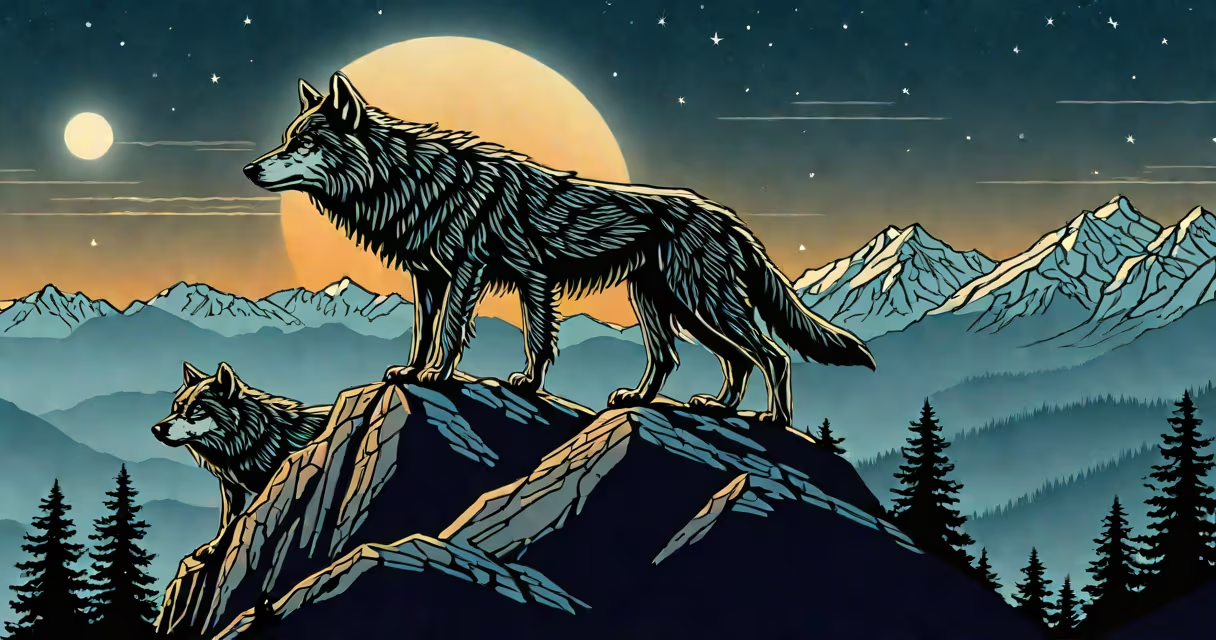
Spirit animals are symbolic representations of inner qualities, life challenges, or spiritual guidance drawn from animal characteristics in cultural and personal belief systems. They appear in dreams, visions, or recurring encounters and are interpreted as messages about identity, purpose, or emotional state.
These figures originate in Indigenous traditions across North America, Siberia, and parts of Africa and Asia, where animals are seen as sacred allies. The concept is not a single doctrine but a collection of practices rooted in oral history, shamanic tradition, and ecological observation. In modern usage, people often assign spirit animals based on personal resonance rather than formal initiation.
For example, a person who repeatedly sees deer may interpret the animal as a sign of sensitivity, intuition, or caution-qualities associated with deer's watchful nature. This interpretation is not universal. A Lakota elder might see a deer as a messenger of peace, while a contemporary spiritual seeker might view it as a symbol of self-awareness during a period of transition.
In Native American cultures, spirit animals are part of a larger structure of spiritual ecology. They are not chosen by individuals but revealed through dreams, rituals, or vision quests. The Lakota, for instance, believe that each person receives a guardian animal during a rite of passage, such as the Sun Dance or vision fast. These animals are seen as protectors and teachers.
The Navajo practice of "skin walking" involves shamans entering altered states to communicate with animal spirits. In this context, a spirit animal is not a metaphor-it is a living entity with agency. Shamans consult these beings for healing, weather prediction, and conflict resolution. The animal's behavior during the vision determines its message.
Modern psychology has adopted the idea under different names. Carl Jung referred to animal symbols as archetypes-universal patterns of behavior stored in the collective unconscious. He described the lion as representing courage and the serpent as embodying transformation. While Jung did not claim these were literal animals, he saw them as psychological tools for understanding the self.
While no single list applies universally, certain animals recur across cultures with consistent symbolic meanings. The following table outlines common associations based on ethnographic records and documented spiritual practices.
| Animal | Cultural Origin | Common Symbolic Meaning |
|---|---|---|
| Bear | Lakota, Cree, Sámi | Strength, introspection, protection |
| Eagle | Navajo, Hopi, Norse | Clarity, perspective, spiritual ascent |
| Owl | Mexican, Celtic, Inuit | Wisdom, hidden knowledge, transition |
| Wolf | Algonquian, Slavic, Mongolian | Community, loyalty, instinct |
| Turtle | Iroquois, Aboriginal Australian | Longevity, stability, grounding |
These interpretations are not arbitrary. For example, the Navajo consider the eagle's flight pattern a sign of divine direction. During ceremonies, the eagle feather is placed on the altar to invoke spiritual presence. Similarly, among the Sámi people of northern Scandinavia, the reindeer is both a physical and spiritual guide-its migration routes align with ancestral pathways.
A lesser-known fact: some traditions distinguish between "spirit animal" and "totem." Totems are clan-based and inherited, while spirit animals are personal and earned through experience. A person may have a totem (like the Bear Clan) but receive a separate spirit animal (such as the Raven) during a vision quest. This distinction is critical-confusing the two leads to misinterpretation.
Many people assume spirit animals are assigned by external forces-like a mystical lottery or a horoscope. This is incorrect. In authentic traditions, the animal reveals itself through personal experience, not random selection. A person does not "choose" their spirit animal; it chooses them through dream imagery, synchronicity, or emotional resonance.
Another misconception is that spirit animals are always positive. In reality, they can reflect shadow aspects. A snake, often seen as a symbol of healing, can also represent fear, betrayal, or transformational pain. In the Yoruba tradition of West Africa, the python is both a sacred being and a harbinger of danger. Its appearance during a ritual may indicate unresolved tension or spiritual imbalance.
There is no evidence that spirit animals exist as physical entities in the material world. They function as metaphors within a symbolic system. When someone says, "My spirit animal is the jaguar," they are describing a psychological or spiritual state-not claiming to have met a real jaguar in the wild. The animal serves as a lens for self-reflection.
One experience stands out: during a retreat in the Canadian Rockies, I sat silently by a river for three days. On the third night, a black bear appeared at the edge of the campsite. It stared at me for ten minutes before turning and walking away. I later learned that bears are considered useful spirit guides in several Indigenous nations. The encounter wasn't a coincidence-I had been invited into a moment of symbolic exchange.
Modern interest in spirit animals stems from a desire for personal meaning in a fragmented world. With declining trust in institutional religion, many turn to symbolic systems that feel immediate and accessible. Spirit animals offer a way to process emotions, set intentions, and explore identity without requiring formal training.
However, this accessibility brings risks. Without cultural context, people may adopt symbols that don't resonate or misrepresent traditions. A person who picks the owl as their spirit animal because they like its feathers may overlook the deeper significance of silence, foresight, and death-related wisdom in many traditions.
For those seeking authenticity, resources like the Native Languages of the Americas project provide verified linguistic and cultural references. The CDC's Indigenous Health Communication Guide also offers ethical frameworks for engaging with Indigenous symbolism responsibly.
Understanding what spirit animals mean begins with recognizing that they are not magic solutions. They are tools for reflection, shaped by centuries of human-animal interaction. learning about others' beliefs, the key is respect-for the culture, the history, and the individual experience behind each symbol.