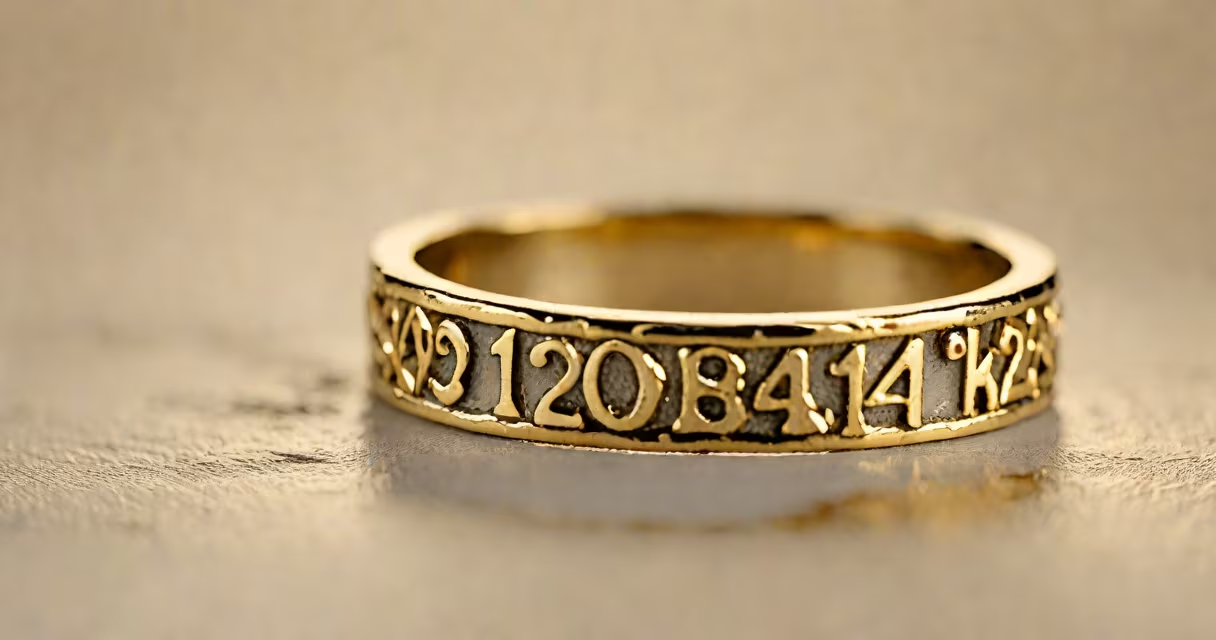
1 20 14k gold indicates a jewelry item with a 14-karat gold layer applied over a base metal, where the gold constitutes 1/20th (5%) of the total weight. This marking appears on costume or fashion jewelry, not solid gold pieces.
The notation follows a standard format used in the U.S. and Europe: the first number is the gold karat (14K), the second is the proportion of gold by weight (1/20), and the third specifies the gold type. In this case, 14K refers to gold that is 58.3% pure gold, with the remainder made of alloy metals like copper and silver.
This system prevents consumer confusion between solid gold and plated or filled items. The U.S. Federal Trade Commission (FTC) mandates accurate labeling of gold content in jewelry, requiring that any claim about gold content be substantiated by weight and purity measurements.
When a jeweler stamps "1 20 14k," they're indicating that the item is gold-filled, not solid gold. The term "gold-filled" means a layer of 14K gold is bonded to a base metal using heat and pressure. The gold layer must make up at least 5% of the total weight for the item to qualify under FTC guidelines.
For comparison, solid 14K gold is typically marked simply as "14K" or "14KT." It contains 58.3% pure gold throughout the entire piece. A 14K gold ring weighing 5 grams contains approximately 2.9 grams of pure gold. In contrast, a 1 20 14k gold ring of the same weight contains only 0.25 grams of pure gold-the rest is base metal such as brass or nickel.
Gold-filled items last longer than gold-plated ones because the gold layer is thicker. While gold-plated jewelry may wear off within months, gold-filled pieces can retain their appearance for decades with proper care.
Different markings indicate varying levels of gold content. The following table outlines common designations and their implications:
| Marking | Purity | Gold Weight Ratio | Use Case |
|---|---|---|---|
| 1 20 14k | 14K (58.3% pure) | 1/20 (5%) | Fashion jewelry, accessories |
| 1 10 14k | 14K | 1/10 (10%) | Higher durability, longer lifespan |
| 14K | 14K | 100% | Solid jewelry, heirlooms |
| 1 100 14k | 14K | 1/100 (1%) | Plated, low durability |
Items marked "1 20 14k" are not suitable for investment or long-term wear as fine jewelry. Their gold content is minimal and subject to wear over time. However, they offer a cost-effective way to enjoy gold-like appearance without high price tags.
Many buyers assume "14k" means solid gold regardless of context. But in the case of "1 20 14k," the number "1" refers to the fraction of gold by weight-not the karat grade. Confusion arises because the format resembles a decimal or percentage, but it's actually a ratio.
A key distinction: 1 20 14k is not the same as "14K GF" (gold filled). Both refer to gold-filled items, but "1 20 14k" specifies the exact weight ratio. "14K GF" only confirms the gold type and category but omits the precise proportion. The FTC requires the ratio to be disclosed when the gold content is below 5%.
Another misconception is that gold-filled items are fake. They are not. They contain real gold, just in a thin layer. According to the American Gem Society (AGS), gold-filled jewelry meets federal standards and is legally required to be labeled accurately. Mislabeling is a violation punishable by fines.
Consider a women's wedding band marked "1 20 14k." The ring weighs 6 grams. Using the formula: 6g × 5% = 0.3 grams of gold. Of that, 58.3% is pure gold, so the actual pure gold content is 0.175 grams. The remaining 5.825 grams is base metal-typically brass or nickel.
If the same ring were solid 14K gold, it would contain 3.5 grams of pure gold. That's nearly 20 times more gold by mass. The difference in value is stark: a 6-gram solid 14K gold ring is worth around $300 based on current gold prices, while the 1 20 14k version is valued at less than $10 due to minimal gold content.
I once purchased a 1 20 14k gold bracelet during a clearance sale. After wearing it daily for three years, the gold layer wore through near the clasp. The base metal showed through, revealing the underlying brass. The piece still looked good, but the gold finish had diminished. This experience confirmed that even gold-filled items have limits.
"1 20 14k" appears most often on fashion jewelry sold at department stores, online marketplaces, and discount retailers. It's rare on fine jewelry from certified jewelers. High-end brands avoid this marking because it signals lower value and durability.
It's also common on watch bands, earrings, and pendant chains. Some manufacturers use it to meet regulatory requirements while keeping production costs low. For example, a chain marketed as "1 20 14k" must disclose that only 5% of its weight is gold-this protects consumers from false advertising.
When shopping, always check the sign. Look for "1 20 14k" alongside other marks like "925" (sterling silver) or "14K" (solid gold). These identifiers help distinguish between materials. If a piece lacks any marking, it may not comply with U.S. jewelry standards.
If you're uncertain whether a piece is solid gold or gold-filled, consult a professional jeweler. They can test the item using a touchstone or electronic tester. A simple acid test can confirm gold content-but only if performed correctly.
Understanding "1 20 14k gold" ensures you know what you're buying. It's not solid gold. It's not a high-value investment. But it's a legitimate product designed to look like gold at a fraction of the cost.