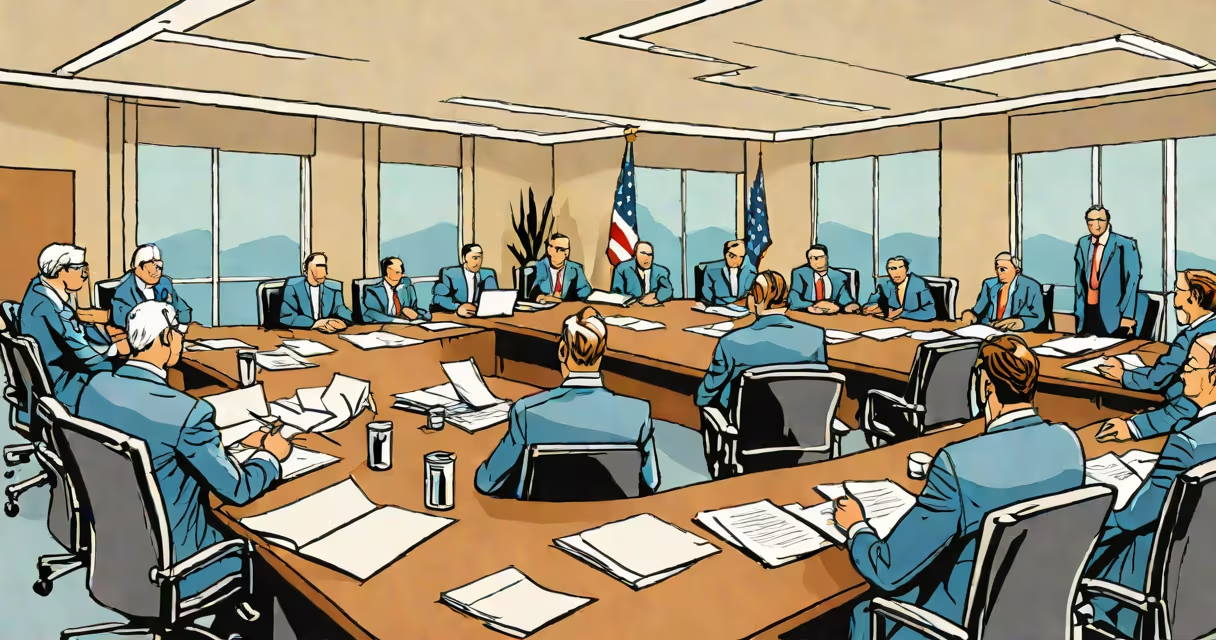
Directors and officers (D&O) insurance covers legal defense costs and settlements when company leaders are sued for decisions made in their official capacity, such as strategic choices, financial reporting, or governance failures. The policy protects individuals personally, not just the corporation.
D&O insurance is essential for public companies, private firms with investors, and nonprofits. It responds when shareholders, regulators, or employees file lawsuits alleging mismanagement, breach of fiduciary duty, or failure to act in good faith. Coverage typically includes legal fees, court judgments, and regulatory fines-not just for the company, but for the individuals named in the suit.
For example, if a public company's board approved a merger that later collapsed, leading to investor losses, affected shareholders could sue the directors. Without D&O coverage, those individuals might face personal liability for millions in damages. The policy pays for legal representation and any awarded compensation, up to the policy limit.
The policy activates when a claim is filed against a director or officer for actions taken while serving in their role. Claims usually stem from allegations of negligence, errors in judgment, or failure to disclose material information. The insurer investigates the claim and provides legal defense even before a verdict is reached.
Most D&O policies have three layers: side A covers individual directors and officers personally; side B reimburses the company for payments it makes to protect its leaders; side C covers the organization itself for securities-related claims. This structure ensures protection at multiple levels.
Consider a tech startup that went public. After announcing a new product feature, the stock dropped sharply when users reported bugs. Shareholders sued the CEO and board members for misleading statements. The D&O policy covered $1.2 million in legal fees and a $3.5 million settlement, protecting the executives' personal assets.
There are three primary forms of D&O coverage, each addressing different risk scenarios:
| Type | Who It Protects | When It Applies | Example |
|---|---|---|---|
| Side A | Individual directors and officers | When the company cannot or will not indemnify them | CEO sued personally after a failed acquisition; company refuses to pay |
| Side B | Company (reimbursement) | When the company pays for a director's defense | Board member spends $50,000 on legal defense; company gets reimbursed |
| Side C | Corporate entity | Securities class action lawsuits | Shareholders sue the company for false disclosures in a prospectus |
Side A is critical for high-risk roles. Even if a company has a policy to indemnify its leaders, courts may rule that indemnification is invalid under certain circumstances-such as when misconduct is proven. Side A ensures protection regardless of the company's stance.
Side C is increasingly common in publicly traded firms. Securities litigation accounts for nearly 60% of D&O claims, according to the National Association of Corporate Directors (NACD). These suits often involve financial misstatements, insider trading allegations, or delayed disclosures.
D&O insurance does not cover criminal acts, fraud, or intentional wrongdoing. If a director knowingly falsified financial reports, the policy excludes that claim. Insurers assess intent during underwriting and deny coverage for deliberate misconduct.
Many assume D&O policies cover employment-related claims, such as wrongful termination or discrimination. That's incorrect. Those fall under separate employment practices liability (EPLI) insurance. Mixing up these policies creates dangerous gaps in protection.
A key distinction: D&O insurance is not the same as fiduciary liability insurance. While both protect decision-makers, fiduciary liability covers trustees managing retirement funds or pension plans. D&O focuses on corporate leadership, including boards and senior management.
I once reviewed a D&O policy for a nonprofit with a volunteer board. The board had no formal indemnity agreement. When a donor sued over a grant allocation decision, the side A coverage paid for legal defense and a $750,000 settlement-protecting volunteers who had no personal stake in the organization's assets.
Public companies require D&O insurance as part of SEC compliance. The Sarbanes-Oxley Act mandates internal controls and transparency, increasing exposure to shareholder lawsuits. Nearly 98% of S&P 500 firms carry D&O policies, according to Deloitte's 2023 survey.
Private companies use D&O insurance to attract investors. Venture capital firms often require D&O coverage before funding rounds. A startup raising $20 million in Series B funding was asked to provide proof of a $5 million D&O policy as a condition of investment.
Nonprofits also benefit. Board members face growing scrutiny over financial stewardship. The IRS requires nonprofits to maintain governance standards. A single lawsuit over fund misuse could bankrupt a small charity without D&O protection.
Smaller organizations sometimes skip D&O insurance, believing they're too small to be targeted. But 40% of D&O claims come from firms with fewer than 100 employees, according to the American Bar Association's 2022 report on corporate liability.
D&O insurance is frequently mistaken for general liability or professional liability insurance. General liability covers bodily injury or property damage from business operations. Professional liability (errors and omissions) applies to service providers like consultants or accountants. Neither covers governance decisions.
Cargo insurance protects goods in transit. Cyber insurance guards against data breaches and ransomware attacks. Life insurance provides death benefits to beneficiaries. None of these replace D&O coverage, which specifically addresses legal exposure from leadership roles.
For instance, a biotech firm lost $2 million in research funding after a patent dispute. The board was sued by investors claiming poor oversight. The D&O policy covered the defense and settlement. Cargo insurance wouldn't apply-no goods were shipped. Cyber insurance wouldn't trigger-no data breach occurred. Only D&O coverage responded.
Understanding the scope of what does D and o insurance cover prevents costly assumptions. A company can have multiple policies yet still lack protection for executive decisions.
When evaluating coverage, always review exclusions. Common ones include claims arising from prior disputes, violations of law, or actions taken after resignation. Policies often exclude claims related to environmental harm or intellectual property infringement unless explicitly added.