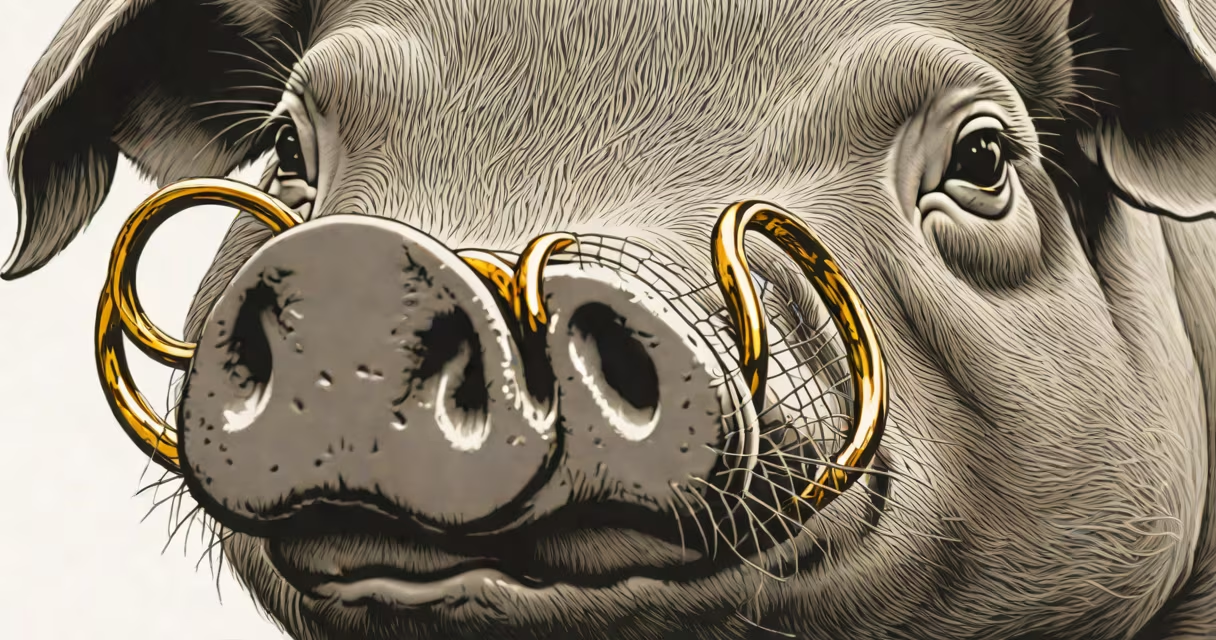
Proverbs 11:22 says a beautiful woman without discretion is like a gold ring in a pig's snout-valuable material in a context that degrades its worth. The verse contrasts external beauty with internal character, emphasizing that virtue matters more than appearance.
This proverb uses vivid imagery common in ancient Near Eastern literature. A gold ring was a symbol of status and refinement. Pigs were unclean animals in Hebrew culture, associated with ritual impurity and low social standing. Placing a precious ring in a pig's snout creates a jarring visual: something noble and valuable in a setting that mocks its dignity.
The Hebrew word for "discretion" here is *māṣār*, which means sound judgment, moral discernment, or self-control. The verse doesn't reject beauty-it critiques its absence of wisdom. A woman may be physically attractive, but if she lacks ethical restraint, her presence diminishes rather than elevates.
Proverbs often uses metaphorical comparisons to teach moral truths. This verse functions as a warning against valuing form over function. It's not about women being inherently flawed-rather, it's about the danger of prioritizing appearance over integrity.
In ancient Israelite society, marriage and social standing were closely tied to reputation and conduct. A woman known for reckless speech, poor decisions, or immorality could damage her family's honor-even if she was physically striking. The proverb reflects a cultural concern with maintaining social harmony through wise behavior.
Modern readers sometimes misread this verse as misogynistic. But the original context treats the issue as universal: anyone-man or woman-who lacks self-restraint is spiritually and socially compromised, regardless of their physical appeal.
The Hebrew text uses a chiasm-a literary structure where ideas mirror each other around a central point. The phrase "a beautiful woman without discretion" balances "a gold ring in a pig's snout." Both halves contain a contrast between high value and inappropriate placement.
"Gold ring" appears in several biblical passages as a sign of wealth and favor. In Genesis 24:22, Abraham's servant gives Rebekah a gold nose ring. In Proverbs 17:8, a gift is described as a "ring" that can influence judgment. The ring symbolizes power, trust, and social capital.
Pigs, however, were forbidden to eat under Mosaic law (Leviticus 11:7). They were seen as unclean and associated with greed and gluttony. Their inclusion here underscores the degradation of something holy when placed in a profane environment.
| Element | Symbolic Meaning | Biblical Context |
|---|---|---|
| Beautiful woman | External attractiveness | Often praised in Proverbs (e.g., Proverbs 31:30) |
| Without discretion | Lack of moral judgment | Contrasts with "woman of noble character" in Proverbs 31 |
| Gold ring | Value, status, honor | Used in blessings, gifts, and symbols of authority |
| Pig's snout | Impurity, degradation, unworthiness | Unclean animal; associated with defilement |
Proverbs 11:22 appears in the collection of wisdom sayings attributed to Solomon. These teachings aim to cultivate practical insight for daily living-not theological doctrine. The book emphasizes consequences of choices, especially those involving ethics, relationships, and personal discipline.
It's cited in sermons and Bible studies to caution against superficial values. Pastors use it to discuss inner transformation versus outward appearances. It's also referenced in discussions about media portrayals of beauty, where physical perfection is celebrated while wisdom and kindness are overlooked.
A 2021 study by the Pew Research Center found that 62% of Americans believe moral character matters more than physical appearance in long-term relationships. This aligns with the message of Proverbs 11:22-wisdom outweighs aesthetics in sustaining meaningful connections.
Many assume this verse condemns women who are attractive. That's incorrect. The critique targets behavior, not biology. The Hebrew text never says "a woman is ugly" or "beauty is bad." Instead, it says beauty without wisdom is misplaced-like a sacred object in a place of shame.
Another error is reading this as a standalone command. Proverbs isn't legalistic. It offers guidance, not laws. The verse doesn't ban beautiful people from leadership or marriage-it warns that charm without conscience leads to ruin.
A lesser-known fact: the original Hebrew uses the word *ḥāṣār* for "pig," which specifically refers to the wild boar. This animal was known for aggression and destruction. The image isn't just unclean-it's dangerous. The ring isn't just misplaced; it's at risk of being destroyed.
Consider a public figure known for striking features and media attention. She gains fame quickly but makes reckless decisions-public outbursts, unethical business moves, damaging relationships. Her beauty draws crowds, but her lack of discretion erodes trust. Over time, her reputation collapses. The gold ring remains, but the pig's snout has ruined its purpose.
This mirrors the outcome the proverb predicts: external value becomes meaningless when paired with poor judgment. The woman isn't rejected because she's ugly-she's rejected because her actions undermine her worth.
Proverbs 11:22 echoes earlier themes in the book. Proverbs 1:7 states that "the fear of the Lord is the beginning of wisdom." Without reverence and self-awareness, even good qualities become liabilities.
Proverbs 16:7 says, "When the Lord takes pleasure in someone's way, he makes their enemies make peace with them." This shows divine approval follows righteous conduct. A person may be attractive, but God favors those whose actions reflect wisdom.
Similarly, Proverbs 19:2 warns, "The desire of the diligent is to be rich, but the lazy man is always hungry." This highlights the cost of poor self-control-just as Proverbs 11:22 warns that beauty without wisdom leads to loss of respect and influence.
I once saw a young woman in a leadership role at a nonprofit. She had a polished appearance and charisma. But during a crisis, she made emotional decisions, dismissed staff concerns, and publicly blamed others. Within months, her team disintegrated. Her beauty didn't protect her influence-her lack of discretion did.
That moment confirmed what Proverbs 11:22 teaches: excellence in form without substance leads to collapse. True value lies in consistency, humility, and sound judgment.
Understanding Proverbs 11:22 isn't about judging people based on looks. It's about recognizing that lasting impact comes from character, not image. A gold ring in a pig's snout may catch the eye-but it tells a story of misplaced value.