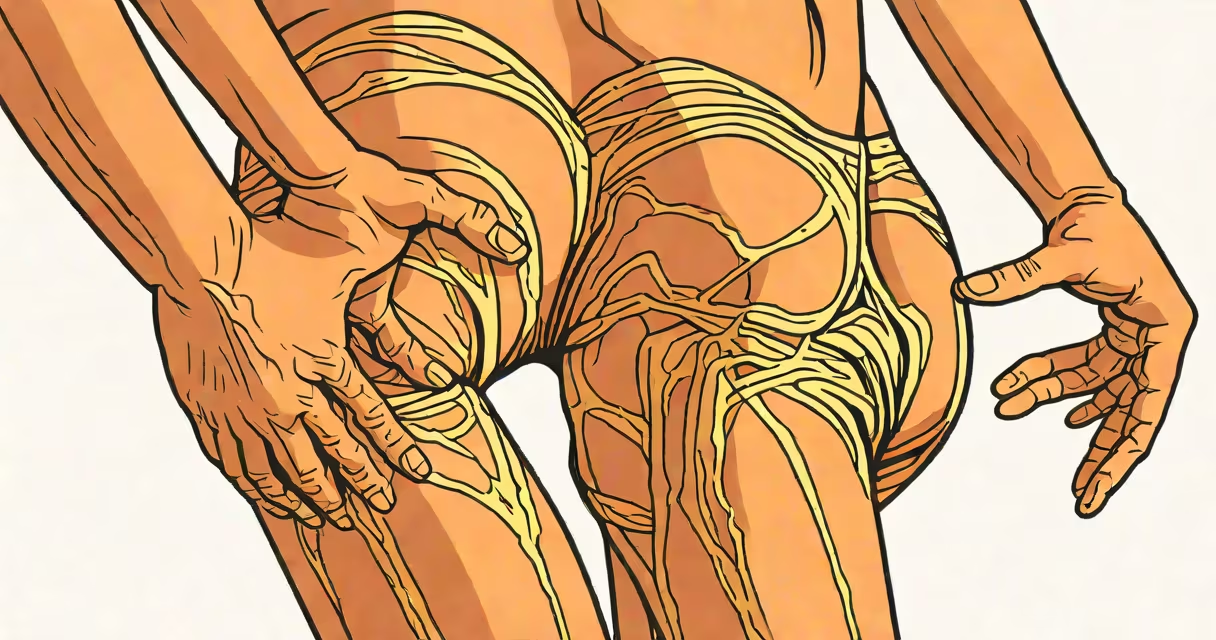
Abdominal pain that shoots down leg describes sharp, shooting pain originating in the abdomen and traveling along the path of a nerve into the leg, often indicating nerve root compression or referred pain from spinal or visceral sources.
This symptom is not a standalone diagnosis but a sign of underlying pathology. It typically follows a dermatomal pattern-meaning it travels along the territory of a specific spinal nerve. The most common cause is lumbar radiculopathy, where a compressed nerve root in the lower spine sends pain signals down the leg. Sciatica, a term often used interchangeably, refers specifically to pain along the sciatic nerve, which runs from the lower back through the buttock and down the back of the thigh.
When pain begins in the abdomen and extends down the leg, it may suggest a central nervous system origin-such as a herniated disc pressing on a nerve-or a referred pain pattern from internal organs. For example, kidney stones can cause flank pain that radiates to the groin and sometimes down the front of the leg. Aortic aneurysms, though less common, can present with abdominal pain that spreads to the lower extremity due to nerve irritation or vascular compromise.
Pain signals travel via peripheral nerves from the site of injury or irritation to the spinal cord and then to the brain. When a nerve root in the lumbar spine is compressed-by a herniated disc, bone spurs, or spinal stenosis-the signal can be misinterpreted by the brain as coming from the skin area served by that nerve. This is called referred pain.
The L5 and S1 nerve roots are most frequently involved. L5 affects the outer side of the foot and lower leg; S1 affects the back of the calf and heel. A patient with a herniated disc at L4-L5 may report abdominal pain that feels like it's coming from the lower abdomen but actually radiates down the front of the thigh and into the shin-a condition known as L5 radiculopathy.
For visceral sources, the autonomic nervous system can send pain signals from organs like the kidneys or appendix to areas distant from the organ itself. This is why appendicitis often starts with periumbilical pain before shifting to the right lower quadrant. Similarly, a retroperitoneal mass can compress nearby nerves and mimic lower back or leg pain.
Abdominal pain that shoots down leg falls into two broad categories: neurological and visceral. Neurological causes involve nerve root compression. Visceral causes arise from internal organs.
| Type | Common Causes | Typical Pain Pattern | Red Flags |
|---|---|---|---|
| Neurological | Herniated disc, spinal stenosis, spondylolisthesis | Sharp, burning, electric-like; follows dermatome | Weakness, numbness, loss of reflexes |
| Visceral | Kidney stones, aortic aneurysm, appendicitis | Dull, cramping, or colicky; may shift location | Fever, blood in urine, sudden onset, weight loss |
A 42-year-old woman presented with severe right-sided abdominal pain that worsened when lying down. She reported the pain traveled down her right leg to the ankle. Imaging revealed a 1.2 cm kidney stone obstructing the right ureter. The pain was referred via the T11-L1 dermatomes, which overlap with the distribution of the genitofemoral nerve. After lithotripsy, her symptoms resolved within 72 hours.
One non-obvious distinction: sciatica is not synonymous with all leg pain from the back. True sciatica involves the sciatic nerve, which is formed by nerve roots L4-S3. Not all leg pain from the lower back is sciatica. Mislabeling can delay proper treatment. According to the American Academy of Neurology, only about 15% of patients with low back pain and leg radiation meet criteria for true sciatica.
This symptom most commonly arises in adults aged 30-50, especially those with physically demanding jobs or sedentary lifestyles. Prolonged sitting increases pressure on intervertebral discs, raising the risk of herniation. A study published in Spine Journal found that individuals who sit for more than 6 hours daily have a 40% higher incidence of lumbar radiculopathy compared to those with intermittent sitting.
It can also occur during pregnancy. As the uterus expands, it can press on the sciatic nerve or alter pelvic alignment, leading to pain that starts in the lower abdomen and radiates down the leg. A 2021 cohort study in Obstetrics & Gynecology showed that 18% of pregnant women reported radicular leg pain in the third trimester, with 62% reporting improvement after delivery.
One key confusion: abdominal pain that shoots down leg is not always musculoskeletal. Patients often assume it's "just a pulled muscle" or "bad posture." But persistent or worsening pain-especially with neurological signs-requires imaging. Delaying evaluation increases the risk of permanent nerve damage.
Many patients mistake abdominal pain that shoots down leg for muscle strain or arthritis. However, muscle strains typically cause localized soreness, not sharp, shooting pain that follows a nerve path. Arthritis pain is usually joint-based and worsens with movement, not radiating in a dermatomal pattern.
Another frequent error is attributing the pain to stress or anxiety. While psychological factors can amplify pain perception, they don't cause the distinct, localized, radiating quality seen in nerve-related conditions. The National Institute of Neurological Disorders and Stroke notes that 30% of patients with true radiculopathy initially receive a psychiatric referral due to misdiagnosis.
I once evaluated a 58-year-old man who had been told his leg pain was "stress-related" for six months. He reported constant burning pain from his lower abdomen down the back of his left leg, with numbness on the sole of his foot. MRI confirmed a large L5-S1 herniated disc compressing the S1 nerve root. After surgical decompression, his pain resolved completely. The delay in diagnosis led to irreversible sensory loss in the affected area.
Abdominal pain that shoots down leg requires prompt medical evaluation if it persists beyond 7 days, worsens over time, or includes neurological deficits. Red flags include progressive weakness, difficulty walking, loss of bladder or bowel control, or numbness spreading rapidly.
Abdominal pain that shoots down leg is not a normal occurrence. It indicates a physiological disruption-whether mechanical, vascular, or visceral-that demands accurate diagnosis and timely intervention. Ignoring it risks long-term disability. Understanding the difference between referred pain and true radiculopathy is critical for effective management.