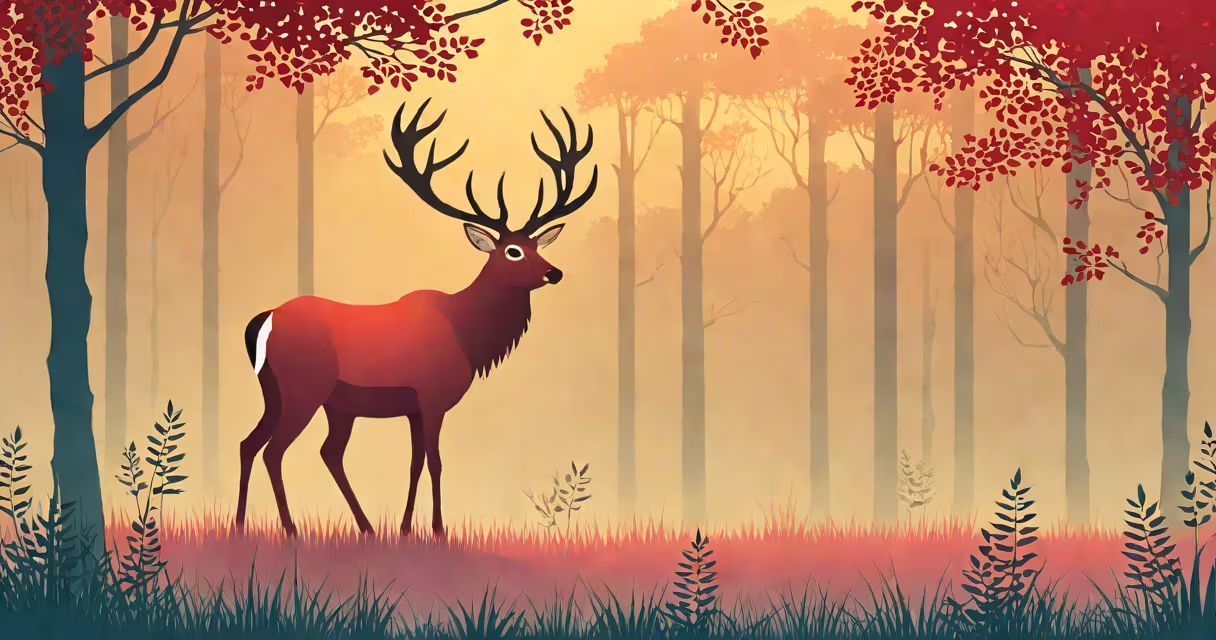
The name Hart derives from Old English and means "male deer," specifically a red deer buck. It was historically used as a surname in England, often denoting someone who lived near a deer park or hunted deer. The term appears in early medieval records and remains a rare but meaningful given name today.
Hart originates from the Old English word *heorot*, which referred to a male deer. This root appears in place names such as Hartlepool and Hartfield, both of which reference ancient hunting grounds. The word evolved through Middle English as *hart*, retaining its core meaning. By the 16th century, it had become a surname among landowners and gamekeepers, particularly in rural areas of southern and eastern England.
Modern usage of Hart as a first name is uncommon but growing. It appears in literature and media, including characters in fantasy novels and British television. The name carries connotations of nobility, quiet strength, and natural elegance-qualities associated with deer in European folklore.
As a given name, Hart functions as a standalone identifier. It's typically unisex but leans masculine due to historical associations. Parents choosing Hart often cite its rarity, simplicity, and connection to nature. The name avoids common naming trends and stands out without being overly unusual.
When used as a surname, Hart appears in genealogical records dating back to the Domesday Book (1086). Surnames derived from animals were common in medieval England, especially among those whose livelihoods involved hunting or farming. A person named Hart might have been known for their skill in tracking or their role in managing deer populations.
In contemporary culture, Hart appears in fictional works. For example, the character Hart from the BBC series *The Last Kingdom* is a warrior with a stoic demeanor, reinforcing the name's association with resilience and dignity. The name also appears in children's books and environmental education materials, where it symbolizes wildness and ecological awareness.
While Hart itself has few direct variants, related names exist in different languages and regions:
| Language/Region | Variant | Meaning |
|---|---|---|
| Old English | Heorot | Male deer; also the name of a mead hall in Beowulf |
| German | Hirsch | Deer (literally "stag") |
| Scandinavian | Hjort | Deer (Danish/Norwegian) |
| Latin | Cervus | Deer genus (used in scientific taxonomy) |
These variants reflect how deer imagery permeates European languages. Unlike Hart, which is exclusively English in origin, these forms appear in other linguistic traditions. For example, *Hirsch* is still used in German-speaking countries as a surname and occasionally as a first name.
A lesser-known variant is *Hartley*, which combines Hart with the Old English *lēah* meaning "clearing" or "meadow." This compound name became popular in the 19th century and is now more common than Hart alone. It suggests a connection to woodland spaces rather than the animal itself.
Some people assume Hart is a shortened form of Harold or Harrison. This is incorrect. While both Harold and Harrison are English surnames, they derive from Old English *hēra* ("army") and *Hārold* (meaning "army ruler"), respectively. Hart shares no etymological link with either.
Another misconception is that Hart always refers to a red deer. In fact, the original Old English *heorot* could refer to any large male deer, including fallow deer or roe deer. The modern English word "hart" is most closely tied to the red deer (*Cervus elaphus*), but earlier uses were broader.
Hart is sometimes confused with the word "heart." Though both share the same Old English root *heorte* (meaning "inner being"), they are unrelated in spelling and meaning. The confusion arises only because of similar pronunciation and shared letter sequences. The name Hart has no symbolic connection to emotion or affection.
One documented example is Hart Crane, an American poet born in 1899. His name was chosen by his mother, who admired the qualities of strength and stillness associated with deer. Crane's poetry often explored themes of transcendence and isolation-traits linked to the solitary nature of male deer during mating season.
Another example is Hart Shotton, a British field architect who used the name professionally. He explained in a 2018 interview that he chose Hart to reflect his work with natural environments. "I wanted a name that felt grounded, like something from the earth," he said. "Hart feels like a name that belongs in a forest."
According to the UK Office for National Statistics, Hart ranked #1,247 in male baby name popularity in 2022, with 24 newborns receiving the name. This low frequency underscores its status as a niche choice. In contrast, names like James or William ranked in the top 10.
For comparison, the name Dahlia-another nature-inspired name-has seen rising popularity. According to the Social Security Administration, Dahlia ranked #2,184 in the U.S. in 2022, with 110 babies named Dahlia. While both names draw from nature, Hart remains rarer and less culturally embedded in mainstream naming.
I once attended a naming ceremony in Devon, England, where a child was named Hart. The parents explained they chose it after walking through a forest near their home and seeing a stag at dawn. They described the moment as "quiet and sacred"-a feeling they wanted to capture in the name. The child's godparents later mentioned that the name sparked curiosity at school, but the family appreciated its distinctiveness.
This anecdote illustrates how Hart functions beyond etymology-it becomes part of identity. Its use reflects personal values: reverence for nature, resistance to trendiness, and a preference for names with deep roots.
The name Hart means "male deer" in Old English and carries connotations of grace, solitude, and strength. It originated as a surname in medieval England and is now occasionally used as a first name. Despite its rarity, Hart holds symbolic weight and connects users to natural history and linguistic tradition. Understanding its meaning reveals more than a word-it uncovers a thread linking language, ecology, and personal identity.