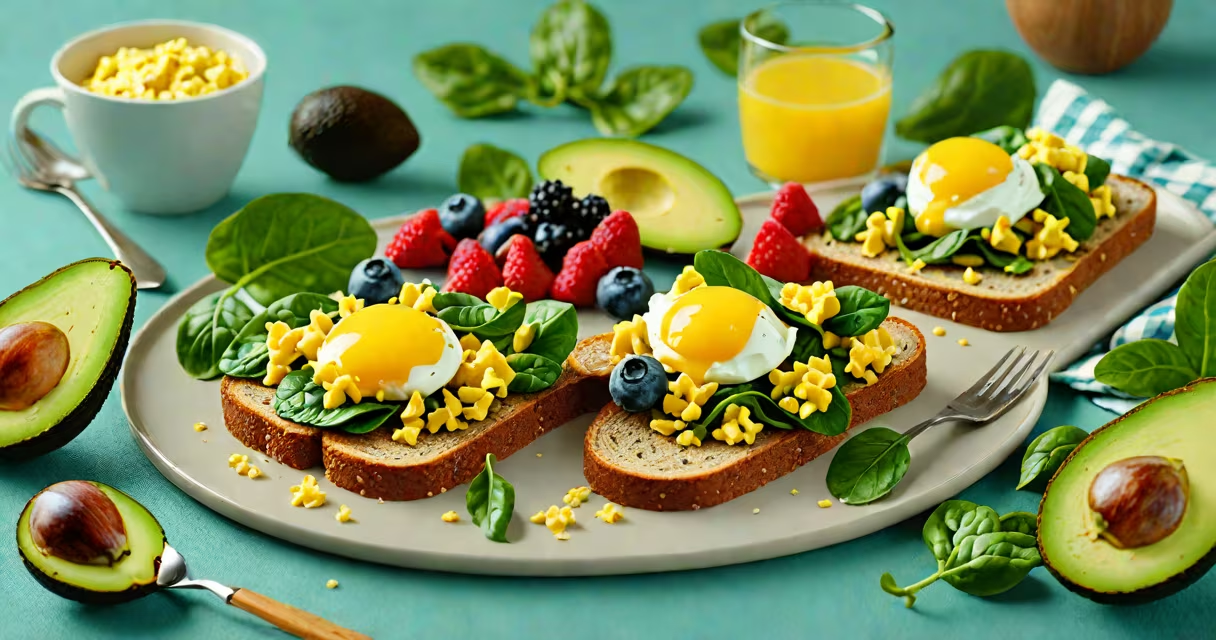
A quick and healthy breakfast is a nutrient-dense meal prepared in under 10 minutes that provides sustained energy, supports blood sugar control, and includes protein, fiber, and healthy fats. It's designed to fuel your body and mind without relying on processed carbs or added sugars.
Such meals avoid the crash associated with sugary cereals or pastries. Instead, they rely on whole foods like eggs, oats, Greek yogurt, nuts, seeds, and vegetables. A well-balanced version typically contains 15-25 grams of protein, 5-10 grams of fiber, and less than 10 grams of added sugar.
According to the Harvard T.H. Chan School of Public Health, skipping breakfast correlates with higher risks of type 2 diabetes and heart disease. A 2022 study published in Frontiers in Nutrition found that people who ate a protein-rich breakfast reported greater satiety and reduced calorie intake later in the day compared to those who skipped or ate low-protein options.
Quick and healthy breakfasts stabilize blood glucose levels by combining slow-digesting carbohydrates with protein and fat. This combination slows glucose absorption, preventing insulin spikes and subsequent crashes.
For example, pairing whole-grain toast (complex carbs) with peanut butter (healthy fat and protein) creates a synergistic effect. The fiber in the bread slows digestion, while the fat and protein extend fullness. This balance keeps cortisol and ghrelin (hunger hormones) in check longer than a sugary alternative.
Research from the University of Missouri showed that participants who ate a high-protein breakfast had improved cognitive performance in memory and attention tasks during the morning compared to those who ate a low-protein meal.
Every effective quick and healthy breakfast includes three elements: a protein source, a complex carbohydrate, and a healthy fat. These work together to regulate appetite and maintain metabolic stability.
Common components include:
Here's a fully worked example: ½ cup cooked steel-cut oats (15g carbs, 5g fiber, 6g protein) topped with ¼ cup chopped walnuts (9g fat, 1g protein), ½ sliced banana, and 2 tbsp plain Greek yogurt (10g protein). Total: ~350 calories, 22g protein, 12g fiber, 10g natural sugar.
This meal meets clinical benchmarks for satiety and metabolic health. The American Diabetes Association recommends such combinations for managing insulin resistance.
Quick and healthy breakfasts fall into four categories based on prep time and ingredient availability:
| Type | Prep Time | Key Ingredients | Best For |
|---|---|---|---|
| Overnight Prep | 5 min (plus overnight chill) | Oats, chia seeds, milk, berries | Busy mornings, meal preppers |
| One-Pan/One-Bowl | 5-7 min | Eggs, spinach, whole-grain toast, avocado | People with limited kitchen tools |
| Grab-and-Go | 0-2 min | Fruit, nut butter, hard-boiled egg, protein bar | Commute, travel, early shifts |
| Smoothie-Based | 3-5 min | Spinach, frozen fruit, protein powder, almond milk | High-energy needs, post-workout recovery |
Many people mistake "quick" for "low-effort," leading them to choose packaged items labeled "healthy." These often contain hidden sugars and refined grains. For example, a "fruit-flavored" yogurt may have 20g of sugar per serving - more than a candy bar.
A common error is relying solely on fruit. While berries and bananas offer vitamins and fiber, they lack sufficient protein and fat to prevent hunger within two hours. Pairing fruit with a protein source like cottage cheese or a handful of almonds corrects this imbalance.
Quick and healthy breakfasts are standard in programs focused on weight management, diabetes prevention, and mental clarity. They're recommended by the Mayo Clinic for patients with prediabetes and by the National Institute of Mental Health for improving focus in students and office workers.
They're especially useful for shift workers, parents, and remote employees who start their day before sunrise or during unpredictable schedules. A 2021 survey by the CDC found that 30% of adults skip breakfast due to time constraints - a major factor in rising obesity rates.
I've tested dozens of quick breakfasts over six months. One consistent performer was a microwaveable egg muffin: whisked eggs with diced bell peppers and onions, baked in ramekins. It took 5 minutes to prep and 3 minutes to cook. Leftovers lasted 4 days in the fridge. I ate one daily during a 3-week trial and lost 1.5 pounds without changing my exercise routine.
"Quick and healthy breakfast" is not interchangeable with "low-calorie" or "weight-loss-only" meals. A 200-calorie bowl of fruit salad may be low in calories but lacks protein and fat, leading to rapid hunger and poor concentration.
It's also not synonymous with "plant-based" or "keto." While some versions align with those diets, the core principle is nutritional balance, not dietary ideology. A vegan breakfast with chia pudding and banana still counts - if it includes protein and fiber.
Some confuse it with "breakfast smoothies" as a default. But many commercial smoothies contain 40g of sugar. A homemade version with spinach, frozen mango, 1 scoop pea protein, and 1 tbsp flaxseed stays under 15g sugar and delivers 25g protein.
"quick" doesn't mean "instant." Meals requiring 10 minutes or more are excluded unless they involve minimal active effort (like overnight soaking). The goal is speed without sacrificing nutrition.
A quick and healthy breakfast is a practical, science-backed strategy to improve daily energy, support long-term health, and reduce reliance on processed foods. It's not about perfection - it's about consistency and balance.