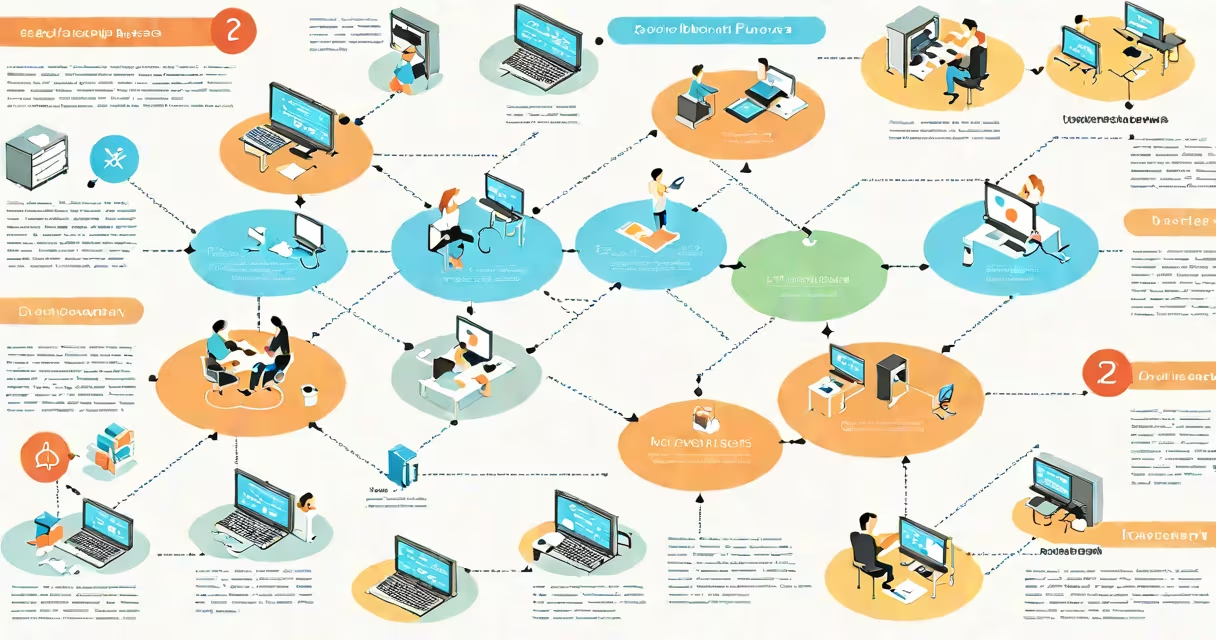
A software development process is a structured sequence of phases that guides teams from initial concept through deployment and maintenance. It defines roles, deliverables, timelines, and quality checkpoints to ensure consistent, predictable results. This structure reduces risk, improves collaboration, and aligns technical work with business goals.
The process begins with identifying user needs and ends with ongoing updates based on feedback. It's not a single method but a category of approaches-each suited to different project sizes, team structures, and delivery timelines. The most widely adopted models include Waterfall, Agile, and DevOps, each with distinct workflows and decision points.
According to the Software Engineering Institute at Carnegie Mellon University, effective processes reduce defect rates by up to 60% compared to ad-hoc development. The ISO/IEC 12207 standard formalizes lifecycle activities, emphasizing traceability and verification across all stages.
Each phase in the process builds on the previous one. Teams start by gathering requirements-what the software must do-from stakeholders. They document functional and non-functional needs, such as performance thresholds or security standards. Without clear requirements, projects often exceed budget or fail to meet user expectations.
Next comes design. Engineers create architecture diagrams, database schemas, and interface mockups. This stage determines how components interact and whether the system can scale. A poorly designed system may work initially but degrade under load or during integration.
Teams choose a model based on project stability, stakeholder involvement, and time-to-market pressure. The following table compares three common approaches:
| Model | Best For | Change Flexibility | Testing Frequency | Example Use Case |
|---|---|---|---|---|
| Waterfall | Fixed scope, regulated environments | Low | After entire build | Medical device firmware |
| Agile (Scrum) | Fast-moving markets, evolving needs | High | After each sprint | E-commerce platform updates |
| DevOps | Continuous deployment, cloud-native apps | Very high | Automated, real-time | Streaming service backend |
Waterfall assumes all requirements are known upfront. Each phase must finish before the next begins. This model works well in regulated industries like aerospace or healthcare, where documentation must prove compliance. But it struggles when user needs evolve mid-project.
Agile breaks work into short cycles called sprints-usually two weeks long. After each sprint, teams demonstrate working features to stakeholders. Feedback is incorporated immediately. This iterative style reduces waste and increases alignment. According to a 2023 report by the Project Management Institute, Agile projects succeed 2.5 times more often than traditional ones.
DevOps integrates development and operations into a continuous pipeline. Code changes trigger automated testing, staging, and deployment. Monitoring tools track behavior in production. This enables rapid iteration while maintaining stability. Netflix uses DevOps to deploy thousands of changes daily without downtime.
Many assume the software development process is rigid or bureaucratic. In reality, the best processes are adaptive. Agile doesn't discard planning-it shifts focus from upfront design to continuous refinement. Teams still define architecture early, but they validate assumptions through prototypes and user testing.
Another error is equating process with tooling. Having Jira or GitHub doesn't make a team agile. The process is defined by behavior: regular retrospectives, cross-functional collaboration, and acceptance criteria for every task. A team using Agile tools but skipping stand-up meetings still lacks the process.
Here's a non-obvious point: the most successful teams don't follow a single model. They blend methods. A startup building a mobile app might use Scrum for feature development but apply DevOps practices for server configuration. This hybrid approach is common in modern engineering organizations.
Consider a team creating a task management app for remote teams. They start with user interviews-12 team leads from distributed companies. Common pain points: missed deadlines, unclear ownership, lack of visibility.
They define core features: assign tasks, set due dates, send notifications, view progress. These become user stories. The team picks Scrum: two-week sprints, daily stand-ups, sprint reviews.
In Sprint 1, they build the task creation form and database schema. They write unit tests covering 85% of logic. After review, they deploy to a test environment. Stakeholders verify the workflow. One user reports confusion about the "assign" field. The team adjusts the label and adds tooltips.
Sprint 2 focuses on notifications. They integrate email and Slack alerts. Automated tests confirm messages trigger correctly. They release to a small group of beta users. Feedback shows delays in Slack delivery. They improve the API call timing.
By Sprint 6, the app supports file uploads and team dashboards. The team deploys to production via a CI/CD pipeline. Monitoring detects a memory leak in the notification service. They roll back, fix the bug, and redeploy-all within 90 minutes.
This cycle reflects how the software development process delivers value incrementally. Each step includes validation, feedback, and adaptation. The result is a product that meets real-world needs-not just technical specs.
I've led a team through a similar rollout for a logistics tracking system. We used Kanban boards and biweekly demos. When a client requested last-minute changes, we adjusted the backlog without derailing the timeline. The process didn't slow us down-it kept us focused.
"Software development process" is often mistaken for "code." Writing code is part of it, but the process includes planning, design, testing, deployment, and support. A developer who writes clean code but ignores testing protocols fails the process.
It's also not synonymous with "custom software development." While both involve building software, the former is a structure for execution. The latter describes the outcome-software tailored to specific needs. You can use Agile to build custom software, or use Waterfall for off-the-shelf solutions.
Understanding this distinction prevents misalignment. A client asking for "a software development process" might actually want a quote for a custom application. Clarifying intent avoids wasted effort.