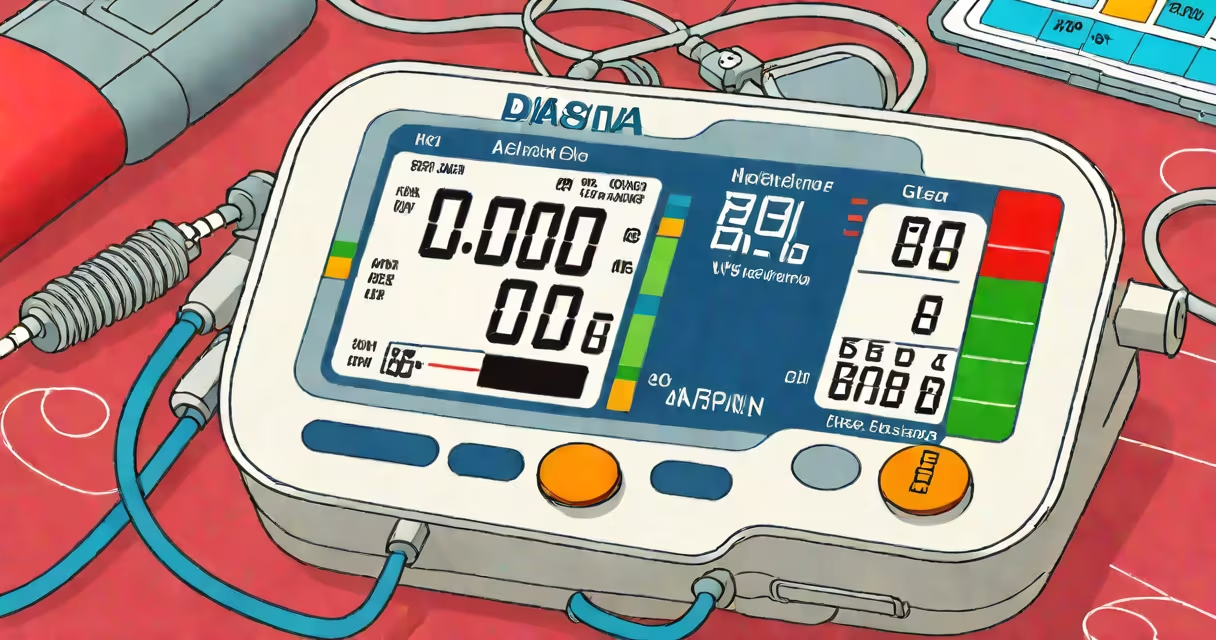
Dia on a blood pressure machine stands for diastolic pressure-the minimum arterial pressure measured during the relaxation phase of the heartbeat. It's the second number in a blood pressure reading, such as 120/80 mmHg, where 80 is the dia value.
Diastolic pressure reflects the resistance in blood vessels when the heart is at rest between beats. It's a key indicator of vascular health and helps determine whether blood pressure falls within normal, elevated, or hypertensive ranges.
The American Heart Association defines normal diastolic pressure as less than 80 mmHg. Values of 80-89 mmHg indicate elevated levels, and 90 or higher signal hypertension. Consistently high dia readings increase the risk of stroke, heart attack, and kidney disease.
Modern blood pressure machines use oscillometric technology. A cuff inflates around the upper arm, temporarily stopping blood flow. As pressure is released, sensors detect the subtle pulses in the artery caused by each heartbeat.
The device calculates systolic (top number) and diastolic (bottom number) pressures based on the amplitude of these oscillations. The point at which the oscillation amplitude peaks corresponds to systolic pressure. The point where the amplitude begins to decline sharply indicates diastolic pressure.
Manual readings using a stethoscope rely on Korotkoff sounds. The first sound heard (K1) marks systolic pressure. The last sound before silence (K5) marks diastolic pressure. Automated devices approximate this process electronically.
Standard blood pressure readings consist of two numbers:
| Term | Meaning | Normal Range | Health Implication |
|---|---|---|---|
| Systolic (top number) | Pressure during heart contraction | <120 mmHg | High values suggest increased strain on the heart |
| Diastolic (dia) | Pressure during heart relaxation | <80 mmHg | High values indicate stiff or narrowed arteries |
A reading of 130/85 mmHg shows systolic pressure at 130 and diastolic at 85. This qualifies as stage 1 hypertension according to current guidelines.
Some people have isolated diastolic hypertension-normal systolic pressure but elevated dia. This condition affects about 10% of adults with high blood pressure and increases long-term cardiovascular risk even when systolic numbers appear acceptable.
Many assume that only the top number matters. This is incorrect. Both numbers contribute to cardiovascular risk assessment.
Another myth is that dia fluctuates wildly throughout the day. While it does vary slightly due to activity, stress, or posture, consistent changes above 80 mmHg over multiple readings require medical attention.
Some users confuse "dia" with "dial." The term "dia" is short for diastolic, derived from Greek "diastole," meaning "to stretch apart." It refers specifically to the heart's relaxation phase, not a dial or adjustment knob.
A 55-year-old woman checks her blood pressure at home. The machine displays: 138/86 mmHg. The "dia" value is 86.
This reading exceeds the threshold for normal diastolic pressure. According to the American College of Cardiology, a persistent reading above 80 mmHg warrants follow-up. She schedules a visit with her doctor, who confirms the diagnosis of stage 1 hypertension and recommends lifestyle changes and medication.
Her case illustrates that dia is not just a number-it's a clinical marker. Ignoring elevated dia increases the risk of silent damage to blood vessels and organs.
Research published in The Lancet found that diastolic pressure is a stronger predictor of stroke risk in people under 60 than systolic pressure. For younger adults, high dia values often precede visible symptoms.
Another study in JAMA Internal Medicine showed that individuals with diastolic pressure above 85 mmHg had a 40% higher risk of developing heart failure over 10 years compared to those below 80 mmHg-even when systolic pressure was normal.
These findings show that dia is not a secondary number. It's a primary diagnostic tool.
Check your blood pressure regularly if you're over 40, have a family history of heart disease, or are overweight. Home monitoring devices provide accurate dia readings when used correctly.
If dia consistently exceeds 80 mmHg, consult a healthcare provider. Persistent readings above 90 mmHg require treatment to prevent complications.
I once used a manual sphygmomanometer during a community health screening. The patient's systolic was 128, but dia was 92. The participant reported no symptoms. After confirming the reading twice, we referred them to a cardiologist. They were diagnosed with early-stage hypertension and began therapy. Their dia dropped to 78 within six months.
This case highlights that dia can reveal issues before symptoms appear. It's not just a number-it's a warning sign.
Low dia values (below 60 mmHg) can also be concerning. They may indicate poor cardiac output or shock. In older adults, low dia correlates with increased fall risk and cognitive decline.
Always interpret dia in context. A single high reading doesn't diagnose hypertension. Multiple readings over time are required for accuracy.
Understanding what dia means on a blood pressure machine helps you take control of your cardiovascular health. It's not just a number-it's a important piece of your body's internal report card.
Regular monitoring and awareness of your dia value can reduce long-term risks. Know your numbers. Know your health.