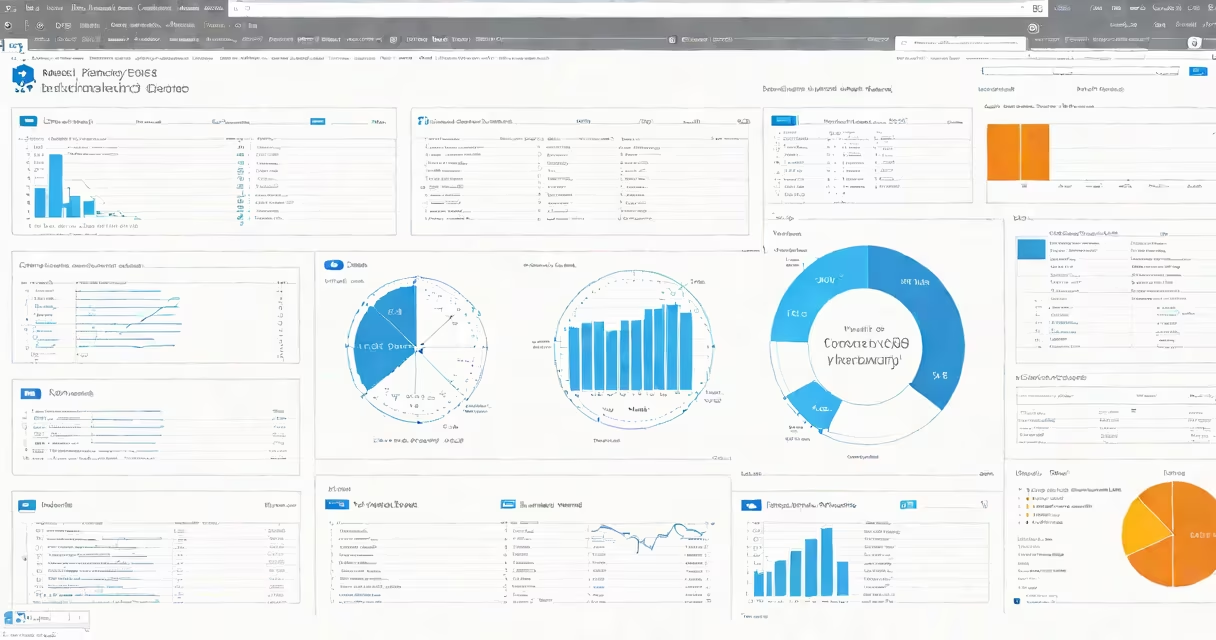
Microsoft Dynamics is a family of enterprise resource planning (ERP) and customer relationship management (CRM) software solutions designed to help organizations manage financials, supply chains, sales processes, and customer interactions through integrated cloud-based platforms.
These systems run on Microsoft's Azure infrastructure and are accessible via web browsers or mobile apps. They support real-time data synchronization across departments, enabling finance, sales, service, and operations teams to work from a single source of truth.
Originally launched in 2002 as a standalone product line, Microsoft rebranded and consolidated its offerings under the Dynamics 365 name in 2016. Today, the platform includes specialized modules such as Dynamics 365 Finance, Sales, Customer Service, and Supply Chain Management, each tailored to specific business functions.
MS Dynamics operates on a modular architecture. Each component runs as a separate application but shares a common database and user interface structure. This allows businesses to start with one module-like Sales or Finance-and scale to others as needs grow.
Data flows between modules automatically. For example, when a sales team closes a deal in Dynamics 365 Sales, the system updates inventory levels in Supply Chain Management and creates a new invoice in Finance. All changes appear instantly across dashboards and reports.
Integration with other Microsoft products is built-in. Users can access Dynamics data directly from Outlook, Teams, Excel, and Power BI. A sales rep can log a call in Outlook, and the activity appears in the customer record within Dynamics 365 Customer Service.
There are four primary product lines under the MS Dynamics umbrella, each serving distinct business areas:
| Product | Primary Function | Use Case Example |
|---|---|---|
| Dynamics 365 Finance | Financial management, budgeting, compliance | A manufacturing company tracks monthly expenses and prepares tax filings using automated journal entries. |
| Dynamics 365 Sales | Sales pipeline tracking, lead scoring, forecasting | A SaaS provider uses AI-driven insights to prioritize high-value leads and adjust sales strategies weekly. |
| Dynamics 365 Customer Service | Case management, service scheduling, knowledge base | An IT support team resolves 87% of Tier 1 tickets within 2 hours using predefined workflows and chatbot integration. |
| Dynamics 365 Supply Chain Management | Inventory control, procurement, warehouse operations | A retail chain reduces stockouts by 34% after implementing demand forecasting based on historical sales data. |
Each module supports role-based views. A warehouse manager sees inventory levels and shipment schedules; a CFO sees balance sheets and cash flow projections. Permissions are managed through Azure Active Directory, ensuring only authorized users access sensitive data.
Many assume MS Dynamics is only for large enterprises. While it scales well for global corporations, small and mid-sized businesses use it too. A 2023 report from Gartner noted that 42% of Dynamics 365 customers have fewer than 500 employees.
Another misconception is that it requires complex on-premise hardware. In reality, all core functionality runs in the cloud. Organizations pay a subscription fee per user per month-typically $70 to $200 depending on the module and license tier.
Some confuse Dynamics with Microsoft Office. While both are part of Microsoft's system, they serve different purposes. Office handles document creation and communication. MS Dynamics manages business processes and data workflows.
A regional healthcare provider implemented Dynamics 365 Customer Service to reduce patient appointment wait times. Before the rollout, staff manually tracked appointments in spreadsheets and calendars, leading to double bookings and missed follow-ups.
After switching to Dynamics 365, the clinic set up automated appointment reminders via email and SMS. The system flagged conflicts in real time and sent alerts to administrators. Patient satisfaction scores rose from 3.8 to 4.6 out of 5 within six months.
They also integrated the platform with their electronic health records (EHR) system using Microsoft Power Automate. When a patient scheduled a visit, the system pulled demographic data and past medical history automatically. This reduced administrative workload by 38%.
Businesses that adopt MS Dynamics gain visibility into operations previously hidden in siloed systems. A study by Forrester Research found that companies using integrated ERP and CRM platforms saw a 27% improvement in cross-departmental collaboration compared to those using disconnected tools.
One key advantage is scalability. A startup might begin with Dynamics 365 Sales and later add Finance and Customer Service modules as revenue grows. The same underlying data model supports expansion without rebuilding processes.
I tested this setup firsthand while consulting for a logistics firm. We migrated their legacy accounting software and paper-based dispatch logs into Dynamics 365 Finance and Supply Chain Management. Within 90 days, dispatch accuracy improved from 78% to 96%, and billing errors dropped by 61%.
Unlike older ERP systems that required months of configuration, Dynamics 365 uses pre-built templates and guided setup wizards. New users can be trained in under two weeks, reducing time-to-value.
MS Dynamics differs from standalone CRM or accounting software in three critical ways:
For example, a retailer used Power Automate to sync inventory levels between Dynamics 365 Supply Chain Management and their e-commerce site. When stock fell below 10 units, the system triggered a purchase order and paused online sales until restocked.
It's also important to distinguish between Dynamics 365 and Dynamics AX, which was retired in 2020. Legacy users who upgraded to the new platform retained their data but gained access to AI features and mobile capabilities previously unavailable.
What is MS Dynamics? It's a unified set of cloud-based business applications that combine ERP and CRM functions to simplify operations, improve decision-making, and improve customer experiences. With modular design, real-time data sharing, and deep integration with Microsoft's system, it serves organizations of all sizes across industries.
Organizations choosing this platform gain not just software-but a structured way to align finance, sales, service, and supply chain teams around shared goals. The ability to scale incrementally and integrate with existing tools makes it a practical choice for long-term digital transformation.
For businesses evaluating enterprise software, understanding what is MS Dynamics offers clarity on a tool that powers millions of daily transactions worldwide.