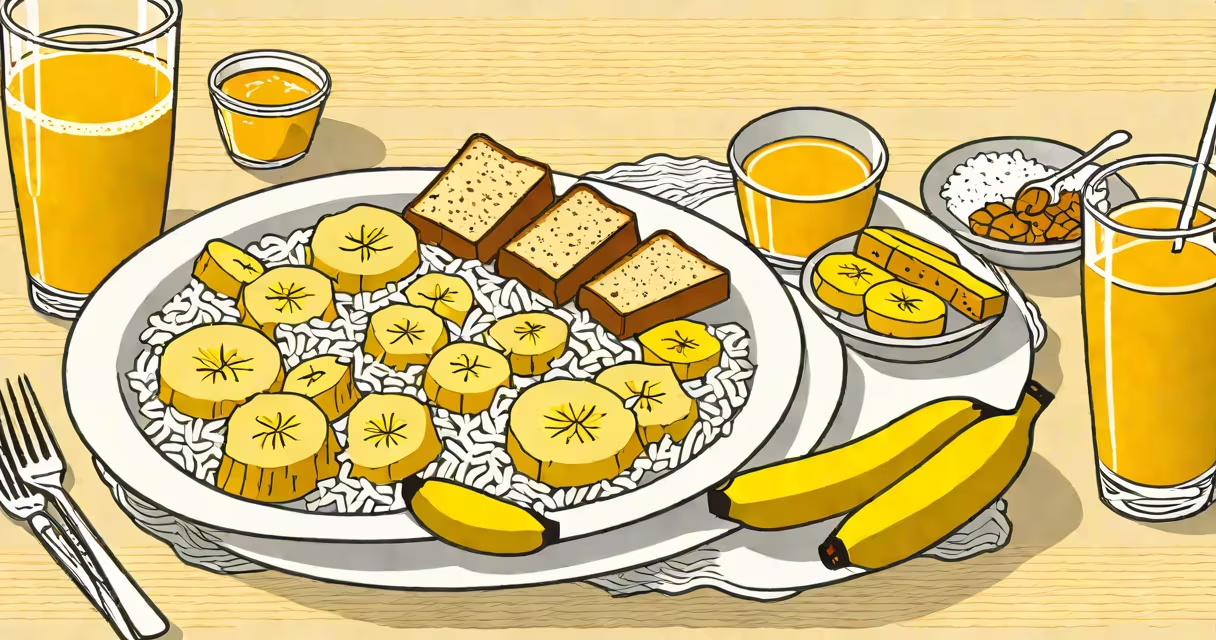
When experiencing diarrhea, focus on clear fluids and low-fiber, bland foods to prevent dehydration and ease gut irritation. Replacing lost electrolytes and minimizing gut stimulation supports faster recovery.
Diarrhea involves loose or watery stools occurring three or more times daily. It results from rapid intestinal transit, often due to infection, food intolerance, or medication side effects. The primary risks are fluid loss and electrolyte imbalance, which can impair kidney function and cause fatigue. Immediate dietary intervention reduces symptom duration and prevents complications.
The American College of Gastroenterology recommends oral rehydration solutions containing sodium, potassium, and glucose for acute diarrhea. These formulas restore fluid balance more effectively than water alone. Bland foods like bananas, rice, applesauce, and toast (BRAT diet) are tolerated well because they contain soluble fiber and are low in fat and acid.
During diarrhea, the intestines secrete excess fluid and fail to absorb enough. This leads to volume depletion and reduced blood pressure. Without replacement, symptoms worsen. Clear fluids replenish water and essential ions like sodium and chloride, which maintain nerve and muscle function.
Soluble fiber in foods such as bananas and oats slows bowel movement by absorbing water and forming a gel-like substance. Insoluble fiber, found in raw vegetables and whole grains, increases stool bulk and may aggravate diarrhea. Avoiding high-fat and spicy foods prevents further irritation of the intestinal lining.
A 2021 study published in Clinical Infectious Diseases found that patients who consumed oral rehydration solution within six hours of symptom onset recovered 24% faster than those who drank only water. The solution's balanced electrolyte profile enhances intestinal absorption through sodium-glucose cotransport.
Effective diets for diarrhea center on four elements: hydration, low-residue foods, electrolyte balance, and avoidance of triggers. Hydration begins with clear liquids-water, broths, diluted fruit juices, and oral rehydration solutions. These provide water and essential minerals without stimulating bowel activity.
Bland foods include boiled rice, plain toast, peeled apples, and bananas. These are low in fiber and easy to digest. They provide energy without taxing the digestive system. Avoid milk, caffeine, alcohol, and artificial sweeteners-they can increase motility or ferment in the gut, worsening symptoms.
Oral rehydration solutions contain precise ratios: 75 mmol/L sodium, 20 mmol/L potassium, and 75 mmol/L glucose. These values match the body's natural absorption mechanisms. Homemade versions using 1 liter water, 6 teaspoons sugar, and 1/2 teaspoon salt approximate this composition, though clinical formulations are more accurate.
There are two main approaches: rehydration-focused and food-based. The rehydration-first method prioritizes fluids until stool consistency improves. The food-integrated strategy introduces bland meals early to maintain energy. Both are valid, but rehydration takes precedence in severe cases.
Common errors include consuming dairy products, believing that "starving" the gut helps, or drinking sugary sodas. Milk contains lactose, which many people lack the enzyme to digest during illness. This leads to bloating and increased diarrhea. Sodas contain high-fructose corn syrup, which draws water into the intestine and worsens symptoms.
Another misconception is that all fiber is bad. Soluble fiber (from oats, bananas, apples) can reduce diarrhea duration by binding water. Insoluble fiber (from wheat bran, raw vegetables) adds bulk and may prolong symptoms. Choose based on tolerance, not blanket rules.
This dietary strategy applies to acute diarrhea lasting less than 14 days. It's used in children, adults, and older adults with mild to moderate symptoms. The World Health Organization includes oral rehydration therapy in its standard treatment protocols for diarrheal disease worldwide.
For travelers, the risk of traveler's diarrhea is highest in regions with poor sanitation. A 2019 review in Travel Medicine and Infectious Disease found that travelers who maintained hydration and ate bland foods had a 40% lower risk of prolonged symptoms compared to those who did not adjust their intake.
People with irritable bowel syndrome (IBS) or inflammatory bowel disease (IBD) may experience flare-ups triggered by certain foods. During an episode, following a low-FODMAP diet temporarily can reduce gas and cramping. However, long-term restriction is not advised without medical supervision.
Some confuse diarrhea management with fasting. Fasting during illness increases the risk of hypoglycemia and delays healing. The body needs calories to repair intestinal lining and produce immune cells. Even small amounts of food help maintain metabolic function.
Another mix-up is equating all clear liquids. While water and broth are safe, sports drinks contain too much sugar and sodium. Apple juice, despite being clear, has fructose that can exacerbate diarrhea. Stick to solutions with controlled sugar and electrolyte levels.
Probiotics are sometimes seen as a cure-all. While certain strains like Lactobacillus rhamnosus GG show modest benefit in reducing duration by 1-2 days, they do not replace hydration or dietary control. Probiotics work best as supplements, not standalone treatments.
Consider a 32-year-old adult with sudden-onset diarrhea after eating contaminated chicken. Symptoms began at 8 AM. By 10 AM, they feel weak and thirsty. The plan:
By evening, stool frequency drops from five episodes to one. No vomiting occurs. The person resumes normal diet the next day.
One overlooked point is that even "safe" foods can trigger issues if eaten in excess. For example, bananas are high in potassium and low in fiber, making them ideal early on. But eating three bananas in one sitting can lead to excess sugar intake, which may draw water into the bowel and restart diarrhea.
Similarly, while white rice is recommended, brown rice contains insoluble fiber and should be avoided during active symptoms. The difference between the two is measurable: white rice has 0.4 grams of fiber per 100 grams; brown rice has 3.5 grams.
Another subtle factor is temperature. Cold liquids can stimulate intestinal contractions. Warm or room-temperature fluids are better tolerated. A 2017 study in Journal of Pediatric Gastroenterology and Nutrition showed that children given warm rehydration solutions reported less abdominal pain than those given cold ones.
What to eat and drink when having diarrhea centers on hydration, low-residue foods, and avoiding known irritants. Prioritize clear fluids and gradually reintroduce bland meals. Do not skip meals entirely. Monitor for warning signs: fever above 101.3°F, blood in stool, or inability to keep fluids down. Seek medical care if symptoms persist beyond 48 hours.
Following evidence-based nutrition practices reduces recovery time and prevents complications. The goal is not to stop diarrhea abruptly but to support the body's natural healing process.