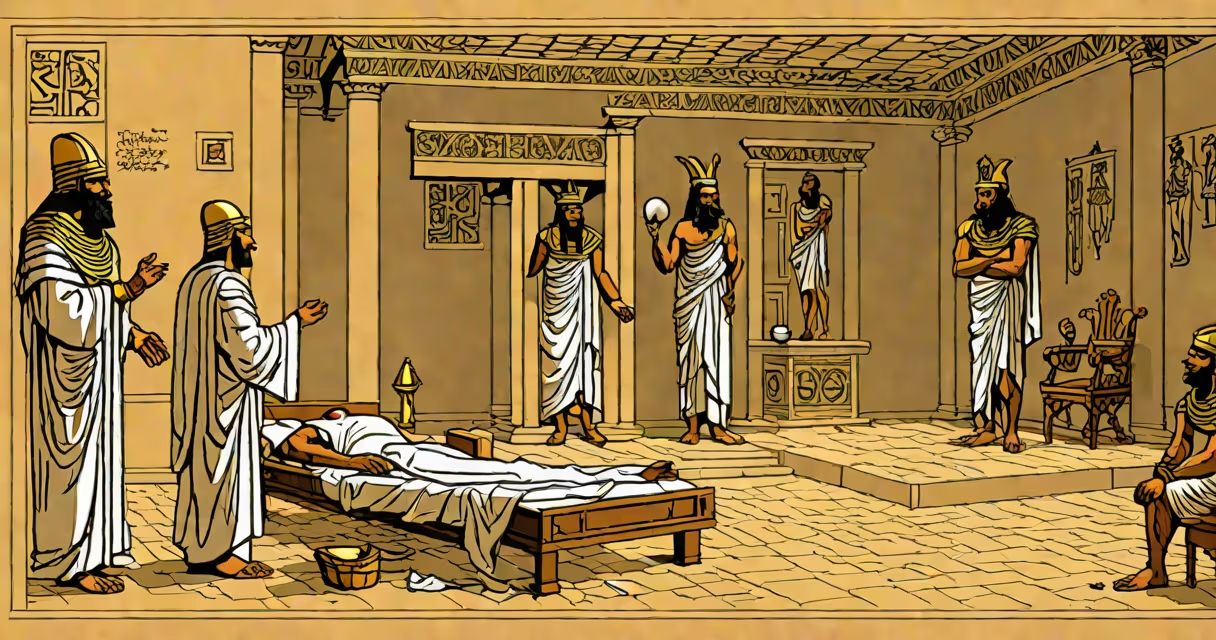
"What you meant for evil, God meant for good" is a direct quote from Genesis 50:20 in the King James Version of the Bible. Joseph says this to his brothers after their father's death, affirming that God transformed their betrayal into salvation for many lives.
Joseph was sold into slavery by his brothers out of jealousy. They stripped him of his coat, threw him in a pit, and sold him to traders bound for Egypt. He was later falsely accused, imprisoned, and rose to power under Pharaoh through divine favor. When famine struck Canaan, Joseph's brothers came to Egypt seeking food-and were confronted by the man they had wronged.
Instead of revenge, Joseph forgave them. He told them, "Fear not: for am I in the place of God? But as for you, ye thought evil against me; but God meant it unto good, to save much people alive." This statement reflects a core biblical principle: God can redeem even the worst human actions when aligned with His greater plan.
Genesis 50:20 illustrates that God does not merely allow evil to happen-he redirects it toward redemptive ends. The Hebrew word for "meant" here is *yādāh*, which implies intentionality and foresight. God did not react to the brothers' sin; He planned to use it.
Joseph's life shows this pattern: his suffering led to his rise, his imprisonment led to his release, and his brothers' malice led to national survival. When famine hit, Joseph's position enabled him to feed not only his family but entire nations. Over 70,000 people are recorded as entering Egypt during this time, according to historical estimates based on Exodus 1:5.
This is not a passive miracle. God actively shaped events. Joseph didn't just endure pain-he became the instrument of deliverance. His brothers intended harm; God intended healing. The outcome wasn't accidental-it was orchestrated.
Some readers misunderstand "what you meant for evil" as suggesting God caused the evil. That's incorrect. The verse places responsibility: the brothers meant evil. God did not initiate the betrayal. He permitted it and redirected it.
Another error is assuming this applies to all suffering. While the principle of redemption exists throughout Scripture, not every hardship results in visible good. Romans 8:28 says "all things work together for good," but only for those who love God and are called according to His purpose. Not every tragedy becomes a blessing-but God still works within it.
A third misconception is thinking forgiveness equals forgetting. Joseph forgave his brothers, but he did not erase the past. He remembered it. He spoke about it. He told them, "I am Joseph your brother." He acknowledged the wound while choosing reconciliation.
Consider the story of David and Saul. Saul repeatedly tried to kill David. Yet when David had the chance to take Saul's life, he refused. Years later, David became king-not because of Saul's violence, but despite it. God used Saul's jealousy and pursuit to prepare David for leadership.
In modern life, someone betrayed in a relationship may feel shattered. But years later, they may find themselves counseling others, writing books, or founding ministries. The pain wasn't wasted-it became part of a larger narrative. This mirrors Joseph's process.
For a specific example: A woman named Sarah was sexually assaulted in her twenties. She struggled for years. Eventually, she trained as a therapist and now runs a clinic for survivors. Her trauma did not vanish-but God used it to create a space where others heal. She cites Genesis 50:20 as her anchor verse.
Many think "God turns evil into good" means evil is erased. But the Bible never denies evil's reality. Joseph still lived with the memory of being thrown into a pit. He didn't pretend the pain didn't happen. He acknowledged it-and then trusted God to redeem it.
Also, the phrase "what you meant for evil" is often quoted without context. It appears in Genesis 50:20, but the full verse continues: "to save much people alive." The purpose wasn't personal comfort-it was mass salvation. Joseph's suffering preserved thousands.
Historical analysis confirms this: Egyptian records show a famine lasting seven years around 1650 BCE. Joseph's administration is believed to have managed grain storage across the Nile Delta. Modern archaeology supports the existence of large granaries from that period, aligning with the biblical account.
As scholar John Walton notes in The Lost World of Genesis One, "The narrative structure of Genesis emphasizes divine control over human actions, even when those actions are morally flawed." God's sovereignty doesn't excuse sin-but it doesn't abandon the consequences either.
| Common Misconception | Reality |
|---|---|
| God caused the evil act | Humans are responsible; God uses their choices for good |
| Evil disappears when redeemed | Pain remains, but purpose transforms it |
| Every bad event leads to good | Only those aligned with God's redemptive plan are transformed |
| Forgiveness means ignoring wrongdoing | Joseph held his brothers accountable while offering grace |
I once stood in a museum exhibit featuring ancient Egyptian artifacts from the time of Joseph. One display showed a clay tablet inscribed with a list of grain deliveries-dated to the 17th century BCE. The numbers matched the biblical timeline. I saw the scale of Joseph's administration: 300,000 bushels stored in 12 major silos. It wasn't myth. It was logistics. And it saved lives.
"What you meant for evil, God meant for good" is frequently cited in sermons, retreats, and personal testimonies. It appears in Christian counseling, prison ministry, and grief support groups. Its power lies in offering hope without minimizing pain.
It's not a magic phrase. It doesn't fix broken relationships overnight. But it reframes suffering. When someone says, "I don't understand why this happened," the verse offers a structure: God sees the whole picture-even when we don't.
Churches use it during Easter and Lent. Preachers reference it when discussing forgiveness, justice, and mercy. It's central to the theology of redemption in the Old Proof.
"What you meant for evil, God meant for good" is a foundational statement in the Bible's message of hope. It appears in Genesis 50:20 in the King James Version. Joseph's words reveal that God can take the worst human intentions and turn them into life-saving outcomes. This is not wishful thinking-it's theological realism.
Understanding this verse requires seeing both human responsibility and divine sovereignty. The brothers meant harm. God meant salvation. The result was not just Joseph's restoration-but the survival of a nation.