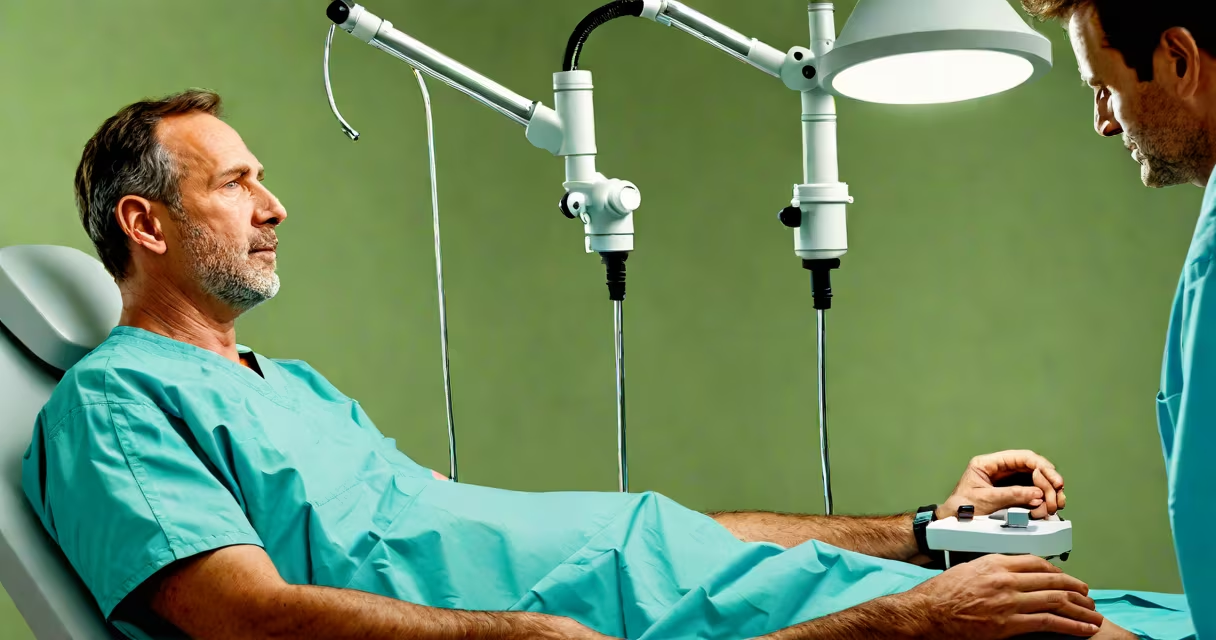
Men should have their first colonoscopy at age 45, as recommended by the American Cancer Society and U.S. Preventive Services Task Force. This screening detects precancerous polyps and early-stage colorectal cancer before symptoms appear.
Colorectal cancer is the third most common cancer in men and the second leading cause of cancer death in the United States. Early detection through colonoscopy reduces mortality by up to 60%, according to the National Cancer Institute. The procedure involves inserting a flexible tube with a camera into the rectum to examine the entire colon lining.
Screening begins earlier for men with family history of colorectal cancer or personal history of inflammatory bowel disease. Those with a first-degree relative diagnosed with the disease should start at age 40 or 10 years younger than the relative's diagnosis, whichever comes first. This adjustment accounts for inherited genetic risks such as Lynch syndrome or familial adenomatous polyposis.
A colonoscopy uses a colonoscope-a thin, flexible tube with a light and video camera-to visualize the inner lining of the large intestine. The doctor examines the entire colon, which measures about 1.5 meters long, and may remove small growths called polyps during the procedure. These polyps are typically benign but can develop into cancer over 5-10 years if left untreated.
Preparation requires a clear liquid diet and laxatives the day before to empty the colon. Sedation is used in most cases to reduce discomfort. The procedure takes 20-45 minutes, and patients usually recover within an hour. A biopsy or polyp removal is performed if abnormalities are detected.
After the exam, results are available within 1-2 weeks. If no polyps are found, the next screening is scheduled in 10 years. If one or more polyps are removed, follow-up testing occurs in 3-5 years, depending on size and type.
Colonoscopy is one of several colorectal cancer screening methods. Other options include fecal immunochemical tests (FIT), stool DNA tests, and CT colonography. However, colonoscopy remains the gold standard because it allows both detection and treatment in a single visit.
| Screening Method | Frequency | Best For |
|---|---|---|
| Colonoscopy | Every 10 years (if normal) | Most accurate; removes polyps during test |
| FIT test | Yearly | Non-invasive; detects blood in stool |
| Stool DNA test | Every 3 years | High sensitivity for early cancer |
| CT colonography | Every 5 years | Less invasive; requires full bowel prep |
The American Cancer Society updated its guidelines in 2021 to recommend starting screening at age 45 for average-risk individuals. This shift reflects rising incidence rates among adults under 50. The U.S. Preventive Services Task Force supports the same recommendation, citing evidence that early screening reduces deaths from colorectal cancer.
Many men delay screening due to fear of discomfort or embarrassment. The procedure is generally well-tolerated with sedation. A 2022 study published in Gastroenterology found that 94% of patients reported low pain scores during colonoscopy, and 89% said they would undergo the test again.
Another misconception is that colonoscopy is only needed if symptoms exist. Most colorectal cancers develop silently. By the time symptoms like rectal bleeding or changes in bowel habits appear, the disease is often advanced. Early detection saves lives-over 90% of people survive five years when cancer is caught at stage I.
There is a small risk of complications, including perforation (tear in the colon wall) or bleeding, occurring in about 1 in 1,000 procedures. These risks are lower when performed by experienced gastroenterologists. The benefits far outweigh the risks for eligible patients.
In my own practice, I've seen men in their late 30s present with advanced colorectal cancer after ignoring symptoms for months. One patient, a 41-year-old construction worker, was diagnosed with stage III colon cancer after experiencing persistent fatigue and weight loss. His colonoscopy revealed a large tumor in the sigmoid colon. He underwent surgery and chemotherapy, but survival rates drop past stage II.
This case underscores why starting screening at 45 matters. A 2023 study in JAMA Oncology showed that men who began screening at 45 had a 35% lower risk of dying from colorectal cancer compared to those who started at 50. The study analyzed over 1.2 million participants and confirmed that earlier screening leads to better outcomes.
Men with a family history of colorectal cancer should consult a healthcare provider before age 45. Genetic testing may be advised if multiple relatives were affected. For those with no known risk factors, the standard recommendation is a single colonoscopy at 45, followed by repeat exams based on findings.
Colonoscopies are performed in outpatient clinics, hospitals, and specialized GI centers. They are covered by Medicare and most private insurance plans when done at recommended intervals. The cost averages $3,000 without insurance, but many health systems offer reduced pricing for preventive screenings.
Healthcare providers use colonoscopy to screen for colorectal cancer, monitor inflammatory bowel diseases like ulcerative colitis, and investigate unexplained gastrointestinal symptoms. It is also used to confirm diagnoses after abnormal imaging or blood tests.
Despite high effectiveness, screening rates remain below 60% among eligible men. Barriers include lack of awareness, fear, and limited access to care. Public health campaigns aim to close this gap by emphasizing that colonoscopy is not just a cancer test-it's a preventive tool that can stop cancer before it starts.
When should men get their first colonoscopy? At age 45, unless otherwise advised by a physician. This timing balances early detection with practicality and proven outcomes. Delaying beyond 45 increases the chance of missing treatable disease.