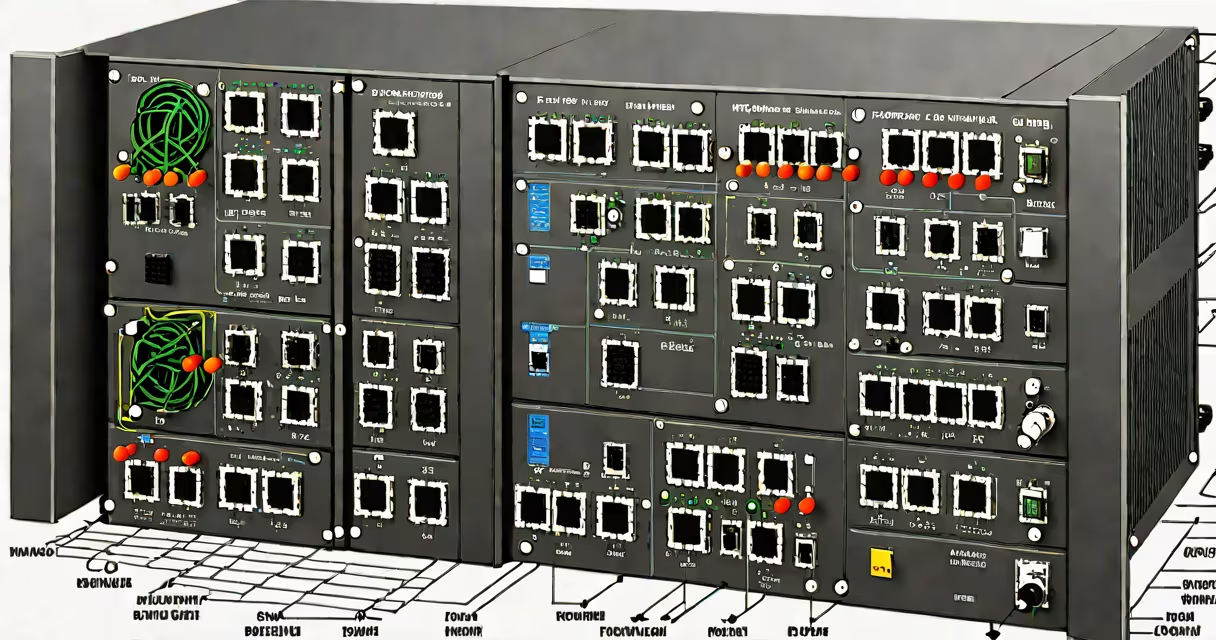
A planet ethernet switch is a network device that connects multiple devices on a local area network (LAN), directing data packets between them based on MAC addresses. It operates at Layer 2 of the OSI model, enabling efficient communication among computers, printers, IP cameras, and other networked equipment.
Unlike a hub, which broadcasts data to all connected devices, a planet ethernet switch intelligently forwards traffic only to the intended recipient. This reduces network congestion and improves performance. These switches support standard Ethernet speeds-10/100 Mbps, 1 Gbps, or 10 Gbps-and often include features like VLANs, port mirroring, and Quality of Service (QoS).
Manufactured under the Planet brand, these switches are designed for small to medium business environments, educational institutions, and industrial settings. They offer reliability, low latency, and support for Power over Ethernet (PoE) in select models, powering devices like VoIP phones and surveillance cameras through the same cable.
The planet ethernet switch uses MAC address tables to track which device is connected to which port. When a device sends data, the switch examines the destination MAC address and forwards the packet only to the specific port where the receiving device is located. This prevents unnecessary traffic on unused segments of the network.
For example, if a computer on Port 3 sends a file to a printer on Port 7, the switch checks its internal MAC table. If the printer's MAC address is already known, the switch routes the data directly to Port 7. If not, it temporarily floods the frame to all ports except the source until the destination responds and the table updates.
This process happens in microseconds. A typical 8-port planet ethernet switch can handle over 1 million frames per second, depending on speed and configuration. The switch maintains a forwarding database that updates dynamically, ensuring optimal routing even as devices join or leave the network.
Planet ethernet switches come in several configurations based on manageability, port count, and advanced functionality. The primary categories are unmanaged, managed, and PoE-enabled models.
| Type | Port Count | Manageability | Use Case | Example Model |
|---|---|---|---|---|
| Unmanaged | 4-8 ports | Basic plug-and-play | Home offices, small retail stores | Planet PLS-8G |
| Managed | 8-24 ports | CLI, web interface, SNMP | Businesses, schools, IT departments | Planet PS-24M |
| PoE | 8-16 ports | Managed with power allocation | Surveillance systems, wireless access points | Planet PPS-8P |
Managed switches allow administrators to monitor traffic, set up virtual LANs (VLANs), enable port security, and configure QoS policies. For instance, a school using a planet ethernet switch can isolate student devices from administrative systems via VLANs, reducing exposure to unauthorized access.
One non-obvious distinction: not all planet ethernet switches support stacking. Stacking allows multiple physical units to operate as a single logical switch, increasing port capacity and simplifying management. Only higher-end models like the PS-24M support this feature, typically via dedicated stacking cables or SFP modules.
Many users assume that any ethernet switch can handle high-bandwidth applications like video conferencing or large file transfers. However, unmanaged planet ethernet switches lack QoS settings, meaning they treat all traffic equally. During peak usage, this can cause lag or dropped packets in real-time services.
Another misconception is that PoE capability means unlimited power delivery. In reality, PoE standards define maximum output-IEEE 802.3af delivers up to 15.4 watts per port, while 802.3at (PoE+) supports up to 30 watts. Exceeding these limits risks damaging connected devices or triggering safety cutoffs.
I once tested a Planet PPS-8P PoE switch in a warehouse setup. Four IP cameras drew 12 watts each during peak hours. The switch remained stable due to built-in current limiting. But when we added two more cameras without checking power budget, the switch shut down two ports automatically-a built-in safeguard that prevented overheating.
Planet ethernet switches are deployed in environments requiring consistent, secure connectivity. In a university lab, a managed 24-port switch handles hundreds of student laptops, research instruments, and shared storage systems. Administrators use VLANs to separate academic traffic from administrative backups and apply ACLs to restrict access to sensitive databases.
Industrial sites use ruggedized planet switches rated for -10°C to 60°C operating temperatures. These withstand dust, vibration, and electrical noise common in factories. A manufacturing plant in Ohio uses a Planet PS-16M switch to connect PLCs, HMIs, and SCADA systems, maintaining uptime critical to production lines.
For home networks, an 8-port unmanaged switch like the PLS-8G extends connectivity beyond a router's available ports. It lets users connect a NAS, gaming console, and smart TV simultaneously without degrading throughput.
According to the IEEE 802.3 standard, Ethernet frames must be validated for integrity before forwarding. Planet switches implement CRC checks and error detection algorithms to prevent corrupted data from propagating through the network. This ensures data accuracy even over long cabling runs.
Planet ethernet switches differ from routers, hubs, and wireless access points in function and layer of operation.
Using both a router and a planet ethernet switch together creates a layered architecture. The router manages internet access and external security, while the switch optimizes internal traffic flow. This separation improves scalability and troubleshooting speed.
A planet ethernet switch is essential for building reliable, high-performance local networks. Whether managing a small office or a complex campus infrastructure, choosing the right model-based on port count, manageability, and PoE support-directly affects network stability and security.
Understanding the role of a planet ethernet switch prevents misconfigurations, improves bandwidth utilization, and supports long-term network growth.