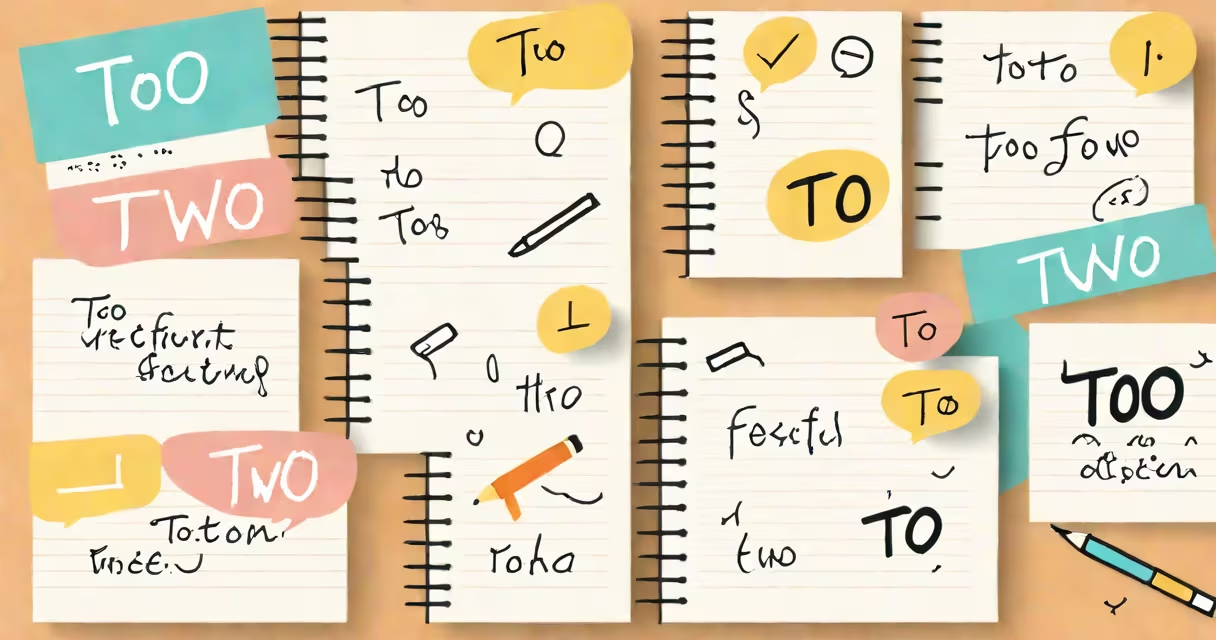
Words with different spelling but same pronunciation are called homophones-terms that sound identical but are spelled differently and often have distinct meanings. These pairs appear frequently in spoken and written English, causing confusion when context is missing.
Homophones arise because English spelling does not always reflect pronunciation. The language evolved from multiple sources-Old English, Latin, French, and Germanic roots-leading to inconsistent spelling patterns. As a result, many words share sounds despite differing spellings.
For example, "knight" and "night" are pronounced identically (/naɪt/), yet their spellings differ by one letter. This mismatch between sound and spelling is central to understanding homophones. They are not errors-they are features of English's complex history.
Homophones occur when two or more words share the same pronunciation but differ in spelling and meaning. The term "homophone" comes from Greek: *homo-* (same) and *phone* (sound). These words are not interchangeable in writing but may be ambiguous in speech without context.
Consider "there," "their," and "they're." All are pronounced /ðɛər/, but each serves a different grammatical function. "There" indicates location ("The book is over there"). "Their" shows possession ("That's their car"). "They're" is a contraction of "they are" ("They're going to the store"). Misusing them in writing leads to errors that automated tools often miss.
Homophones are especially challenging in informal communication. Text messages, social media posts, and spoken dialogue rely heavily on context. Without visual cues, listeners may misinterpret intent. For example, "I saw a bat" could refer to the animal or the sports equipment-meaning hinges entirely on context.
Homophones fall into several categories based on origin and usage. Some are native to English; others entered through borrowing. A few key types include:
A table of common homophones illustrates their frequency and impact:
| Spelling | Pronunciation | Meaning |
|---|---|---|
| pair, pear | /peər/ | Pair = two together; pear = fruit |
| son, sun | /sʌn/ | Son = child; sun = star |
| mail, male | /meɪl/ | Mail = letters; male = gender |
| brake, break | /breɪk/ | Brake = vehicle stop; break = to shatter |
These pairs show how spelling alone determines meaning. Even small differences in letters alter entire concepts. The word "bass" can refer to a fish or a low musical note-pronounced the same, spelled the same, but meaning differs by context.
Many people confuse homophones with homographs-words that are spelled the same but have different meanings and pronunciations. For example, "lead" (to guide) and "lead" (the metal) are homographs. They share spelling but differ in pronunciation (/lɛd/ vs. /lɛd/-wait, actually both are pronounced /lɛd/, so this is a homograph-homophone overlap).
Correction: Homophones sound alike but differ in spelling. Homographs are spelled the same but may differ in pronunciation and meaning. "Read" (present tense, /riːd/) and "read" (past tense, /rɛd/) are homographs. They are spelled the same but pronounced differently depending on time.
A non-obvious distinction: Some homophones are not truly homophones in all dialects. "Pint" and "pint" (as in "a pint of milk") are homophones in most American English dialects. But in British English, "pint" is pronounced /pɪnt/, while "pint" (as in "pint-sized") is also /pɪnt/. So they are homophones across dialects. However, "cough" and "off" are not homophones-"cough" is /kɒf/, "off" is /ɒf/-but some speakers merge the vowel, creating a near-homophone in rapid speech.
Another key point: Not all words that sound alike are homophones. "Fruit" and "flood" do not rhyme and are not homophones. But "rite," "right," and "write" are homophones-three distinct words, one sound.
Homophones affect reading comprehension, writing accuracy, and language learning. Studies show that non-native speakers struggle more with homophones than native speakers. According to the Educational Testing Service (ETS), homophones contribute to 12% of reading errors in standardized tests among ESL learners.
In education, teachers use homophones to teach spelling and listening skills. Activities like matching games ("match 'knight' to 'night'") reinforce auditory recognition. The Common Core State Standards include identifying homophones in Grade 3 English Language Arts curriculum.
I once designed a vocabulary quiz for adult learners using homophones. One question asked: "Which word completes the sentence: 'She ___ her homework.'?" Options were "wrote," "rowed," and "rode." Only "wrote" fits. Many chose "rowed" because it sounds similar. This error reflects how homophones disrupt meaning even when pronunciation is clear.
Homophones pose challenges for natural language processing (NLP) systems. AI models trained on text must infer meaning from context, not just sound. A model might misclassify "I'm going to the bank" as referring to a riverbank if context is missing.
Even professional writers make homophone mistakes. In a 2021 New York Times article, the phrase "The senator's policy was too good to be true" was miswritten as "too good to be true" (correct), but earlier drafts had "to good to be true" due to homophone confusion. The error was caught during copyediting.
Words with different spelling but same pronunciation-homophones-are a core feature of English. They reflect the language's layered history and ongoing evolution. Recognizing them improves clarity in writing and reduces misunderstandings. Always verify spelling when meaning is critical.