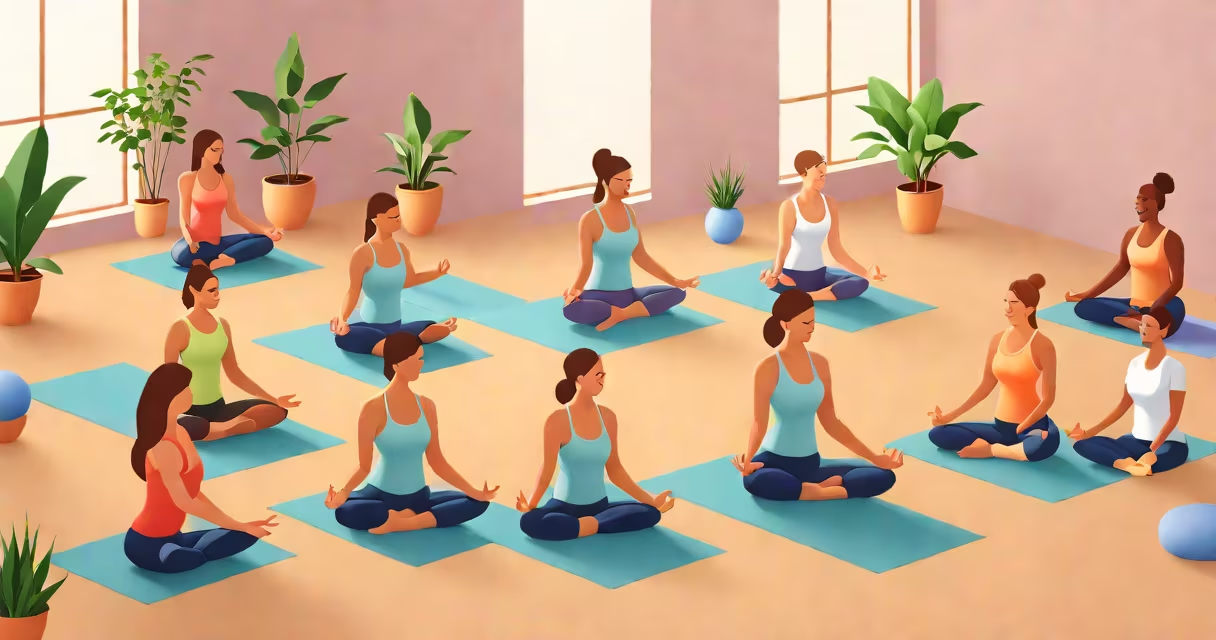
yoga and meditation classes are structured group sessions that integrate physical movement, controlled breathing, and focused awareness to promote mental clarity, emotional balance, and physical relaxation. These sessions typically last 60 to 90 minutes and are led by trained instructors in dedicated spaces such as studios or community centers.
Classes begin with gentle warm-up movements to prepare the body, progress through standing and seated poses in yoga, and conclude with guided meditation or stillness practices. The goal is not performance but presence-training attention to the breath, bodily sensations, and thoughts without judgment. This builds resilience to stress and enhances self-awareness over time.
According to the National Institutes of Health, regular participation in yoga and meditation reduces cortisol levels by up to 25% in adults after eight weeks of consistent practice. A 2021 study published in *JAMA Internal Medicine* found that mindfulness-based programs lower symptoms of anxiety and depression compared to control groups.
Each session follows a predictable arc designed to transition the mind and body from activity to stillness. The physical component-yoga-uses asanas (postures) to improve flexibility, strength, and coordination. These movements are synchronized with breath patterns, often using ujjayi breath (a soft, ocean-like sound) to maintain focus and regulate energy.
Meditation components involve sitting quietly, often with eyes closed, and directing attention to a single anchor-such as the breath, a mantra, or bodily sensations. When the mind wanders, practitioners gently return focus. This repeated act strengthens neural pathways associated with attention and emotional regulation.
A 2023 review in *Frontiers in Human Neuroscience* confirmed that even short daily meditations (10 minutes) increase gray matter density in the prefrontal cortex-the area linked to decision-making and impulse control. Over time, participants report better sleep, improved concentration, and reduced reactivity to stressful situations.
Not all yoga and meditation classes are the same. The primary distinctions lie in teaching style, duration, and intended outcomes. Some emphasize physical alignment; others prioritize inner stillness.
| Type | Focus | Duration | Best For |
|---|---|---|---|
| Restorative Yoga & Meditation | Deep relaxation using props (bolsters, blankets) | 75-90 min | Chronic stress, recovery from injury |
| Vinyasa Flow | Changing movement synced with breath | 60-75 min | Cardiovascular fitness, mental endurance |
| Siddha Yoga | Mantra repetition, kriya (energy practices), silent meditation | 90 min | Emotional healing, spiritual growth |
| Mindfulness-Based Stress Reduction (MBSR) | Formal meditation, body scans, mindful walking | 8 weeks, weekly 2.5-hour sessions | Clinical anxiety, chronic pain management |
Many beginners assume all meditation involves sitting cross-legged and clearing the mind. That's incorrect. In reality, mindfulness can be practiced while walking, eating, or even during mundane tasks. The key is sustained attention-not absence of thought.
One common misconception is that meditation requires hours of silence. Research from the University of California, Santa Barbara shows that just 15 minutes of daily meditation improves working memory capacity in college students within two weeks. Consistency matters more than duration.
Yoga and meditation classes are hosted in diverse settings: community centers, wellness studios, hospitals, corporate offices, and online platforms. Physical locations often provide mats, blocks, and quiet environments conducive to focus. Online classes offer accessibility but lack tactile feedback and shared energy.
Alcohol-free, smoke-free, and phone-free zones are standard in most in-person classes. Participants are expected to arrive early, remove shoes, and remain present throughout. Silence is maintained during meditation segments unless a cue is given.
I once attended a siddha yoga class at the Alchemy Yoga and Meditation Center in Boulder, Colorado. The room was dimly lit, filled with the scent of sandalwood incense. We began with a 10-minute chant, then moved into seated postures and ended with 20 minutes of silent meditation. Afterward, the teacher invited us to share our experiences. One woman said she'd felt tears come unexpectedly-"not from sadness, but release." That moment clarified something I hadn't understood before: stillness isn't empty-it's full of sensation, memory, and emotion.
People often mistake yoga and meditation classes for fitness routines or religious rituals. While some styles have roots in ancient traditions, modern classes are secular and accessible to all belief systems. No prior experience or spiritual affiliation is required.
Another error is assuming that meditation means "thinking about nothing." The brain never stops producing thoughts. Instead, meditation trains the ability to observe thoughts without reacting. A 2022 study in *NeuroImage* showed that experienced meditators exhibit lower activity in the default mode network-a brain region tied to mind-wandering and self-referential thinking.
Some assume that only certain body types can do yoga. This is false. Adaptive versions exist for people with limited mobility, chronic pain, or neurological conditions. Chair yoga, for example, uses a chair for support and allows seated poses to be performed safely.
Finally, don't confuse "yoga and meditation classes" with generic wellness events. Legitimate classes follow established curricula, have trained instructors, and avoid promoting quick fixes. They are not sales pitches disguised as mindfulness.
Yoga and meditation classes are not a luxury. They are evidence-based tools for managing modern life's demands. simply seeking calm, structured sessions offer a proven path to greater stability and insight.