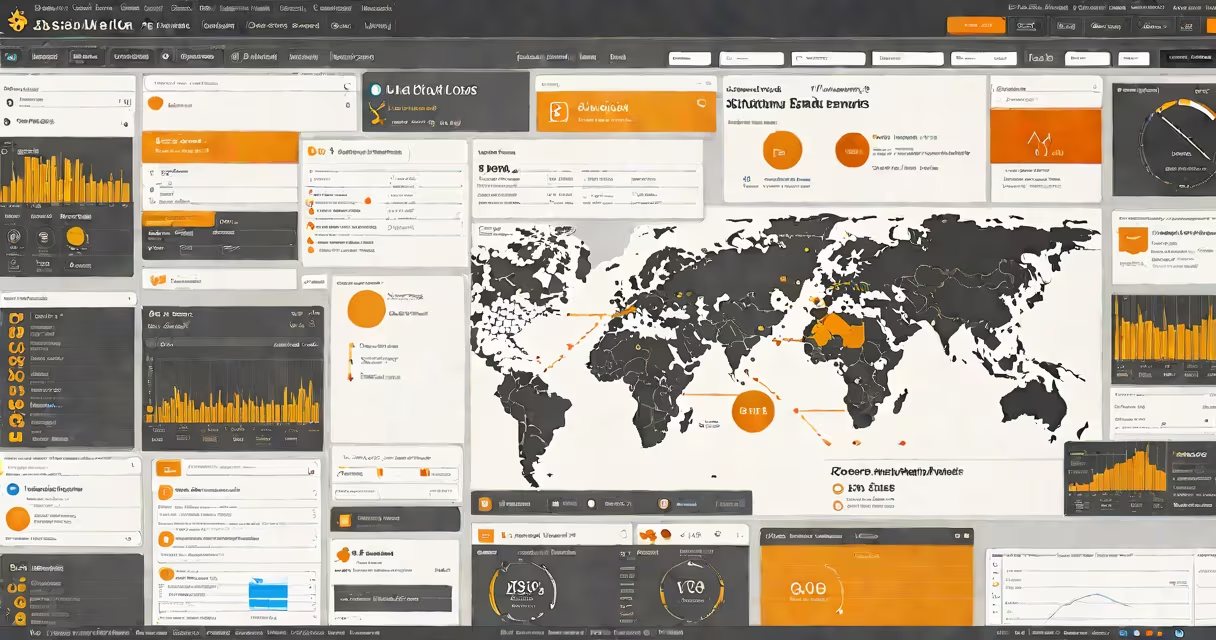
AWS Security Lake is a managed service that collects, normalizes, and stores security data from across your AWS environment and third-party security tools in a centralized data lake. It enables organizations to perform advanced analytics, detect threats, and meet compliance requirements using a single source of truth.
Security data from AWS services like Amazon GuardDuty, Amazon Macie, and AWS CloudTrail, along with logs from third-party tools such as firewalls, endpoint protection platforms, and SIEMs, flow into Security Lake. The service automatically converts this data into a standardized format-Open Cybersecurity Schema Structure (OCSF)-so analysts can query and correlate events consistently across systems.
For example, if a suspicious login attempt is detected by AWS IAM Access Analyzer and a malware alert appears in a third-party EDR tool, Security Lake combines both signals into a unified timeline. This allows security teams to investigate incidents faster than manually stitching together logs from separate consoles.
Security Lake operates as a serverless data lake built on Amazon S3. When enabled, it ingests data from predefined sources through AWS Data Exchange, AWS EventBridge, or direct API integration. All incoming data undergoes automatic normalization using OCSF, which maps fields like "source_ip" and "event_type" to consistent schema definitions regardless of origin.
After ingestion, data is stored in encrypted S3 buckets with access controlled via AWS Identity and Access Management (IAM). Analysts can then query the data using Amazon Athena, integrate it with business intelligence tools like Tableau, or feed it into machine learning models for anomaly detection.
For instance, a financial institution using Security Lake might set up automated queries to flag any AWS resource creation outside approved regions. Alerts trigger via Amazon SNS and are routed to a Slack channel used by the SOC team, reducing response time from hours to minutes.
Security Lake supports structured and semi-structured logs from native AWS services and external security tools. The following table outlines common data types and their sources:
| Data Type | Source Examples | Use Case |
|---|---|---|
| CloudTrail Logs | AWS account activity, API calls | Track user actions, detect privilege escalation |
| GuardDuty Findings | Threat detection, malicious IPs | Identify brute-force attacks or data exfiltration attempts |
| Macie Data Discovery | Sensitive data exposure, PII leakage | Ensure compliance with GDPR or HIPAA |
| Third-Party SIEM Feeds | Microsoft Defender, Splunk, Palo Alto Cortex XDR | Correlate on-premises and cloud threats |
| Endpoint Detection & Response (EDR) | CrowdStrike, SentinelOne | Monitor device-level behavior for insider threats |
Each data stream is processed through a transformation pipeline that applies OCSF mapping rules. This helps a "login_failure" event from AWS IAM and a "failed_auth" message from a firewall have equivalent field structures, enabling cross-source correlation.
Security Lake is not a real-time alerting system. It's a data aggregation and storage layer. Real-time detection requires integration with tools like Amazon Detective or third-party SIEMs. Security Lake provides the raw material for analysis, not the analysis itself.
Another misconception is that Security Lake replaces existing SIEMs. It doesn't. Instead, it acts as a central data reservoir that feeds into SIEMs. For example, a company using Splunk can ingest normalized logs from Security Lake to reduce parsing overhead and improve query performance.
A key distinction: unlike traditional SIEMs that focus on log retention and rule-based alerts, Security Lake emphasizes scalability and interoperability. It's designed to handle petabytes of data across global workloads without requiring upfront infrastructure provisioning.
In one deployment, a retail company operating in North America, Europe, and Asia used Security Lake to monitor traffic across 12 AWS accounts and 400 microservices. They integrated CloudTrail logs from all regions, GuardDuty findings from EC2 instances, and EDR data from endpoints running on customer-facing applications.
After normalizing the data under OCSF, they created a custom Athena query to identify any outbound connections from production EC2 instances to known malicious domains. Over a 72-hour period, the query returned 14 hits-three of which were linked to compromised containers. The team isolated those instances and initiated incident response procedures within 15 minutes.
Without Security Lake, identifying these patterns would have required querying each region separately and cross-referencing results manually. The centralized view reduced investigation time by 68%, according to internal metrics.
Security Lake supports regulatory frameworks like ISO 27001, SOC 2, and PCI DSS by providing auditable records of access and configuration changes. Organizations can generate reports on who accessed sensitive data, when, and from where-all traceable back to original logs.
According to AWS documentation, Security Lake reduces the time needed to build compliance dashboards by up to 70% compared to manual log collection. It also integrates with AWS Audit Manager, allowing automated evidence collection for audits.
I've used Security Lake in a project involving a healthcare provider handling protected health information (PHI). By ingesting logs from AWS WAF, CloudFront, and a third-party DLP tool, we built a compliance report that met HIPAA requirements. The process took less than four hours, including setup and validation.
To begin, enable Security Lake in the AWS Console under the Security Hub section. Select the AWS accounts and regions you want to monitor. Then, define data sources-either through AWS-managed integrations or custom APIs.
Best practices include:
Security Lake is not a standalone solution. It works best when paired with other AWS security services. For example, combining it with Amazon Detective improves root cause analysis by highlighting unusual behaviors across interconnected resources.
For teams building secure cloud architectures, understanding AWS Security Lake is essential. It forms part of a layered defense strategy that prioritizes visibility and data integrity. As cloud environments grow more complex, centralized security data becomes a necessity-not a luxury.
Organizations aiming to strengthen their security posture should consider adopting AWS Security Lake as a foundational component of their observability stack. It turns fragmented logs into actionable insights, supporting faster incident response and stronger compliance outcomes.